The Dominican Republic's Senate approved an emergency bill on Tuesday that modifies the 2026 General State Budget, adding RD$54.1 billion in government spending and raising the fiscal deficit from 3.24% to 4.2% of gross domestic product.
The measure passed with the ruling party's majority backing it and a single amendment proposed by the opposition, which was rejected. Senators approved the bill in two consecutive readings under an urgent procedure, with 23 votes in favor and one against among the senators present.
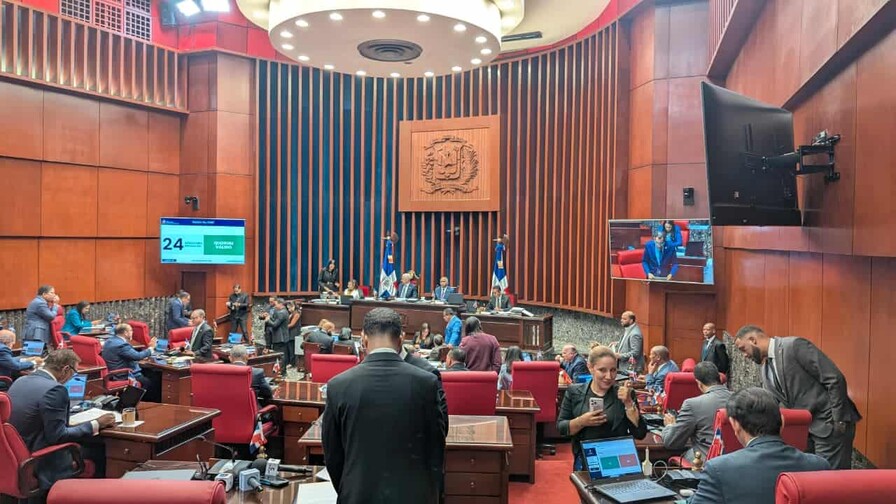
The bill had already been approved on an urgent basis by the Chamber of Deputies before reaching the Senate on November 19. Its review was limited to a single meeting of the Budget Committee, which issued a favorable report on Tuesday and recommended approval.
With this approval, the legislation now awaits submission to the Executive Branch for enactment.
Opposition questions deficit increase
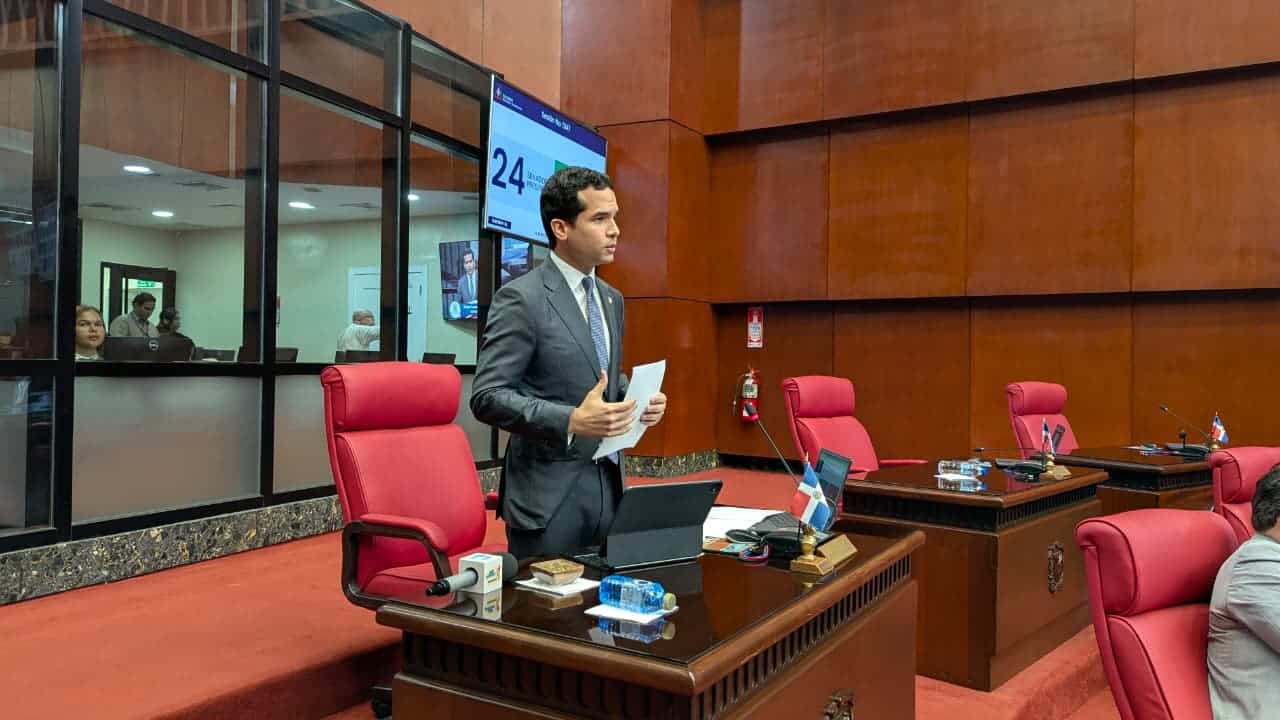
During the session, Senator Omar Fernandez of the National District, who belongs to the Fuerza del Pueblo party, presented an amendment that the full chamber rejected.
Fernandez questioned why, just five months after a fiscal reform was approved, the government is projecting a drop in revenue of more than RD$31 billion while seeking to increase the fiscal deficit by more than RD$85 billion.
He warned that the deficit would rise from 3.24% to 4.2% of GDP, which he said amounts to an increase of more than 30%.
Fernandez said that in July the government had announced an additional RD$41 billion in revenue, but is now reporting RD$31 billion less than what was projected at that time. He asked what had changed, or whether that revenue had never been properly substantiated in the first place.
Fernandez also criticized what he described as the government's habit of routinely suspending laws. He cited as an example the failure to apply wage indexation that would benefit Dominican workers, as well as the government's intention to suspend Law 35-24 on Fiscal Responsibility, which was approved during the current administration.
He said that now, when that law begins to demand discipline, the government is proposing to suspend its application with the year almost over, which he said is not planning but rather giving legal cover to a failure that has already occurred.
Fernandez argued that the government cannot turn the exception into the rule by suspending legal provisions whenever compliance becomes inconvenient.
Where the extra money will go
Of the additional RD$54.1 billion, RD$44 billion will go to the Administration of National Treasury Obligations, RD$5 billion to the Ministry of Public Works, RD$3.6 billion to the Ministry of Education, RD$1 billion to the Ministry of Industry, Commerce and Small and Medium Enterprises, and RD$500 million to the Ministry of the Interior and Police.
Why the deficit is rising
According to the report presented by Budget Committee chairman Daniel Rivera, the revised budget projects revenue of RD$1,351,943 million and spending of RD$1,717,911 million, producing a deficit of RD$365,968 million, equivalent to 4.2% of GDP.
The report attributes the change to how the economy performed in the first half of 2026, citing international fuel and raw material prices. It also states that the revision is meant to reflect the cost of measures the government implemented to soften the impact of those price increases on the population and on productive sectors.
What happens next
The bill now awaits submission to the Executive Branch for enactment.
Test yourself
By how much did the Senate raise the fiscal deficit as a share of GDP?
How did senators vote on the budget modification bill?
Which entity receives the largest share of the additional RD$54.1 billion?
Have your say
Do you think raising the fiscal deficit to fund extra government spending is justified?
Where it happened
Santo Domingo, Dominican Republic