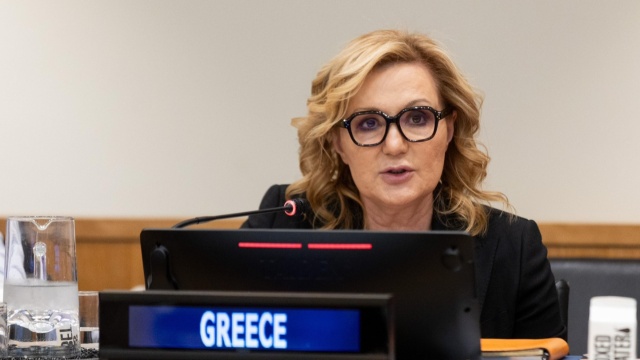
Greece called on the United Nations Security Council to push for an immediate de-escalation of the fighting in Yemen, urgent humanitarian access and the release of 73 UN staff members held by Houthi forces, as the council met in emergency session on Tuesday, September 15, 2026.
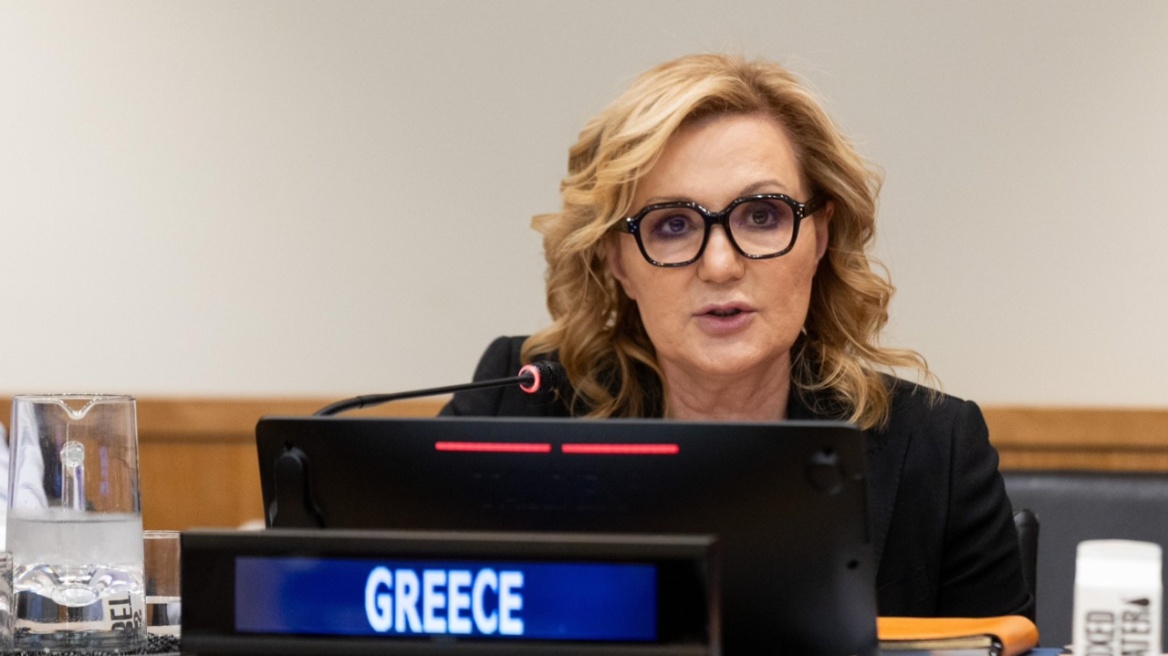
The council convened to discuss the deteriorating situation around the Bab el-Mandeb Strait, a strategically vital waterway, as UN agencies warned of rising displacement, with thousands of Yemenis fleeing to Djibouti.
Greece condemned the expansion of hostilities in Yemen and attacks on civilians and critical infrastructure in Saudi Arabia, saying the Houthis were continuing a military escalation that was bringing Yemen to the brink of full-scale conflict.
Greece's Permanent Representative to the UN, Ambassador Ag. Balta, called for an immediate and unconditional halt to the military escalation and expressed solidarity with Saudi Arabia and the government of Yemen.
Houthi advance along the coast
Balta placed particular emphasis on the Houthi advance along Yemen's western coast and the group's capture of the port of Al Mokha and the Greater and Lesser Hanish islands, near the Bab el-Mandeb Strait.
Athens warned that the development marked a dangerous turning point for Red Sea security, saying the consequences extended to international maritime security, global trade and prosperity.
Warning over shipping attacks
Balta stressed the need to protect shipping, noting that recent attacks had also struck Greek-owned vessels. She said freedom of navigation and the right of passage had to be fully respected and protected under international law and the UN Convention on the Law of the Sea, and she reaffirmed Greece's commitment through the European Union's Operation ASPIDES.
She said rights of passage through international straits could not be subject to illegal restrictions, discriminatory measures, fees or prior authorisation requirements.
Balta also voiced serious concern over the displacement of civilians and called for safe, rapid and unimpeded humanitarian access. She condemned the detention of 73 UN staff members by the Houthis and demanded their immediate and unconditional release.

She called for immediate de-escalation and for communication channels to stay open, saying the political process must not be lost from view, with the goal remaining a lasting and comprehensive political settlement in Yemen.
Scale of the displacement crisis
According to the UN, ongoing clashes between Yemeni government forces, backed by Saudi Arabia, and Iran-backed Houthi militias have caused widespread displacement in the Aden, Al Hudaydah, Abyan and Taiz regions.
Military operations around the Bab el-Mandeb Strait have increased, with the Houthis seizing several islands over the past week. The World Health Organization has recorded 2,883 casualties since August 6, while the International Organization for Migration put the number of people displaced at 93,864.
Seven health facilities were damaged, knocked out of service or directly hit over a ten-day period, according to the WHO's latest situation report.
The UN High Commissioner for Refugees said the rapid escalation of hostilities along Yemen's western coast had forced thousands more people to seek safety by crossing the Bab el-Mandeb Strait into Djibouti.
The UN said continuing insecurity could affect humanitarian and commercial maritime transport and resupply. Almost half of Yemen's population of 41 million people needs humanitarian assistance, and acute food insecurity continues to worsen.
Yemen's appeal to the council
Yemen's Permanent Representative to the UN, Abdullah Ali Fadhl al-Saadi, warned that the Houthi escalation was no longer an internal matter but a growing threat to regional security, freedom of navigation, energy supply and global trade.
He said his government was responding to the Houthi advance along the western coast and toward Bab al-Mandeb, with government forces reorganising to regain the initiative and prevent the Houthis from using the coastline to threaten international shipping.
He said continuing Houthi attacks on Saudi Arabia and energy infrastructure were part of a broader regional threat, and warned of links between instability around the Red Sea, terrorist organisations and trafficking networks in the Horn of Africa.
Al-Saadi called on the Security Council to move beyond condemnation, urging enforcement of the arms embargo, the dismantling of networks trafficking weapons, financing and contraband, support for Yemen in restoring state authority over its territory and coasts, and an immediate response to growing humanitarian needs.