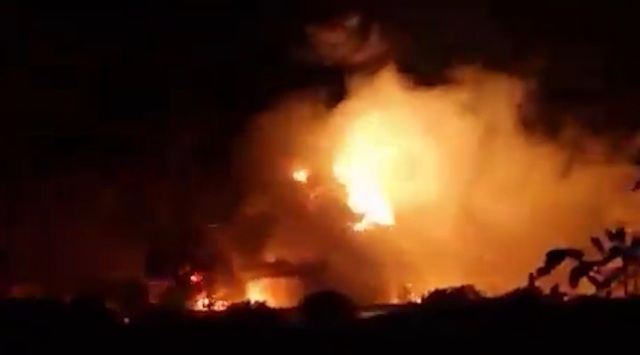
Iran-backed Houthi rebels in Yemen claimed responsibility on Sunday for new air strikes that killed at least 11 civilians and soldiers, as the 2022 ceasefire collapsed last month.
The Houthis announced that they targeted an oil refinery in neighboring Saudi Arabia, an ally of the Yemeni government. Facilities belonging to oil giant Aramco in Jizan, southwestern Saudi Arabia, were hit by a precision drone strike, according to Houthi military spokesman Yahya Saree.
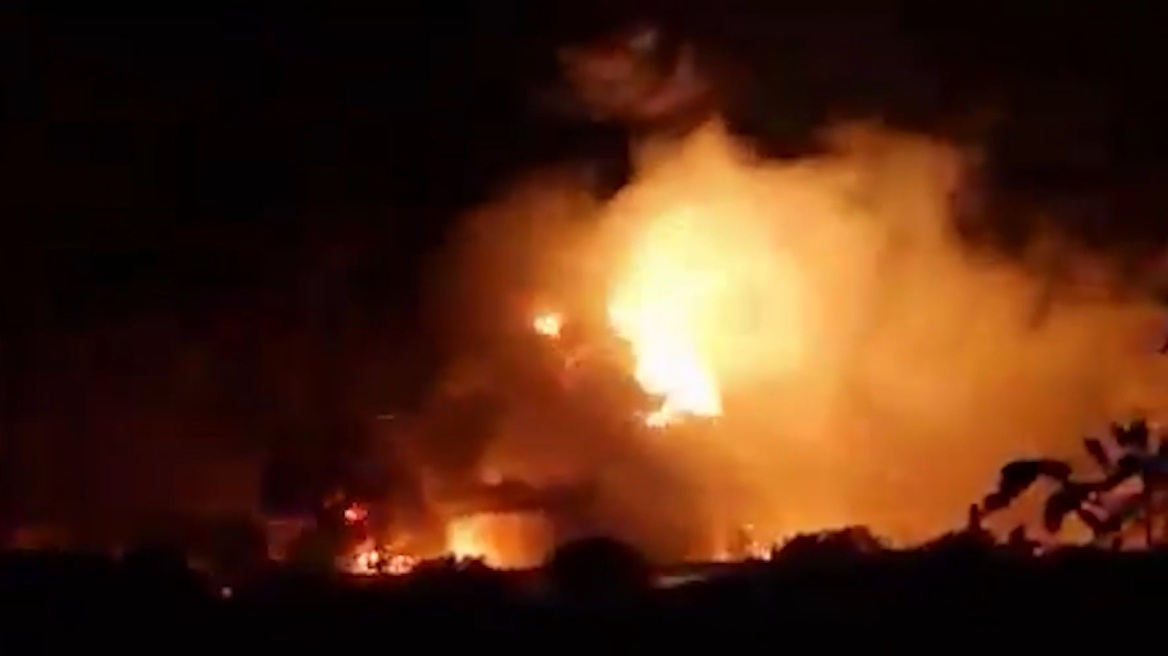
Saree said the attack was carried out in response to Saudi incursions into northwestern Yemen. He stated that Yemeni armed forces successfully targeted the Aramco refinery in Jizan with a drone in response to Saudi enemy drones violating the airspace of Saada and Hajjah provinces.
The Saudi Ministry of Energy announced that a fire at the facility was extinguished without causing casualties, though officials did not specify the cause of the blaze.
Aramco Refinery and Mocha Port Strikes
Inside Yemen, the Houthis claimed responsibility for drone and ballistic missile attacks targeting troops and equipment of the Saudi enemy in Mocha, a port city controlled by the internationally recognized government.
Fayyad al-Numan, deputy minister of information for the Yemeni government, told news agency dpa that the Houthi targeting of Mocha caused material damage to buildings and the port pier. Local residents confirmed to Agence France-Presse that they heard explosions in the area, with one resident reporting six consecutive explosions at the port.
The strikes in Mocha killed three civilians and eight members of government forces, according to a medical source who also reported 32 wounded, including 10 civilians. Two government military sources confirmed the death toll of eight soldiers.
One military source also reported strikes on other facilities near the strategic Bab al-Mandab Strait at the southern end of the Red Sea. Some of the targeted locations housed Saudi troops, but the source specified that no casualties were reported among Saudi soldiers.
Deadliest Escalation Since 2022 Ceasefire
Hostilities in the Yemeni conflict resumed last month for the first time since a negotiated ceasefire in 2022, marking a new phase in regional escalation stemming from the war between the United States and Iran. Since then, the Houthis have repeatedly struck Saudi infrastructure, including a previous attack on Jizan last month.
In late July, the rebels announced a blockade of Saudi ships in the Red Sea. The waterway became a vital shipping route for hydrocarbons after Iran blocked the Strait of Hormuz on the opposite side of the Arabian Peninsula. The Houthis have repeatedly attacked ships since declaring the blockade.
Government forces suffered heavy losses prior to the Mocha attack. On Friday, at least eight government soldiers were killed in oil-rich Marib province in central Yemen, one day after the deadliest strikes since 2022 killed 58 government troop members.
Regional Alliances and Diplomatic Conflict
The Houthis said they carried out the recent attacks in retaliation for what they viewed as reinforcements of Saudi-backed Yemeni forces. Riyadh intervened in Yemen in 2015 to support the government. The war has killed hundreds of thousands of people and plunged Yemen, the poorest nation on the Arabian Peninsula, into a severe humanitarian crisis.
Fighting resumed in July after air strikes attributed to Riyadh targeted the Houthi-controlled Sanaa airport. Iran had sent an aircraft carrying a rebel delegation to the airport without seeking authorization from Saudi Arabia, which controls Yemeni airspace.
Saudi Arabia, a United States ally, has also been targeted by repeated Iranian strikes in recent months. To strengthen its security alliances amid regional tensions, Saudi Arabia signed a mutual defense agreement with Pakistan and Turkey on Friday.