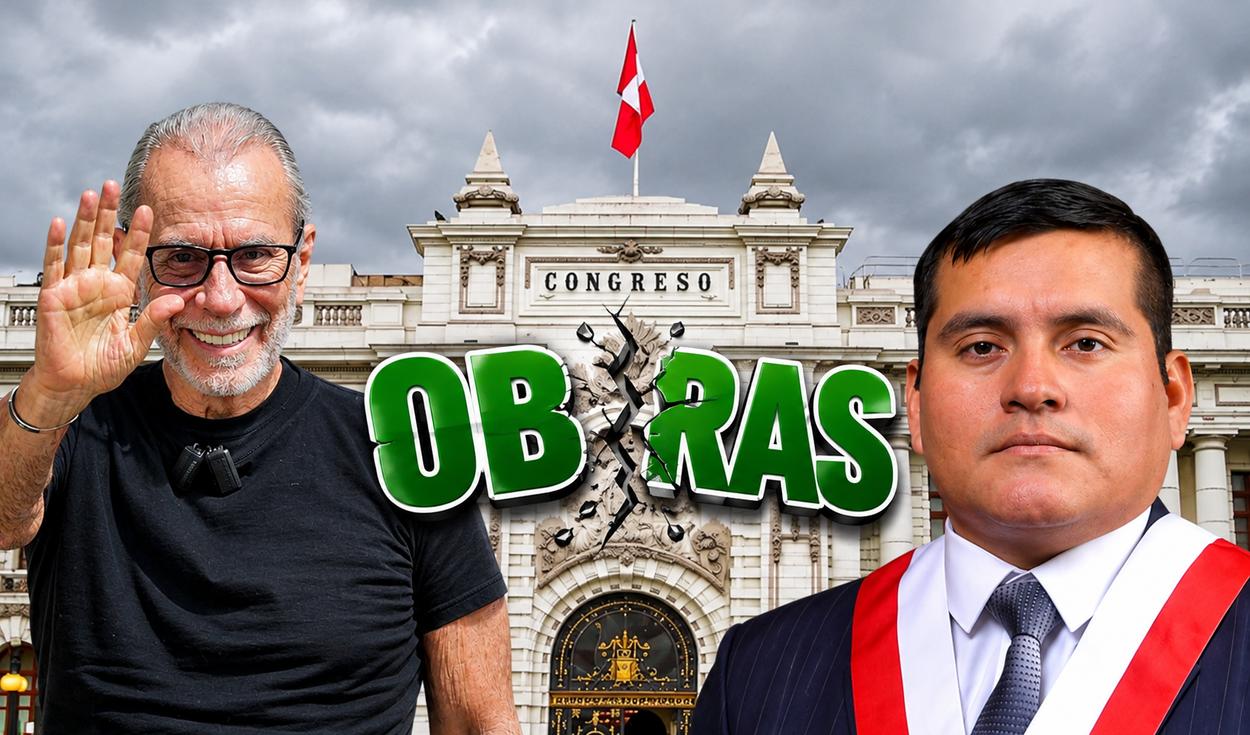
Peru's Cívico Obras party is embroiled in an internal crisis after its leader, Ricardo Belmont, accused congressman Víctor Piñán of betraying the party and announced the expulsion of fellow congressman Hebert López, while Piñán lost his position as the party's spokesman in Congress.
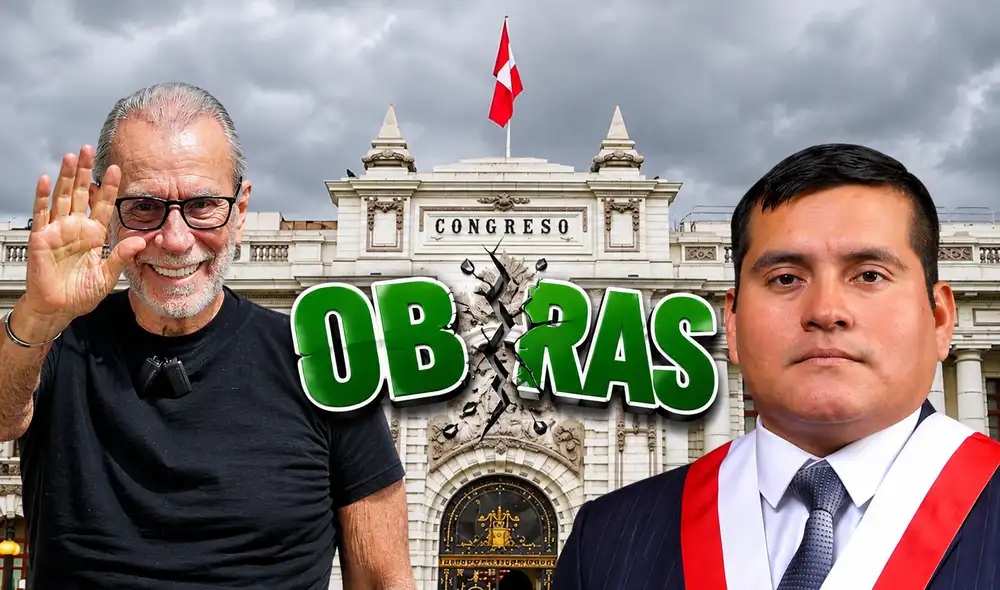
The dispute became public after Belmont posted a video on social media accusing Piñán of attempting to modify the internal rules of the Cívico Obras congressional bloc to change how the spokesman and the members of the bloc's governing board are chosen. Belmont also named López as the person who allegedly organized a signature-gathering effort to push the rule change through.
Belmont said in the video that what was happening was very serious, and that lawmakers were being deceived in an attempt to change the party's internal rules in a disloyal way. He said that among Spartans, betrayal was forbidden, and that the party had now been betrayed by Obras's own spokesman, who he said was circulating a letter claiming that Belmont, as party president, wanted to remove many people working in Congress, something Belmont called false.
López expelled, Piñán loses spokesman role
After leveling the accusation, Belmont announced that López would be expelled from the party. He said López could go to another party that would take him in, adding that López was the one circulating the document that had supposedly been signed. Belmont said López would be given the right to a defense before being invited to leave the party.
Belmont later softened his language on how López would be removed. He said the party had the authority to expel him but that he did not want to expel him, he wanted López to leave if he had any dignity, adding that he wished the dispute had never become public.
Piñán, meanwhile, stopped appearing as the bloc's titular spokesman before Congress's Junta de Portavoces, the committee that coordinates parliamentary spokespeople. Raúl Camargo, who had been serving as the group's alternate spokesman, took his place.
Belmont, who founded Cívico Obras and serves as its president, said the change followed his accusation that Piñán pushed a modification of the bloc's internal rules without his knowledge, which he described as disloyal and aimed at altering how the bloc organizes itself.
Piñán denies betrayal
This newspaper tried to reach both lawmakers for comment. Piñán said he had not yet managed to speak with Belmont because the party leader's schedule was very busy and difficult to coordinate with. On his removal as spokesman, he said the change had already taken place and that he respected whatever decisions were made.
Piñán said the dispute began after lawmakers received a letter demanding that they pay 10% of their salary to the party, a demand he refused. He said that as spokesman he had to represent the lawmakers' voice, that they did not support Belmont's unilateral decision, and that he was removed because he refused to go along with the payment agreement.
He said no sanction had been applied so far, though he acknowledged that pressure to comply had been discussed. He said he was not aware of any lawmaker being sanctioned and that he disagreed with the decision.
Piñán said the goal of changing the rules was to "democratize" how the party's representatives were chosen, rather than leaving appointments to be made directly by the leader without a vote. He said Belmont accused him of betrayal because, as spokesman, he carried the lawmakers' concerns, and because the bloc's rules had been written so that the party president alone designated representatives, with no election involved.
López declined to comment to this newspaper.
Dispute over Congress hiring
The conflict also extends to staffing decisions inside Congress. Belmont said the party's Secretaría General had brought in more than 150 workers without consulting him, despite his position as party president.
He said that after reviewing the list of employees, he found that only 3% were linked to Cívico Obras, while the rest had ties to other political organizations. He also questioned the presence of lawmakers' relatives among those hired.
Belmont said relatives of senators and diputados had been found working inside Congress and that the party would verify this. He said that if Cívico Obras ended up with only one congressman left, that is what would happen, because the party's principles could not be violated.
Demand for 10% of salaries
The internal rift also stems from Belmont's request, made in an official letter to his party's congressmen, senators and staff working in Congress, that they contribute 10% of their monthly pay to Cívico Obras's bank account.
The letters are dated September 17 and state that, under the party's statute, failing to make the payment amounts to a serious violation that can lead to sanctions.
Under the schedule obtained by this newspaper, senators and diputados are asked to contribute 1,179.80 soles a month, equivalent to 10% of a net salary of 11,798 soles. Level-1 advisers are asked for 1,092.40 soles, level-2 advisers for 895.70 soles, and technicians for 609.20 soles. Assistants, auxiliary staff and coordinators are asked for 298.80 soles a month, based on a net salary of 2,988 soles.
Andean parliamentarian Jahn Toledo Palomino and congressman Piñán received Oficio Circular N.° 0002, which asked them to deposit the money directly from their bank accounts into the party's account to ensure transparency, and warned that failing to do so could bring internal sanctions.
On the same day, Belmont signed a second letter addressed to professionals and technicians invited to work in Congress. Unlike the first letter, this one described the contribution as voluntary, though it asked for deposits into the same party bank account.
The two documents, dated the same day and ultimately reaching some of the same recipients, set out different conditions: one warned of possible sanctions for noncompliance, while the other presented the payment as optional.
What happens next
Belmont said the party would verify the employment ties of the more than 150 workers hired in Congress.
Test yourself
Who did Ricardo Belmont accuse of betraying the Cívico Obras party?
Why did Víctor Piñán say he was removed as the party's spokesman?
What percentage of lawmakers' net salary did Belmont ask them to contribute monthly to the party?
Have your say
Should political party leaders be able to require lawmakers to contribute part of their salary to the party?
Where it happened
Lima, Peru