

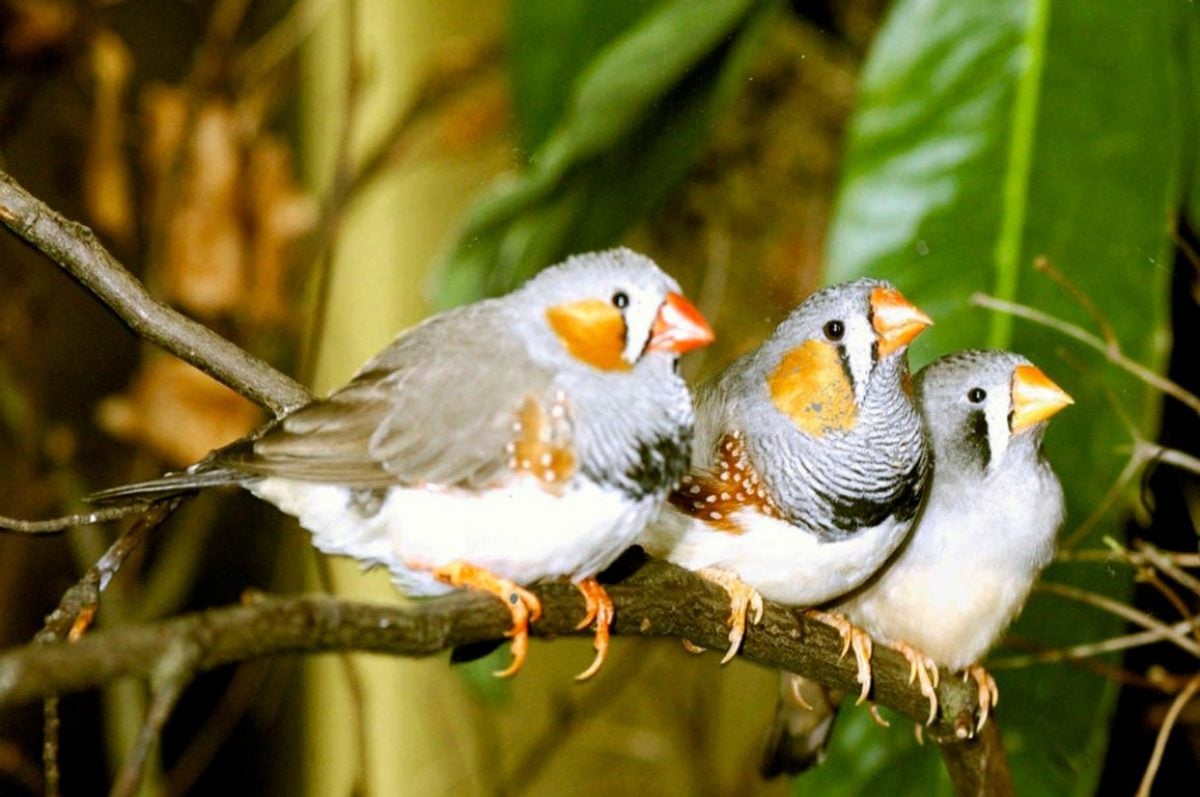
University of California, Berkeley neuroscience researcher Julie Elie has used artificial intelligence to decode the calls of Australian zebra finches into an audio dictionary. Her research shows that the small, highly social songbirds understand their vocal signals by meaning rather than sound alone.
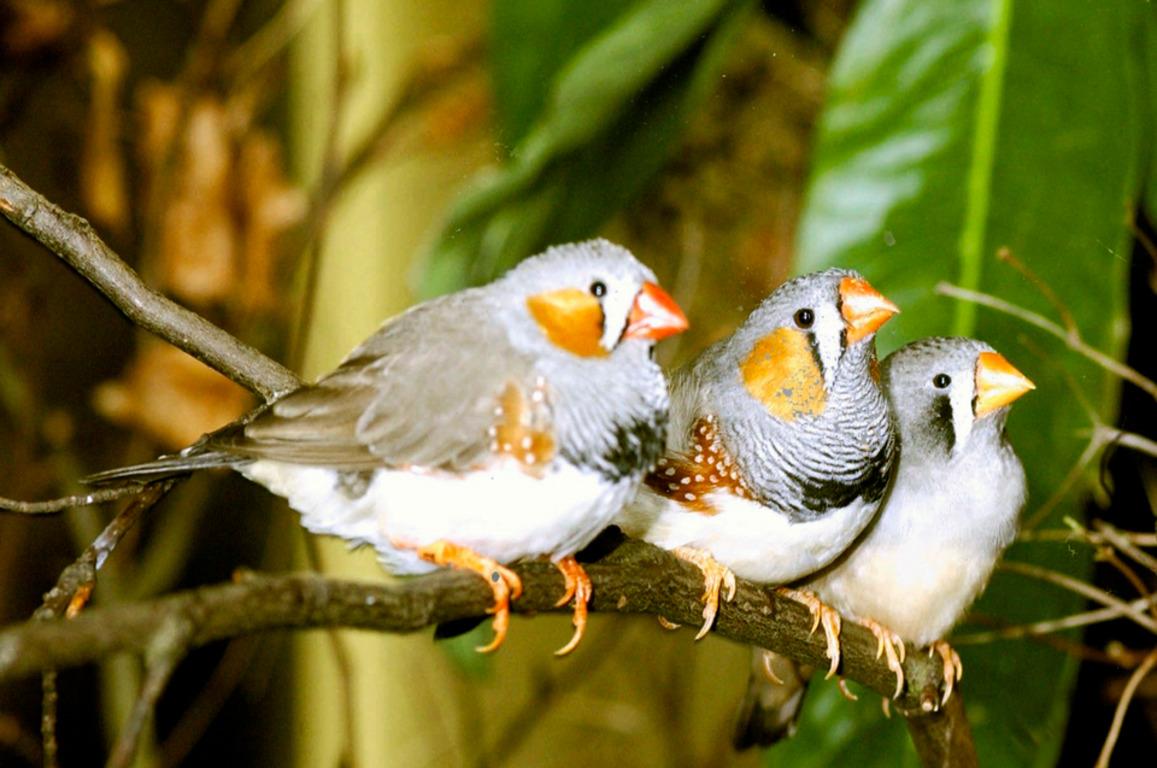
According to reports in Newsweek and UC Berkeley News, the findings could become an early step toward two-way communication between humans and animals. For her work decoding zebra finch vocalizations, Elie won the 2026 Coller Dolittle Prize for achievements in two-way interspecies communication.
The annual prize carries a $100,000 award and recognizes scientific research that can help investigators build technologies for communicating with animals. While practical two-way dialogue between humans and birds remains a distant prospect, the study demonstrates that songbirds categorize their own vocal repertoire according to specific concepts.
Meaning and acoustics in zebra finch calls
Elie, a researcher in the Department of Neuroscience at the University of California, Berkeley, has spent more than ten years studying how zebra finches communicate with one another. Her work identified roughly 11 distinct types of sound signals that the birds use in daily flock life.
Through those 11 call types, zebra finches pass information to other birds about hunger, alarm, danger, and social conflicts. They also use the vocalizations to establish initial contact and maintain long-term social bonds with other members of their group.
Laboratory experiments showed that zebra finches tell the 11 signal types apart not merely by their acoustic properties, but by what the calls mean. During testing, the birds were more likely to confuse calls that shared a similar meaning than calls that simply sounded alike in pitch or rhythm.
Speaking to UC Berkeley News, Elie explained that when different types of signals hold clearly distinct meanings for the birds, the finches distinguish them very well, even when the calls sound quite similar. She added that the pattern of mistakes made by the birds indicates they hold a mental representation of the meaning behind their own signals.
How machine learning built the zebra finch audio dictionary
To decipher the vocal repertoire of the species, Elie and her colleagues combined more than a decade of behavioral observations with machine learning and artificial intelligence tools. This approach allowed the research team to sort varied zebra finch vocalizations into distinct categories and build a functional dictionary of their core vocabulary.
According to the University of California, Berkeley, Elie constructed an audio dictionary linking specific signal types to concrete states and needs, including hunger, distress, physical danger, and the desire to establish social contact. Once the artificial intelligence models had grouped the recordings, the scientists tested whether those categories made sense to the birds themselves.
In follow-up behavioral experiments, researchers trained zebra finches on sound classification tasks and rewarded the birds for correctly performing tasks that required classifying the sound signals. The results confirmed that the finches sorted the audio recordings along lines of semantic meaning rather than superficial sound similarity.
Why behavioral observation remains essential alongside AI
The study also revealed the current limits of automated sound analysis in animal communication research. While artificial intelligence programs can easily separate two audio signals based on acoustic characteristics such as pitch or rhythm, algorithms cannot determine on their own what those differences mean to a living animal.
The reactions of the zebra finches showed that the birds respond directly to the message carried by a call, such as whether another bird is signaling danger, hunger, or a need for social contact. Because of this gap between acoustic sorting and true comprehension, the researchers noted that artificial intelligence alone is not enough to decode avian communication.
Direct observation of animal behavior remains essential to the decoding process. To establish the true meaning of any specific vocal signal, scientists must record the circumstances under which a bird makes the sound, observe what is happening in the surrounding environment, and track how other individuals react.
Zebra finches as a model for vocal learning
Zebra finches are small estrildid songbirds native to the grasslands and arid interior of Australia, where they live in dense, highly social flocks. In the wild, the birds form long-term pair bonds and rely on constant vocal exchanges to coordinate movement and daily group activity across their colonies.
In neuroscience, the zebra finch serves as one of the leading model species for studying how the brain processes sound and acquires complex communication skills. Much like human infants learning to speak by listening to adults, young zebra finches learn their vocal repertoires by imitating older tutors during an early developmental window.
The Coller Dolittle Prize, named after the fictional literary physician Doctor Dolittle, was established to accelerate scientific research that applies artificial intelligence and bioacoustics to non-human species. By pairing automated acoustic analysis with long-term biological fieldwork, researchers aim to map how animals encode information in sound.
Broader biological discoveries and future communication
The Berkeley songbird findings appear alongside other recent scientific investigations into animal biology noted in the report, including research into the diabolical ironclad beetle. Native to the western United States, the flightless beetle measures about two centimeters long and has an exoskeleton made of two halves joined like interlocking puzzle pieces, distributing load evenly so it can survive being run over by a car and offering engineers a model for aircraft manufacturing and repair.
In the field of animal communication, artificial intelligence currently serves as a tool to help scientists analyze complex bird calls that were previously difficult for humans to sort. However, the evidence that zebra finches classify sounds by meaning could bring researchers closer to a larger goal.
If scientists can reliably establish the exact meanings of individual avian calls, artificial intelligence systems could be trained both to recognize those signals in real time and to play back synthesized sounds that the birds understand. That capability could eventually allow humans not only to understand animals, but to answer them in their own vocal language.


