Brent crude oil held at $116 a barrel on Tuesday as diplomatic efforts to prevent renewed military strikes against Iran helped check market pressures.
The price steadying followed a brief small drop earlier in trading, with investors weighing the possibility of restarted negotiations against the threat of fresh American and Israeli attacks on Iranian targets.
Tensions across the Middle East continue to create substantial risks for global energy supplies, leaving commodity traders watchful despite the diplomatic push.
Talks between regional powers and Iran
Senior officials from Saudi Arabia, Pakistan and Turkey met on Monday with top Iranian officials, according to published reports, in an effort to defuse regional hostility.
The talks were organized to de-escalate tensions and revive stalled negotiations, with the explicit goal of heading off a new round of American and Israeli strikes against Iran.
Saudi Arabia, Pakistan and Turkey represent three influential regional powers that have sought to prevent direct confrontation from spilling across borders. Saudi Arabia is the world's leading crude exporter and de facto leader of the Organization of the Petroleum Exporting Countries, giving Riyadh a vital interest in avoiding any conflict that could imperil Gulf energy facilities.
Turkey and Pakistan have maintained open diplomatic channels with Tehran, using their positions to broker regional stability and prevent wider economic disruption across neighbouring trade routes.
Impact of Washington decisions and elections
The diplomatic push is taking place approximately one week before the United States midterm elections, putting decision-making in Washington at the centre of the crisis.
President Donald Trump has repeatedly hinted that military operations against Iran could resume after the midterm vote, following months of stagnation in talks.
The prospect of fresh strikes remains a primary driver of uncertainty in energy markets, as any military escalation could disrupt crude exports and transport corridors across the Middle East.
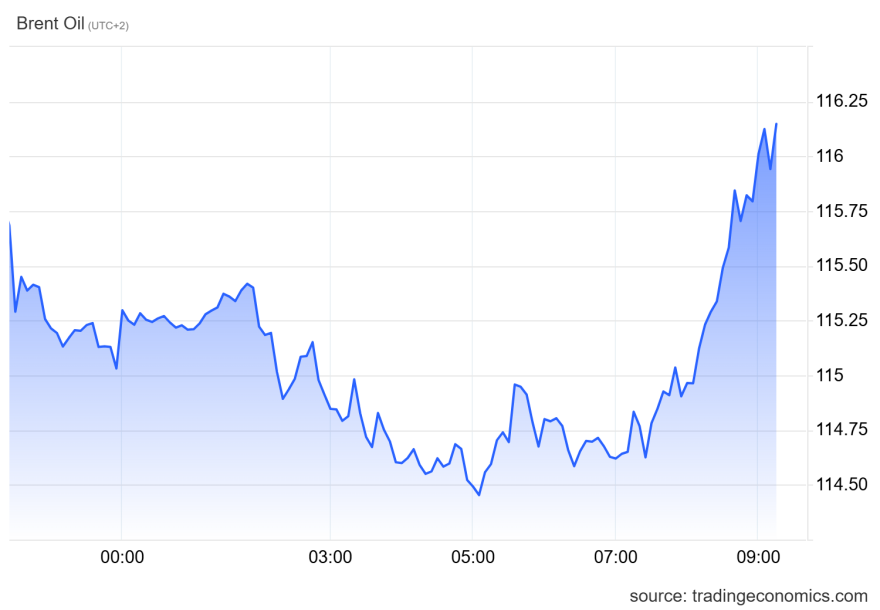
In the United States, midterm elections determine control of Congress, and sitting administrations frequently face domestic political pressure over energy costs and fuel prices at the pump. Brent crude serves as the international benchmark for global oil contracts, and elevated prices around $116 a barrel feed directly into consumer inflation worldwide.
Much of the region's oil passes through the Persian Gulf and the Strait of Hormuz, a vital maritime corridor bordered by Iran and Oman that handles about a fifth of the world's daily petroleum shipments. Any threat of military conflict near those waters immediately adds a substantial risk premium to international crude prices.
Threats from Yemen and Lebanon conflicts
At the same time, ongoing regional military conflicts continue to complicate diplomatic efforts to stabilize the area.
Forces led by Saudi Arabia are continuing military operations against Houthi rebels in Yemen, an armed group that receives backing from Iran.
Meanwhile, the militant organization Hezbollah is preparing for a new regional conflict in Lebanon after receiving financial support from Tehran, according to reports.
Both Hezbollah in Lebanon and the Houthis in Yemen form part of a broader network of regional groups aligned with Iran. The Houthis have previously targeted merchant vessels in the Red Sea and energy installations in the Arabian Peninsula, while Hezbollah commands extensive military positions and rocket stockpiles along Israel's northern border.

Global energy supply and market risks
Despite the diplomatic outreach, underlying regional friction continues to threaten the smooth flow of energy exports from the Middle East.
Crude oil flows have recovered to roughly pre-war levels, which has helped limit immediate market anxiety over acute supply shortfalls for now.
Market analysts note that the recovery in flow volumes does not remove the persistent threat of fresh supply interruptions. For global energy markets, the key test will be whether regional diplomatic engagement achieves genuine de-escalation, or whether the region is drawn into a new round of military operations.