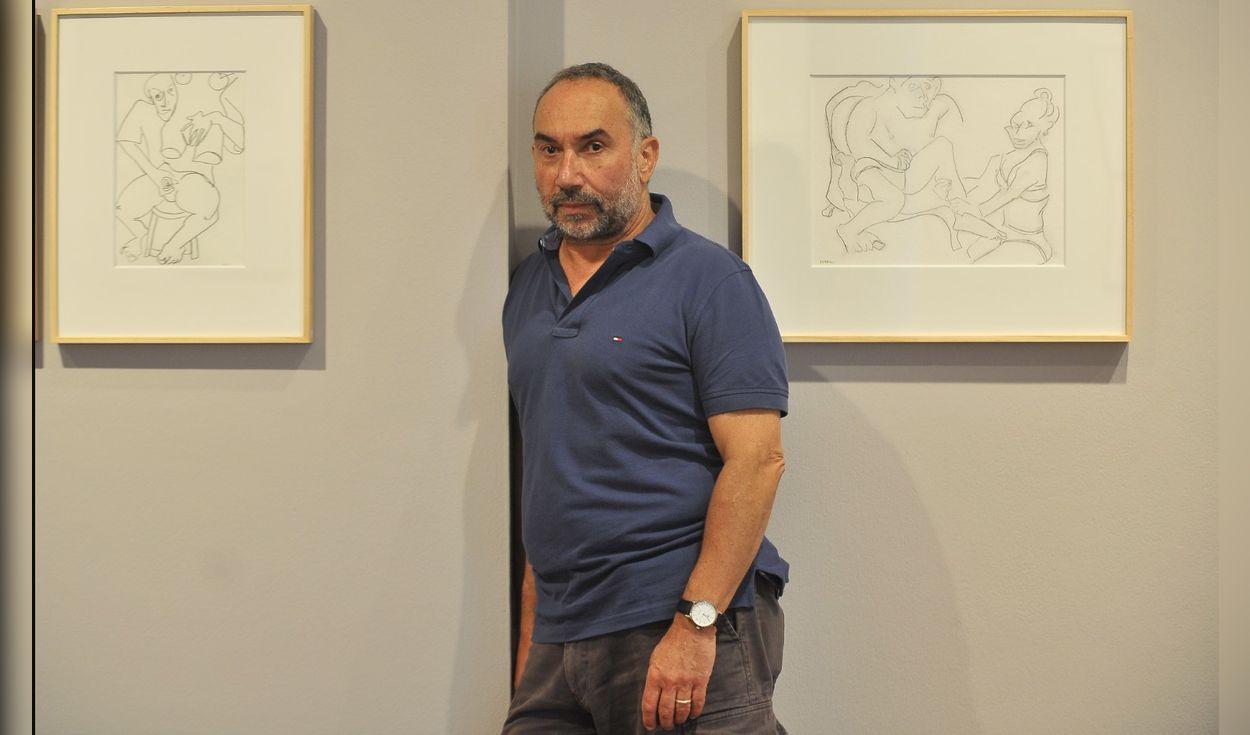
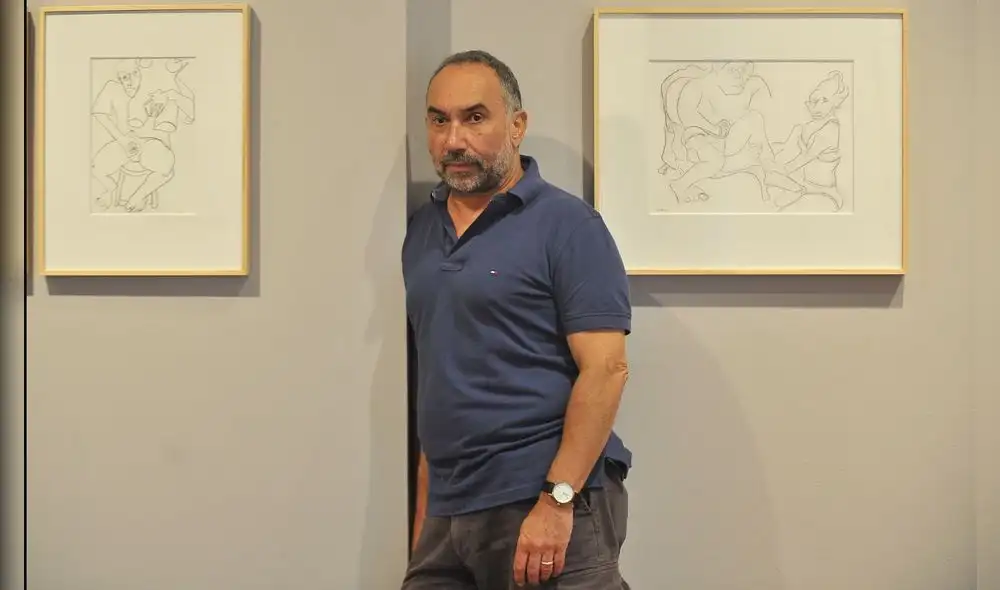
Peruvian painter Bruno Zeppilli, born on September 19, 1954, shaped his artistic voice through two formative mentors, draughtswoman Cristina Gálvez and painter Tilsa Tsuchiya, before striking out on his own path following Tsuchiya's death in 1984.
At 17, Zeppilli enrolled in the Faculty of Fine Arts at the Universidad Católica, where teacher Anna Maccagno suggested he secretly take drawing lessons with Cristina Gálvez. Gálvez's methods were not welcomed at the university; the school did not share her ideas about teaching, her sense of freedom, how she influenced students, or her drawing techniques, which centered on the human body and the nude. She held that every line in the universe repeats itself in the body, and that drawing the body teaches a person to draw everything.
Zeppilli tried to draw with her, following her method, but after five months he wanted to quit, believing it was not for him. Gálvez looked at him, stayed silent, then proposed he stop following the pace of the other students: he would draw in her studio every day, in two sessions of two hours each. She told him drawing was a talent anyone could discover, and she believed he had it. She also set him to work on sculpture and three-dimensional experiments, holding that insistence is the mother of achievement and discipline its godmother. Her guidance pushed him toward wanting to learn and to dedicate his life to art.
Meeting Tilsa Tsuchiya
Zeppilli met Tilsa Tsuchiya, who was 18 years older than him, by a swimming pool during a casual lunch. They talked the whole afternoon and became friends. Tsuchiya, one of Peru's best known modern painters, invited him to paint alongside her so he could learn, and over time welcomed him into her studio.
She suggested he begin with still lifes, believing that was how his training should start, and encouraged him to transfer to the Escuela de Bellas Artes, the national fine arts school. He enrolled there after three years at the Universidad Católica, since Tsuchiya felt that system suited a life dedicated to art and made it easier for her to guide him.
A study trip to Europe
In March 1983, Zeppilli moved to Europe and based himself in Florence. Every Saturday he traveled to nearby towns with a professor and a group of young students to see the work of artists who interested him, most of them from the Renaissance.
He visited Urbino, San Gimignano and other towns with similar artistic histories, drawing on their surroundings. There he discovered Rosso Fiorentino, a Tuscan Renaissance painter linked to the School of Fontainebleau and a leading figure of Mannerism who lived from 1494 to 1540. Zeppilli studied Fiorentino's compositions and the arrangement of figures on canvas, later citing them in his own work and repeating that way of presenting figures. He also studied the work of Jacopo Carucci, known as Pontormo after his hometown, another Florentine painter whose treatment of figures also influenced him.
Paris and financial struggle
From Florence, Zeppilli traveled to Paris, where he visited an exhibition of the work of Balthus at the Centre Pompidou. He was drawn to the French painter's work, an influence that later showed in his own paintings.
He wanted to stay in Paris but ran out of money and took work cleaning staircases and doing other jobs ill-suited to him, working intense hours from eight in the morning to six in the evening alongside other young art students. He ended up exhausted, by then close to 29 years old.
Return to Lima and Tsuchiya's final lessons
Concluding that Paris was not for him, Zeppilli returned to Lima on December 24, 1983, and visited Tsuchiya again. She set out to guide him and work by his side; over three months he finished around five paintings under her supervision, absorbing her techniques.
He was eventually sent to work on the rooftop because he talked too much and distracted her. There she supervised his work and told him to abandon his usual, slower technique, saying modern times called for different rhythms. She pushed him toward faster, looser brushwork and toward painting what he saw exactly as he saw it, and she taught him to value chance and accident, showing him the point at which a work should no longer be touched because the first strokes were the most accurate. He began painting with his canvases turned upside down so he could study them better.
Tsuchiya's death and his own path
Tsuchiya died on September 23, 1984, one day before her 56th birthday. Her death was a heavy blow for Zeppilli, who had to find his own way afterward.
For his first exhibition, he went against her advice to focus on still lifes and instead showed his own figures, striking out on his own path. He drew on Renaissance compositions, placing his own figures in similar attitudes and arrangements, and developed work defined by its own poetry, specific references and reflection.
Test yourself
Who first suggested Bruno Zeppilli secretly study drawing with Cristina Gálvez?
How many years older than Zeppilli was Tilsa Tsuchiya?
In which city did Zeppilli base himself after moving to Europe in March 1983?
Where it happened
Lima, Peru