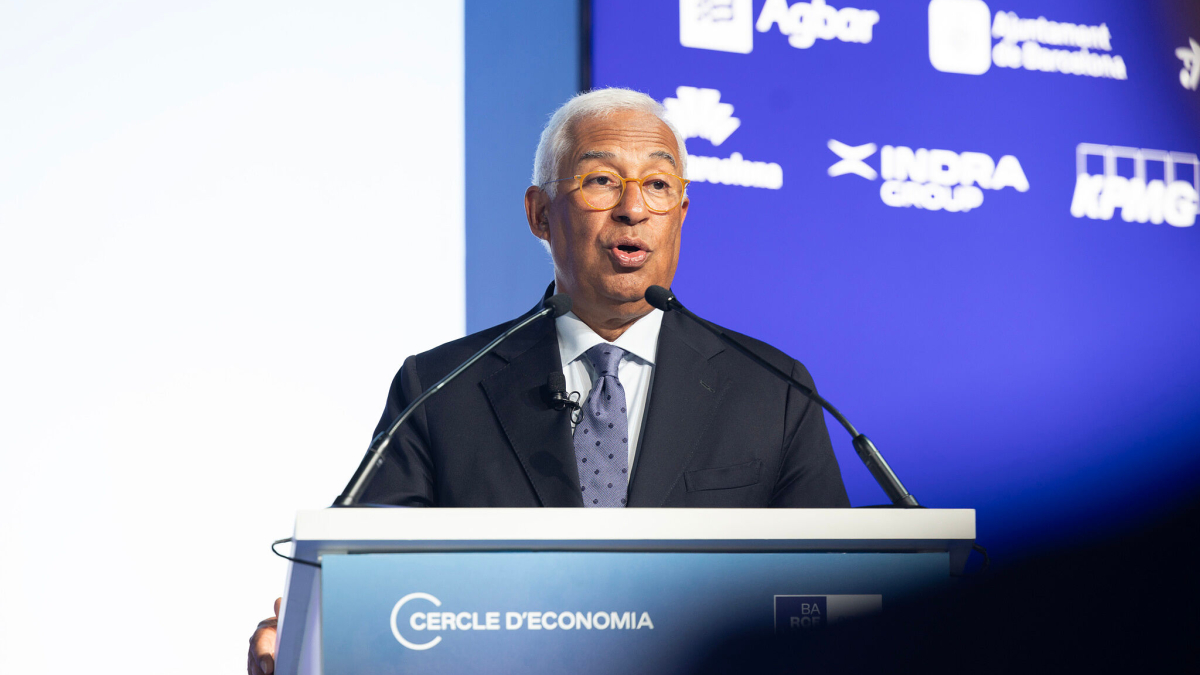
The European Council has proposed a new basket of taxes, including a digital levy on large technology companies, aimed at raising up to 60 billion euros for the European Union's next long-term budget. The plan was unveiled as part of a draft budget that cuts almost 200 billion euros from the figure proposed by the European Commission in the summer of 2025.
European Council President Antonio Costa, a former prime minister of Portugal, presented the proposal on Saturday as he works to close the gap between EU member states that has so far blocked agreement on the bloc's new Multiannual Financial Framework, the budget covering 2028 to 2034. The framework requires unanimous approval from every member state.
EU leaders are due to debate the proposal at an extraordinary summit in Brussels on Thursday and Friday.
What Costa proposed
Costa's document is known in Brussels jargon as a "negobox," the draft text used as a starting point for negotiating the different elements of the financial framework. Alongside the overall budget figures, Costa added a package of EU-wide taxes designed to raise as much as 60 billion euros in new revenue.
The draft sets out five possible sources of income. The most prominent is a new contribution on certain digital services, aimed at large technology companies.
How the digital tax would work
The proposed rate is 3% on annual net revenue earned from online advertising, digital marketplace services and the monetisation of user data. Although billed as a tax on big tech, it would apply to any company earning more than 50 million euros a year from digital activity in the EU and more than 750 million euros in revenue worldwide.
Alongside the digital levy, the tax basket includes diverting part of the income from the EU's carbon border adjustment mechanism, a charge on uncollected electronic waste, a share of revenue from the European Emissions Trading System, and a specific levy on tobacco.
The measures are designed to bridge the divide between countries such as Germany, which oppose contributing more to the EU budget, and those that argue the financial framework needs to be ambitious enough to meet the bloc's new priorities.
Budget cuts favor "frugal" states
Despite unveiling the new tax basket, Costa also sided with the bloc's so-called frugal countries by presenting a budget roughly 200 billion euros smaller than the one put forward by the European Commission in the summer of 2025. The result is an overall reduction of 10.2% in commitments, bringing the budget to around 1.58 trillion euros, compared with the Commission's 1.76 trillion euro proposal.
Costa's cuts are concentrated in the Competitiveness and Defence sections of the budget, as well as in Global Europe, the bloc's main vehicle for funding foreign policy and external action.
What happens next
EU leaders will discuss the new proposal on Thursday and Friday at the European Council meeting in Brussels. Several capitals, including Madrid and Paris, have already said the plan is not ambitious enough, while Berlin is pushing for further cuts.
What happens next
EU leaders will debate the proposal at an extraordinary European Council summit in Brussels on Thursday and Friday.
Test yourself
What rate is proposed for the new EU digital services tax?
How much smaller is Costa's draft budget compared with the Commission's summer 2025 proposal?
Which country is reportedly pushing for deeper cuts to the proposed budget?
Have your say
Should the EU introduce a new tax on big tech companies to help fund its budget?
Where it happened
Brussels, Belgium