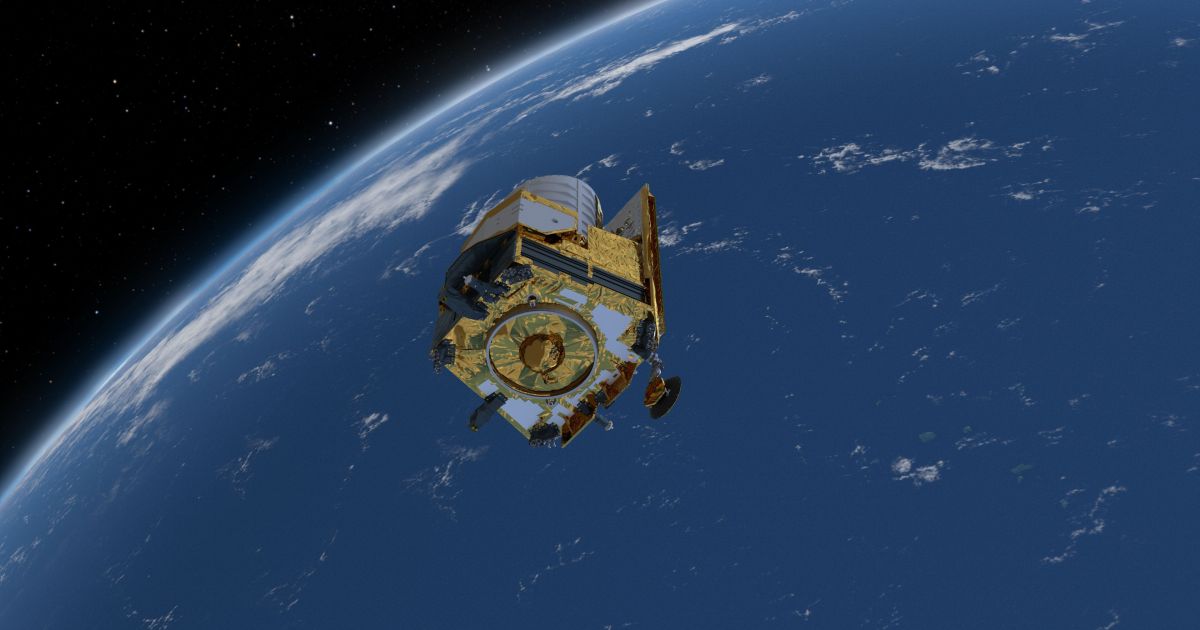
The European Space Agency's Euclid space telescope has discovered a previously unknown comet, designated C/2026 S1, in a region close to Earth.
Photographs taken by the space telescope in September were officially confirmed on October 8 by the International Astronomical Union's Minor Planet Center. The Minor Planet Center operates as the official worldwide clearinghouse for tracking and verifying comets, asteroids, and other small celestial bodies.
The discovery surprised scientists because the Euclid mission was designed to observe distant galaxies across the cosmos rather than locate objects in our cosmic neighbourhood. According to researchers, the newly identified comet travels high above the planets that normally circle the Sun, and it could take thousands of years to complete its orbit.
Astronomers identified C/2026 S1 using specialized software created to spot and track small solar system objects that pass through Euclid's wide images. A doctoral student at the University of Helsinki developed the tracking program to scour astronomical data for moving objects that might otherwise be missed.
Detection in the northern sky
The telescope found the object in a designated observation zone known to astronomers as the Euclid Deep Field North. Euclid captured photographs of the comet across five distinct fields of view, taking between two and four exposures in each field for a total of 16 exposures.
During the automated review, the software detected a diffuse cloud enveloping the celestial body, which is a characteristic feature of comets venting gas and dust. Astronomers checked the object against existing catalogs of known asteroids and comets, but they found no matching entries for its specific traits.
The European Space Agency launched Euclid to investigate the dark universe, focusing on dark matter and dark energy by mapping the shapes and positions of billions of distant galaxies. While staring deep into space from its orbital post, the sensitive telescope also records closer bodies moving across its field of view.
Clues to the early solar system
Astronomers noted that comets are usually found in cold orbits far from the Sun, making the discovery of C/2026 S1 so near to Earth particularly unusual. As an icy body draws closer to the Sun, solar heat causes solid ice to turn directly into gas, a process known as sublimation.
That transition releases dust and gases, forming a glowing haze around the nucleus that scientists call a coma. Comets are made mostly of ice and dust that have remained largely unchanged for approximately 4.6 billion years, dating back to the formation of the planets.
Studying these ancient materials can offer clues about the origin of water on Earth and the essential chemical compounds that allowed life to develop. Scientists explained that analyzing a comet traveling so close to the Sun provides a rare chance to examine those pristine chemical ingredients.
Researchers do not yet know the exact length of the comet's orbital period. Astronomers said establishing its precise path and schedule will require new observation records and further scientific analysis.
What happens next
Astronomers will collect new observation records and carry out orbital analyses to confirm the exact duration of the comet's journey around the Sun.
Test yourself
Which space telescope made the unexpected discovery of comet C/2026 S1?
Who developed the software used to detect the comet in the telescope's images?
Why did the comet's location particularly surprise astronomers?
Have your say
Should space agencies dedicate more mission time to tracking near-Earth comets and asteroids?