

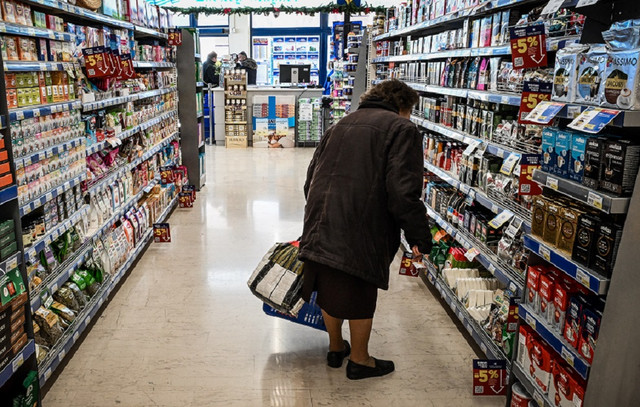
Greece's National Price Reduction Initiative is entering its final stretch, with 1,150 product codes now enrolled in the scheme and August 31 marked as the key deadline for the new, lower prices to appear on supermarket shelves. The average reduction across participating products stands at roughly 7 percent.
Development Minister Takis Theodorikakos presented the progress of the initiative to the Cabinet, at a time when high prices continue to strain household budgets despite a slowdown recorded in food prices in July.
By August 20, 750 product codes from branded goods and a further 100 codes of private-label products had joined the scheme, with the average price reduction calculated at close to 7 percent. So far, 62 suppliers and 10 supermarket chains are taking part, and the list remains open, with new entries added daily.
Which products will be cheaper
The cuts apply to staple goods that regularly feature in household shopping baskets. Among the items included are dairy products, meat, pasta, pulses, cleaning and personal hygiene products, as well as baby food and nappies.
Targeting widely consumed goods carries particular weight, since these are purchases made repeatedly and place a steady burden on monthly household budgets.
Cuts on 300 school items
A separate part of the initiative covers back-to-school shopping ahead of the new academic year. Six retail chains are taking part in this strand, cutting prices on 300 codes of school supplies.
With the addition of school products, the total number of codes enrolled in the initiative so far reaches 1,150: 750 branded products, 100 private-label products and 300 school items. The figure is not considered final, as new suppliers and products continue to be added daily.
The critical August 31 deadline
The next step is for the agreed reductions to move from price lists onto the shelf. Under the initiative's timetable, the lower prices are due to be reflected in supermarkets by August 31, allowing consumers to see the practical results of agreements between the ministry, suppliers and retailers.
That date effectively serves as the first major test of the scheme, since what matters is not only the number of codes taking part but whether the reduction is genuinely felt at the checkout.
Aim: lowering the cost of living
The initiative is designed to act as a more direct measure against high prices. Unlike interventions focused mainly on preventing new increases, this scheme emphasizes an outright reduction in the price of specific products, so the benefit is immediately visible to consumers.
Whether the intervention meaningfully affects the overall cost of the shopping basket will depend both on the range of products that ultimately take part and on the scale of the reductions in the categories with the highest consumption.
Theodorikakos: no room for complacency
Despite the easing recorded in food prices in July, the development minister stressed that there is no room for complacency. He said international geopolitical uncertainty and ongoing wars continue to create risks of renewed inflationary pressure.
He voiced particular concern over the trajectory of international oil prices, noting that a prolonged rise in energy costs could feed through to transport, production and, ultimately, final product prices. With winter approaching, energy costs remain one of the key unpredictable factors for the path of inflation.
For households, immediate attention is now turning to August 31, when the agreed reductions are expected to have reached the shelves, revealing whether the new initiative can deliver measurable relief in everyday spending.


