

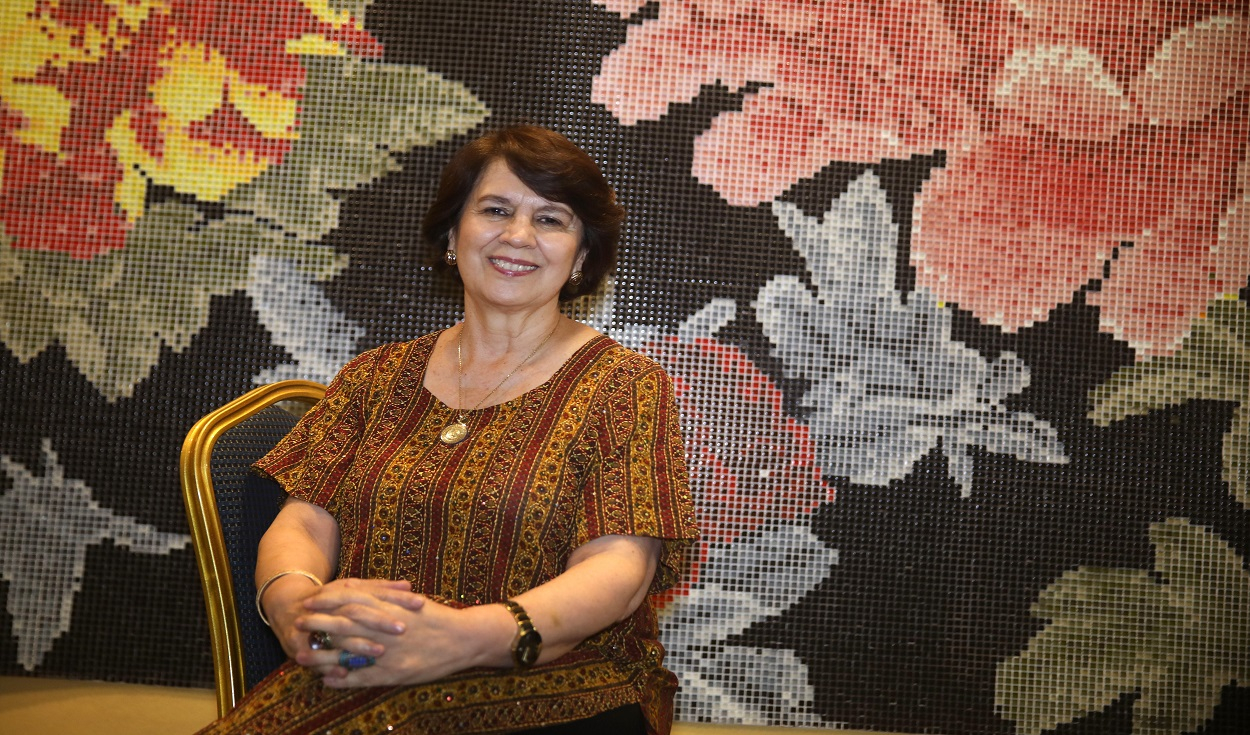
Rosalía Arteaga, the only woman to have served as president of Ecuador, says governments across Latin America are failing to coordinate against criminal organizations even as those groups grow more sophisticated and more violent.
Speaking during a visit to Lima, where she had been invited by the International Book Fair, Arteaga said that while criminal networks operate across borders with clear internal organization, governments have not matched that level of coordination. She said the Organization of American States should take on regional anti-crime cooperation as a core mission, adding that the issue was not one of resources but of political will and the ability to bring leaders together regardless of their political stripe.
Arteaga said Ecuador was experiencing the worst wave of violence in its history. She described criminal groups tied to Mexico's Sinaloa and Jalisco cartels as well as organizations from Eastern Europe and Africa operating inside the country.
Children Recruited as Hitmen
One of her deepest concerns, she said, was the recruitment of children as young as nine and ten years old into criminal bands, a pattern she said was visible across Mexico, Colombia, Peru, and elsewhere in the region. She argued that this was not primarily driven by money but by a search for belonging that families and schools were no longer providing. Criminal organizations, she said, offered young people a sense of identity that fractured families and weakened schools could not.
Arteaga said the only lasting response to organized crime was education, arguing that it was impossible to station a soldier behind every person. She leads an initiative of former education ministers that has been examining violence as one of its central themes.
Illegal Mining and Environmental Damage
Arteaga also addressed the threat that narco-trafficking posed to Ecuador's natural spaces, saying criminal groups had found illegal mining a useful vehicle for laundering money. She said the problem was also affecting Peru and other countries in the region.
Rather than an outright ban on mineral extraction, she advocated for the state to take responsibility by granting concessions to accountable companies that could be monitored and held to environmental standards. She said that once a gold seam was discovered it was effectively impossible to halt exploitation, and compared the current situation to the gold rush of the American frontier era.
A Presidency Won and Quickly Lost
Arteaga served as president of Ecuador in 1997, following the removal of Abdalá Bucaram, having previously been minister of education under President Sixto Durán and before that a city councillor in Cuenca. Her tenure was brief, and she attributed resistance to her at the time largely to machismo, noting that nearly 30 years ago there were no quota laws and gender parity in candidacies was unimaginable.
She said it took more than 20 years for her official portrait to be hung in the Palacio de Carondelet, Ecuador's seat of government, and that it happened not through any spontaneous decision by a sitting government but because women's groups, led especially by women from Guayaquil, demanded it.
Ecuador now requires that if a presidential candidate is male, the vice-presidential candidate must be female, and vice versa, a rule she noted did not exist in Peru.
Writer First
Arteaga told the interviewer that before public service or environmental advocacy, her deepest vocation had always been writing. She said she had wanted to be a writer since childhood, composing stories from an early age, and described herself as someone who wrote in fits and starts around her other commitments.
Her book Jerónimo, about her son who had Down syndrome and died at ten months old, remains her best-known work. First published in 1992, it was initially distributed free of charge by a pharmaceutical company whose sales representatives carried it alongside medical samples, and pediatricians gave copies to parents of children with disabilities. It has since been translated into several languages and incorporated into school reading programs in Ecuador.
The work that brought her to Lima was Rosa Carmin, a poetry collection that profiles 42 women from Ecuador and Latin America. She described the poems as historical, drawn from careful research into each figure, with the history rendered in verse rather than prose. She said she was also finishing a second collection of the same type, focused on lost cities including Machu Picchu and Mohenjo-Daro.


