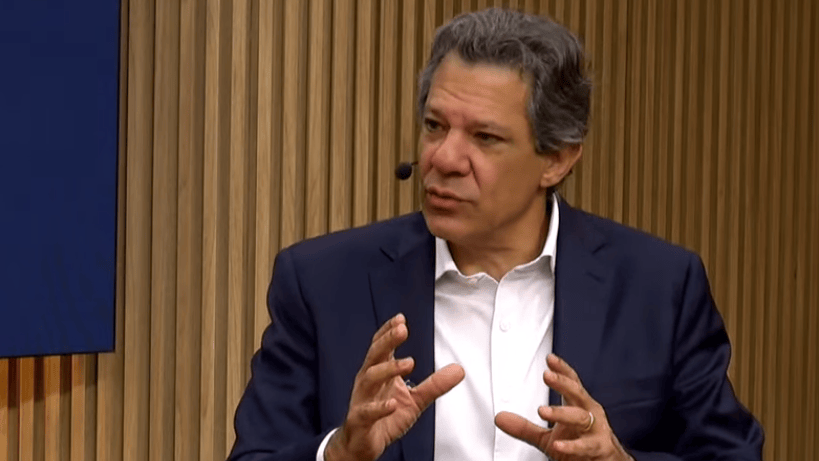
Sao Paulo gubernatorial candidate Fernando Haddad has rejected suggestions that the outcome of the state election will harm President Luiz Inacio Lula da Silva's re-election campaign.
Speaking on Thursday during an interview hosted by the news website Metropoles, Haddad said the race for the Palacio dos Bandeirantes, the seat of the Sao Paulo state government, will not necessarily have a direct impact on Lula's national bid.
Interviewers asked the Workers' Party candidate whether the Sao Paulo contest could finish in the first round and weaken Lula's campaign platform in Brazil's largest electoral college. Haddad dismissed any automatic link between the two races. He recalled that the governorship of Sao Paulo was decided in the first round in the 2006, 2010, and 2014 elections without preventing Lula from winning the presidency.
Addressing whether the state race could end in the first round, Haddad said that with only two candidates running, such an outcome was entirely possible. He remarked that the race would have to be extraordinarily close for a single percentage point to make a difference, but maintained that past state outcomes proved there was no automatic fallout for Lula's re-election.
Poll numbers and runoff rules
His comments came a day after the release on Wednesday of a fresh Quaest poll on the Sao Paulo election. The survey showed Republicanos candidate Tarcisio de Freitas leading with 44 percent of voting intentions, while Haddad registered 27 percent.
Haddad argued that the structure of the state election differs fundamentally from the presidential contest. While the national race features multiple competitive candidates that increase the likelihood of a second round, the Sao Paulo ballot is a two-person race. Under Brazilian electoral rules, executive contests go to a runoff only if no candidate secures an absolute majority of valid votes, meaning a two-candidate field is naturally resolved in the first round.
Haddad said that figures on the far right were eager to promote the idea that an early state finish would hurt the president, but insisted that the situation in Sao Paulo was dictated by electoral legislation. He added that even if the state race concludes on October 4, it does not mean Lula will lose momentum in Sao Paulo during a potential second round of the presidential election.
National alliances in Sao Paulo
The link between state and federal campaigns has become a dominant theme in the final days of the Sao Paulo race. In recent days, de Freitas has stepped up his involvement in Senator Flavio Bolsonaro's Liberal Party campaign for the Planalto presidential palace, openly urging voters to connect their support for his gubernatorial candidacy with backing for the senator.
Sao Paulo is Brazil's most populous state and its economic engine, housing more than 30 million voters who form the country's most influential electoral base. The Palacio dos Bandeirantes governorship has long been a pivotal prize in Brazilian politics, frequently acting as a counterbalance to federal power in Brasilia. Haddad, a former federal education minister and former mayor of the city of Sao Paulo, represents the leftist Workers' Party, which has historically struggled to capture the state executive despite strong national showings.
Haddad continues to treat Lula as his chief national partner in the contest for the state government. With the first round set for October 4, the Workers' Party nominee is concentrating his efforts on narrowing the polling gap with de Freitas before voters head to the ballot box.