Brazil's Ministry of Health, through the Sistema Único de Saúde (SUS), the country's public health system, held a national "D-Day" campaign on Saturday, November 28, against dengue, zika and chikungunya. The effort combined the release of sterile mosquitoes with mosquitoes carrying a bacteria that interferes with the development of the three viruses, across 11 states.
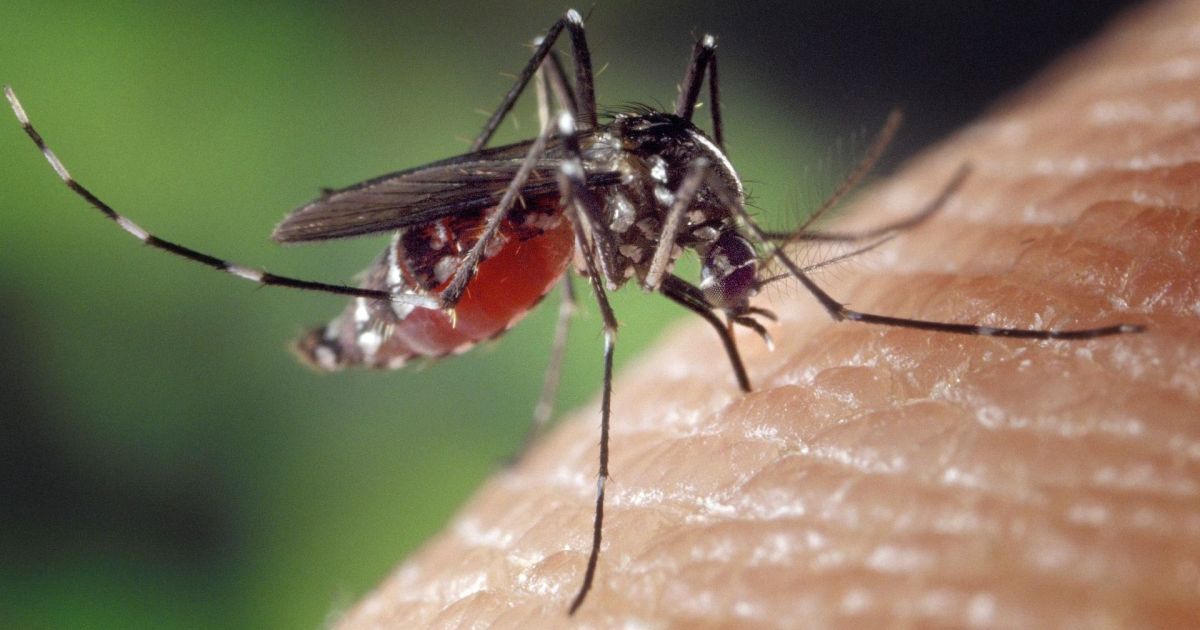
Dengue, zika and chikungunya are viral diseases spread mainly through the bite of the Aedes aegypti mosquito, which breeds in standing water. The insect is the common target of all the prevention efforts included in Saturday's campaign.
The mobilization also included a national prevention campaign that sent personalized messages through WhatsApp and the government's Gov.br channel to more than 30 million Brazilians, advising them on how to stop the mosquito from breeding and how to prevent the diseases.
Alongside educational activities, the ministry highlighted the release of mosquitoes carrying the Wolbachia bacteria and of sterile insects in an indigenous territory in Amambai, in the state of Mato Grosso do Sul. In Garanhuns, in the state of Pernambuco, the first release of mosquitoes carrying the bacteria was also scheduled for Saturday.
From January to October this year, Brazil recorded 489,100 probable dengue cases, a 67% drop compared with the same period in 2025, when 1.5 million cases were counted. The country has now logged two consecutive years of declining case numbers.
The campaign aims to get more people involved in controlling the Aedes aegypti mosquito as the period of highest transmission of these diseases approaches. Because of the possible effects of El Niño, the climate pattern that favors mosquito breeding, the Ministry of Health updated its National Contingency Plan for the three diseases.
Removing containers that can collect standing water remains the main way to prevent the mosquito from breeding, and officials say it requires joint effort from public managers, health services, disease-control agents and residents.
What is the Wolbachia method?
The technique involves releasing mosquitoes carrying Wolbachia, a bacteria naturally found in many insect species that poses no risk to human health or the environment.
When present inside a mosquito, Wolbachia interferes with how the viruses develop, making it harder for them to multiply and spread. After release, the mosquitoes carrying the bacteria breed with wild mosquitoes already in the environment, passing Wolbachia on to future generations.
Over time, the bacteria becomes established in the local mosquito population, reducing its ability to transmit the viruses and helping lower the number of cases and their impact on public health. Scientific studies carried out in Brazil have shown the method is effective at reducing arbovirus cases.
Results in Niterói, Campo Grande and Belo Horizonte
In Niterói, in the state of Rio de Janeiro, an assessment carried out in 2025 found an 89% reduction in dengue cases compared with the period before the intervention. In Campo Grande, in Mato Grosso do Sul, a study published in 2026 pointed to an estimated 63.2% reduction in the disease.
In Belo Horizonte, in the state of Minas Gerais, results presented this November showed a 68.5% drop in dengue infections and a 73.3% drop in chikungunya infections among children in areas where Aedes aegypti mosquitoes carrying Wolbachia had been released.
Expansion of the program
According to the Ministry of Health, the Wolbachia method already benefits 5.94 million Brazilians across 16 cities that have completed the mosquito releases. Another 44 municipalities are at different stages of implementation.
This year, the ministry secured funding to produce enough Aedes aegypti mosquitoes carrying Wolbachia to directly cover around 10 million people. For 2027, the ministry plans to continue expanding the strategy, with financing to benefit another 10 million people.
Dengue vaccine rollout
SUS offers the dengue vaccine to children and adolescents aged 10 to 14, the age group set for vaccination in the public health network. More than 3.6 million doses were given in 2025, and more than 5.1 million doses have been administered so far in 2026.
At the end of October, Eder Gatti, director of the National Immunization Program (PNI), said almost 4 million doses of the dengue vaccine sent to municipalities across Brazil remained unused. At the same time, he said, more than 3 million adolescents had received only the first of the two required doses.
Separately, a new vaccine is being developed by the Butantan Institute, which is expected to become available again in 2027. The Ministry of Health suspended that vaccination after an analysis of the first 500,000 people vaccinated pointed to possible adverse events that had not previously been identified, including 42 severe reactions and two deaths that are under investigation.
What happens next
The Ministry of Health plans to expand the Wolbachia program to cover another 10 million people in 2027, and the Butantan Institute's vaccine is expected to become available again that year.
Test yourself
What method did Brazil use in its "D-Day" campaign against dengue, zika and chikungunya?
How much did probable dengue cases fall in Brazil from January to October 2026 compared with the same period in 2025?
Why did the Ministry of Health suspend the Butantan Institute's dengue vaccine?