European Union Ambassador Raúl Fuentes Milani hosted a reception for journalists and diplomats at the European Union's diplomatic residence in Santo Domingo, where he spoke about the war in Ukraine, the crisis in Haiti and the bloc's economic ties with the Dominican Republic.
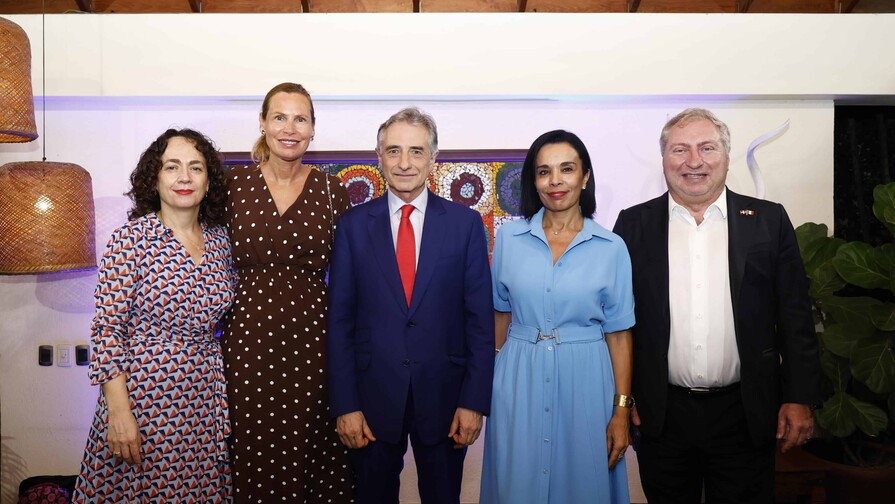
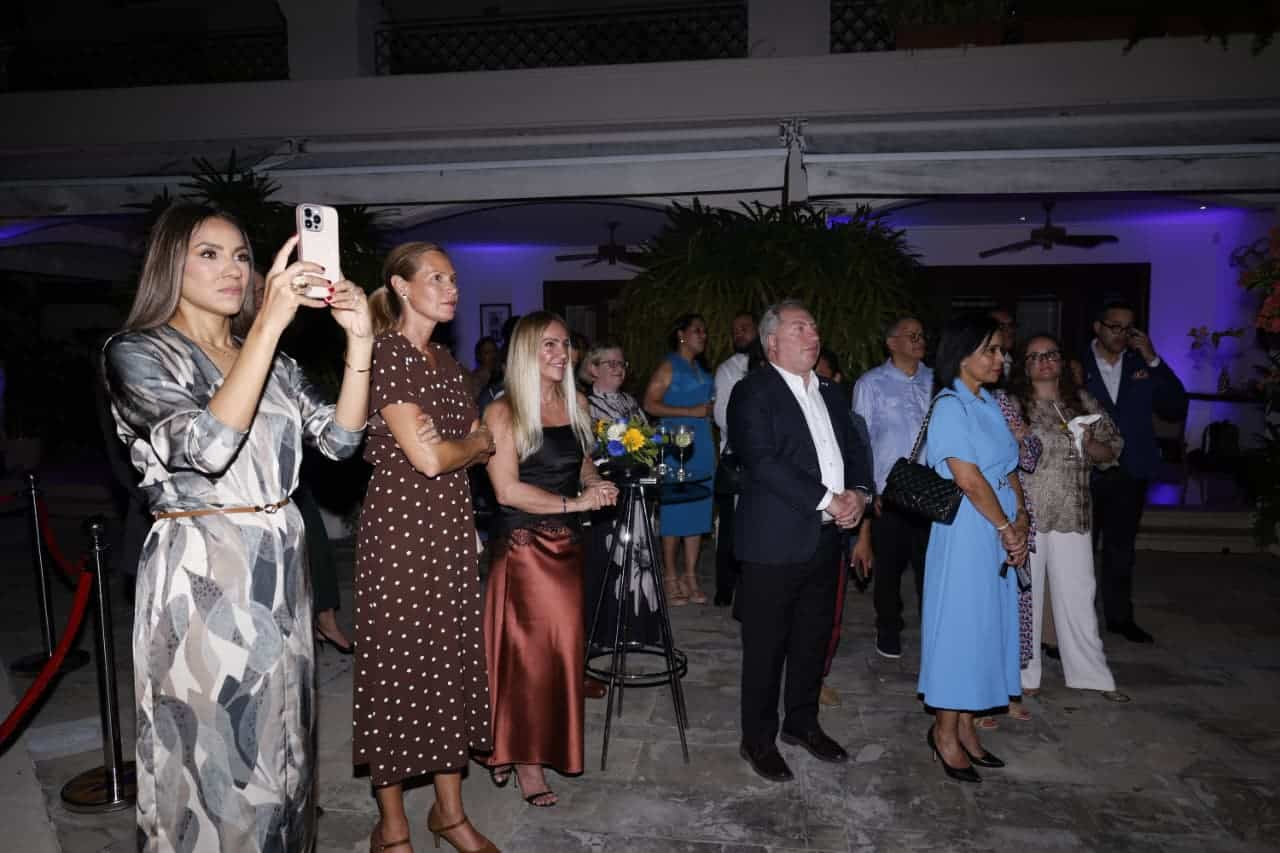
Among those pictured at the gathering were Lorea Arribalzaga, Maike Friedrichsen, Salima Saa and Sergio Maffettone, alongside Fuentes Milani himself.
The European Union is a political and economic union of 27 member states that coordinates policy on trade, foreign affairs and development aid, among other areas. Fuentes Milani serves as the bloc's ambassador to the Dominican Republic.
The event brought together a select group of media representatives and diplomats in a relaxed, informal setting. Guests shared laughter and spontaneous conversation throughout the evening, with some exchanges so engaging that no one wanted to look away for fear of missing a word, in what unfolded as an atmosphere of camaraderie.
Fuentes Milani welcomed each guest personally and with evident interest, showing the side of an approachable host who favors encounters that go beyond diplomatic formality.
The reception underscored the ambassador's efforts to build relationships with the domestic press corps as he continues settling into his post in the country.
A first meeting with the press
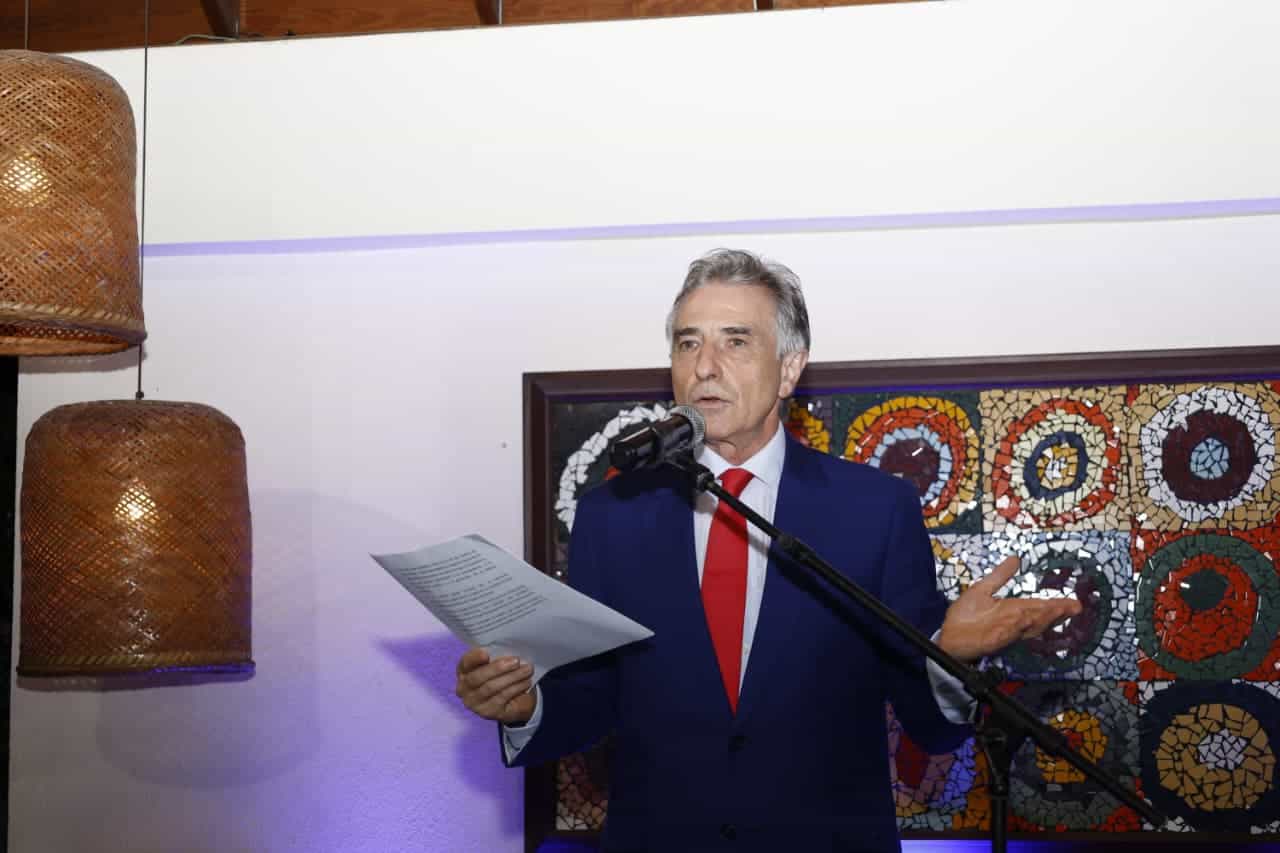
Later in the evening came the more formal part of the night: his speech. The ambassador explained that this was the first time he had brought together media representatives since arriving in the country, and he jokingly described the gathering as a kind of blind date.
The description made sense in context. Although he is, as a diplomat, a regular consumer of news and hears journalists discussed almost daily, he had not yet had the chance to meet them in person.
Ukraine and Haiti on the international agenda
Fuentes Milani used the occasion to lay out the European Union's vision for its relationship with the Dominican Republic. He said the bloc wants to be a partner in defending shared values such as sovereignty, the rule of law and multilateralism.
Multilateralism refers to countries working together through international institutions, such as the United Nations, rather than acting alone, a principle that has been central to the EU's foreign policy approach.
Turning to international affairs, he addressed the war in Ukraine, stating that Russia will not win the war. He also touched on the situation in Haiti, climate change and the challenges raised by artificial intelligence.
Russia launched a full-scale invasion of Ukraine in February 2022, and the war has continued since then, drawing in Western allies including the European Union, which has provided Ukraine with political, financial and military support throughout the conflict.
On Haiti, Fuentes Milani said the European Union maintains a cooperation commitment that includes 320 million euros in non-reimbursable aid through 2027, along with more than 50 million euros in humanitarian assistance. He defended the importance of multilateral efforts in helping stabilize the country.
Haiti has endured a severe security and humanitarian crisis in recent years, marked by gang violence and political instability that have displaced large numbers of people and disrupted basic services across the country.
International organizations have repeatedly called for coordinated international support to address the deteriorating security and humanitarian conditions there.
Economic ties with the Dominican Republic
On economic matters, Fuentes Milani noted that the European Union is the Dominican Republic's largest investor and its second-largest trading partner in goods and services. He also highlighted opportunities for cooperation in renewable energy, telecommunications, sustainable transport, water and sanitation.
The European Union has long positioned itself as a major donor and trading partner across Latin America and the Caribbean, often channeling cooperation funds toward infrastructure, governance and sustainability projects.
The European Union's trade relationship with the Dominican Republic is governed in part by the Economic Partnership Agreement between the EU and the Caribbean Forum of African, Caribbean and Pacific States, known as CARIFORUM, which aims to boost trade and investment between the two regions.
The Dominican Republic shares the island of Hispaniola with Haiti and is the largest economy in the Caribbean, with close trade and diplomatic ties to both the United States and the European Union.
Press freedom and the role of journalists
Fuentes Milani closed his remarks by addressing the media directly. He recognized the role of journalists in transparency, accountability and building an informed public debate.
He said that in a time of growing disinformation and polarization, free journalism takes on even greater importance, calling press freedom an indispensable condition for the functioning of democracy.
Press freedom has faced growing pressure in many parts of the world in recent years, with journalists confronting threats that range from online harassment to censorship and violence, according to international media watchdogs.
Test yourself
What did Raúl Fuentes Milani say about the war in Ukraine?
How much non-reimbursable aid did the EU commit to Haiti through 2027?
According to Fuentes Milani, what role does the EU play in the Dominican Republic's economy?
Have your say
How important do you think a free press is to a functioning democracy?
Where it happened
Santo Domingo, Dominican Republic