

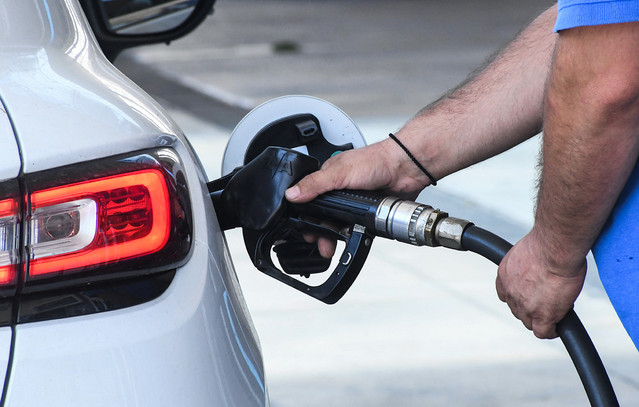
The Greek government will extend a direct pump subsidy on diesel fuel by 20 cents per liter, the prime minister announced during a Cabinet Council meeting on Wednesday morning.
The economic support package combines state intervention with refinery discounts and will apply for the first half of October. Government officials stated that the rate of support for the remainder of the month will be determined and announced on October 14.
The measure comes as fuel prices at Greek service stations continue to rise rapidly. Average nationwide retail diesel prices jumped by 19.3 cents per liter in under a month, rising from 2.023 euros per liter on August 31 to 2.216 euros per liter on September 28.
Greece relies heavily on imported crude oil and refined petroleum products to meet its domestic transport and heating needs. Fuel in the country carries significant tax burdens, making retail pump prices particularly sensitive to shifts in global crude markets and refinery profit margins.
Surging retail diesel costs
Consumer savings at the pump will depend not only on government aid but also on refinery pricing and global energy market movements. International crude prices have experienced sharp fluctuations in recent weeks, placing growing pressure on household budgets and transport businesses.
Greek financial authorities face a difficult balancing act between mitigating high energy costs for citizens and maintaining fiscal discipline. European Union institutions issued a clear warning ahead of the European Council summit scheduled for October 15 and 16, emphasizing that national energy crisis interventions must remain temporary, targeted, and strictly controlled.
European financial governance guidelines urge member states to avoid returning to broad horizontal subsidies that bloat public deficits. Brussels has encouraged governments to phase out generalized relief measures in favor of targeted assistance to keep national budget trajectories aligned with debt reduction goals.
Winter heating oil relief package
The government faces its next major policy test on October 14, when it plans to outline a comprehensive winter heating support package. The announcement comes just one day before Greece's heating oil market officially opens on October 15.
Officials plan to allocate an estimated 320 million euros for winter heating aid, up from 270 million euros allocated during the previous year. The expanded package represents an increase of roughly 20 percent and aims to keep starting retail heating oil prices below 1.75 euros per liter.
The upcoming scheme will provide direct sales price relief alongside an enhanced heating allowance. Financial support will cover households heating their homes with natural gas, electricity, firewood, and wood pellets, in addition to traditional heating oil consumers.
Greece provides annual targeted heating grants to help low and middle income families cope with winter climate demands. Grant amounts vary depending on local weather conditions across the country, with households in colder northern and mountainous regions receiving higher baseline payments.
Tax adjustments and market outlook
Starting October 15, Greece will also enact its standard annual reduction in the Special Consumption Tax on heating oil. The seasonal tax rate will drop from 410 euros down to 280 euros per 1,000 liters to help lower consumer entry costs.
While seasonal excise tax cuts provide predictable downward pressure on prices, economic officials noted that tax relief alone cannot offset a major surge in global crude prices. The ultimate cost to households when the heating season opens will depend on international market trends, state subsidy levels, and refinery discounting.


