

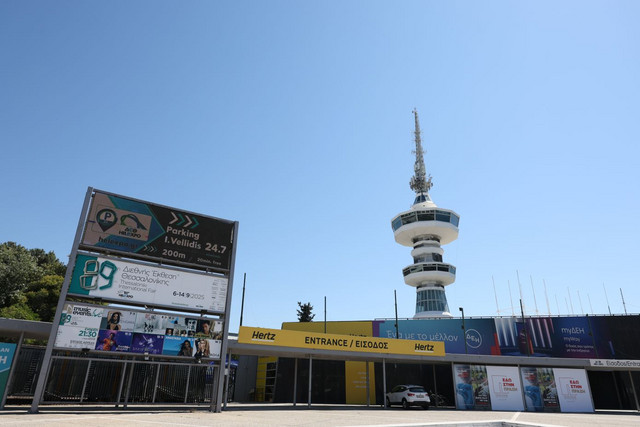
The Greek government has unveiled a package of direct financial aid and tax relief worth more than 2.8 billion euros, announced at the Thessaloniki International Fair, with the first payments due before the end of 2026.
More than 600 million euros of the package takes effect from late 2026, with a further 2.2 billion euros of measures following in 2027. Cumulatively, the government said, the measures will put an extra 3.5 billion euros into the pockets of 2.2 million beneficiaries over the 15 months to the end of 2027.
According to the announcements, the measures are considered settled and will be enacted immediately, with a direct effect on the disposable income of households and businesses.
The Thessaloniki International Fair is an annual trade exhibition held every September in Greece's second city, where the prime minister traditionally sets out the government's economic policy programme for the coming year.
Renters and Regional Public Workers
The rollout begins with tenants. From 25 September 2026, doctors, nurses and teachers working in Greece's regions get double rent support, paid retroactively for the 2024 tax year. A rent rebate for 2025 leases follows on 30 November 2026, under widened income limits:
- Single people: threshold rises from 20,000 to 25,000 euros
- Married couples: threshold rises from 28,000 to 35,000 euros, plus 5,000 euros per child
- Single-parent families: threshold set at 39,000 euros, plus 5,000 euros for each child after the first
The measure covers around one million tenants, or 85% of the total, including about 70,000 new beneficiaries. Doctors, nurses and teachers in the regions also get a double rent refund for 2025 on the same date, meaning they will have received the equivalent of three rent refunds between September and November.
Pensioners
Pensioners are among the groups with the most measures in the package. On 30 November 2026, an annual payment rises from 300 to 400 euros net and is extended to all pensioners over 65. The same amount goes to widows and widowers over 60 who receive only a widow's pension, to people with disabilities, and to uninsured elderly people, taking total beneficiaries to about 2.2 million, roughly 270,000 more than under the previous system.
In late December 2026, before Christmas, pensions for January 2027 will be paid at increased rates, calculated on inflation and growth without offsetting the "personal difference" some pensioners retain. The increase is currently estimated at 2.6% to 2.8% and applies to all pensioners.
As an example given by the government, a pensioner with 10,000 euros in annual taxable income and 823 euros net monthly income would receive 208 euros net from the inflation-and-growth rise plus 400 euros from the November payment, a combined 608 euros extra a year, roughly three-quarters of a monthly pension.
From 1 January 2027, disability benefits paid by OPEKA and e-EFKA will be indexed annually, having previously stayed fixed. From 2026, the scheduled 50% cut to widow's pensions after three years is scrapped, and the national pension for death will keep being paid even to recipients who also draw a pension in their own right. Public sector pensioners hit by the earlier cut will see their pensions rise by an average of about 450 euros as the lost national pension is restored.
Public Sector Pay
In December 2026, public employees with three children will see their monthly pay rise through reduced or scrapped tax withholding. From 1 January 2027, the tax rate falls to zero for annual incomes up to 20,000 euros, covering salaries below 1,665 euros a month.
From April 2027, all public employees get an across-the-board rise linked to the minimum wage increase, worth around 40 euros gross. A further 80 euros gross a month follows from the December 2027 and January 2028 payroll.
In December 2027, public employees will also receive a Christmas bonus of 500 euros gross for the first time in 15 years, paid to everyone including special pay scales such as police, judiciary and teachers, with no income criteria. Doctors, nurses and teachers in the regions additionally get a double rent payment in November 2027 for rents paid in 2026.
As an example, a 40-year-old public employee with two children on a gross monthly salary of 2,000 euros (1,447 euros net) would receive 562 euros extra net over 2027, made up of a 327-euro Christmas bonus and 235 euros from the minimum-wage-linked rise. In 2028 the same employee would receive 964 euros extra: the 327-euro bonus plus 637 euros from the pay rise.
Private Sector Wages and Tax Breaks
For low-paid private sector workers, the first change comes in April 2027, when the minimum wage rises above 950 euros gross. It is due to reach 1,000 euros, or 1,300 euros with seniority increments, by January 2028. Measured against the 650-euro minimum wage of 2021, the total rise will reach 54%.
The increase pulls up linked benefits including unemployment benefit, maternity benefit and overtime pay. From April 2027, social security contributions in the private sector fall by a further 0.5 percentage points, with the full benefit going to the employee rather than being shared with employer deductions.
From March 2027, covering 2026 income tax returns, the tax exemption for tips rises from 300 euros a month to 6,000 euros a year, effectively exempting most seasonal hospitality workers from tax on that income.
From the 2027 tax year, the tax rate falls to zero on incomes up to 20,000 euros for employees with three children, benefiting about 87,000 of the 152,000 three-child families above the tax-free threshold, which rises from 14,364 to 25,364 euros. Even higher-earning three-child families gain, since the first 20,000 euros will not be taxed: a three-child parent earning 30,000 euros in 2027 would pay 1,800 euros less tax that year. Employees and pensioners see the benefit from January 2027; farmers and the self-employed see it in their 2028 tax returns.
Freelancers and Farmers
Self-employed professionals feel the first changes during the 2027 tax return period, from mid-March to mid-July. From the 2026 tax year, compliant freelancers are exempt from surcharges based on turnover and staff payroll when their minimum net income is calculated, provided they have filed all data through the myDATA platform, linked card terminals to cash registers, and committed no tax or labour violation in the past five years. Income tax for the self-employed is also being cut, at a budgetary cost of 402 million euros. From the 2027 tax year, the advance tax payment for sole proprietorships falls from 55% to 50%, affecting 2028 returns, and a 50% reduction in presumptive income calculations is extended to settlements of up to 2,000 residents, with special rules for taxi drivers.
For farmers, the first measure arrives on 1 November 2026, when the refund of the special consumption tax on agricultural diesel starts being applied directly at the pump rather than paid back later. From March 2027, tax settlements for 2026 income will show zero tax for incomes up to 20,000 euros, affecting about 47,000 of the 246,000 full-time farmers above the tax-free threshold; for a farmer without children, that threshold rises from 8,633 to 22,204 euros. All farmers gain further from the broader personal income tax reform already in force since 1 January 2026, reflected in settlements issued between mid-March and mid-July 2027.
Property Owners and Families
Property owners see their first change in mid-March 2027, with the ENFIA property tax bill. From 2027, ENFIA is abolished in settlements of up to 2,000 residents, or 2,200 in Western Macedonia, covering 131 additional settlements and around 62,000 more owners, taking the total to 12,855 settlements. From the 2026 tax year, an intermediate 25% rate applies to rental income above 12,000 euros, worth 90 million euros to landlords. Tax exemptions for vacant properties that are rented out, reduced tax for building upgrades, and VAT exemption on new buildings are all extended through 2027-2030 to encourage more long-term rental housing.
For parents, a "Piggy Bank for the New Generation" investment account launches in January 2027 for infants up to two years old, with the state matching parental contributions of up to 1,200 euros a year until the child turns 18, when the funds can be withdrawn. For births from 1 January 2026, the birth grant for large families rises by 1,000 euros per child, reaching 4,500 euros for four children, 5,500 for five and 6,500 for six. Nursery voucher payments rise 10%, income thresholds across all categories increase by 2,000 euros, and income criteria are scrapped for three-child families. The daily student food allowance rises from 2 to 3 euros, and from 2.45 to 3.50 euros in border and island regions.
First-time buyers gain from January 2027 through the "My Home III" scheme, a 2-billion-euro programme run through the Hellenic Development Bank offering low-interest mortgages, with widened criteria:
- Age limit: up to 55, from 50
- Maximum property value: 300,000 euros, from 250,000
- Maximum loan: 230,000 euros, from 190,000
- Financing: up to 90% of a property's value
- Family income allowance per child: 7,000 euros, from 5,000
Allowable square metres also rise for families with more than four children. From 2027, the property transfer tax for buyers from outside the European Union rises from 3% to 15%, intended to curb demand and price pressure facing Greek buyers.
Energy and Business Support
Household electricity bills benefit from 1 January 2027, when Public Service Obligation charges are halved, from 6.9 to 3.45 euros per megawatt-hour. Public investment in energy projects will also rise, from 6.2 billion euros in 2026 to 7 billion in 2027, 8 billion in 2028, 9 billion in 2029 and 10 billion euros by 2030.
Businesses gain from two new Hellenic Development Bank programmes launching in January 2027 or earlier: a 1.1-billion-euro loan scheme and a 400-million-euro guarantee scheme for small and medium-sized enterprises, expected to support 5 billion euros in total lending together with the banking sector. From March 2027, the business activity fee is scrapped in Greece's regions and in Thessaloniki, with a 50% cut in Attica in 2028 and full abolition in 2029. From the 2027 tax year, accelerated depreciation applies to investment in machinery, cutting the write-off period from ten to six years. From the 2028 tax year, the advance tax payment for companies begins falling by 5 percentage points a year, from 80% toward a target of 50% by 2034. The R&D Clawback refund for investment plans approved in 2026-2027 also rises, from 150 million to 200 million euros.


