

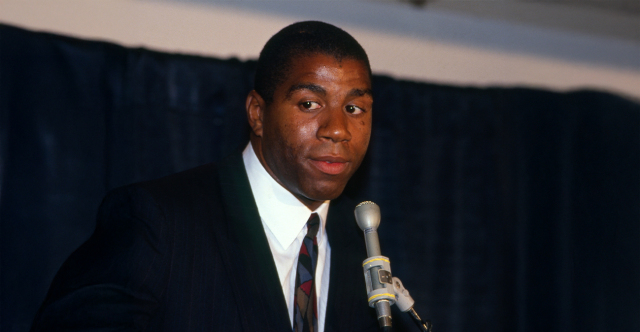
Earvin Magic Johnson stunned the sporting world on November 7, 1991, by announcing he had tested positive for HIV and was retiring from basketball.
The Los Angeles Lakers guard revealed his diagnosis at an emergency press conference, stepping away from the National Basketball Association at the height of his career.
His revelation brought immediate global shock, thrusting a devastating public health crisis into mainstream sports and transforming how millions of people understood the virus.
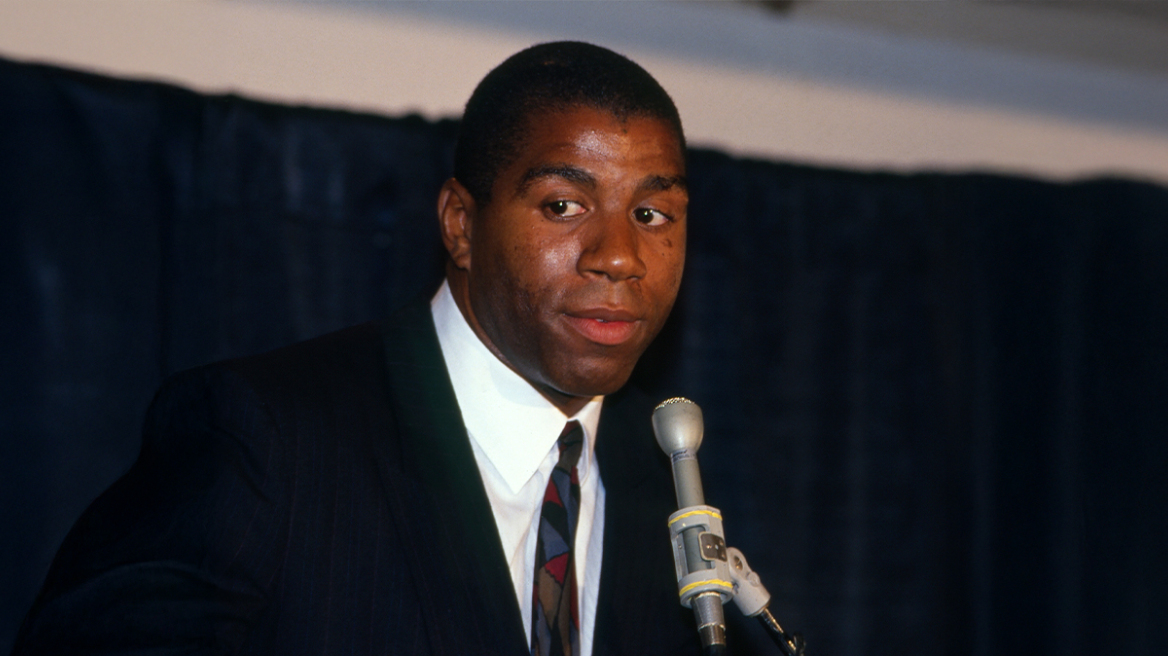
Although the diagnosis forced his immediate departure from professional competition, Johnson returned to international action the following year to win an Olympic gold medal at the 1992 Games in Barcelona, Spain, as a member of the original United States Dream Team.
Press conference announcement
Johnson appeared before television cameras alongside NBA commissioner David Stern and his longtime Lakers teammate Kareem Abdul-Jabbar to deliver the unexpected news.
Johnson began his address by stating that because of the HIV virus he had contracted, he would have to retire from the Los Angeles Lakers that day, according to records of the announcement.
The 32-year-old guard explained that his immediate priority would be protecting his health, while also using his international fame to educate the public and promote prevention.
He emphasised that no individual should consider themselves immune to infection, urging people everywhere to understand their vulnerability.
Johnson said that people always believe such things will not happen to them and will only affect others, adding that if it could happen to Magic Johnson, it could happen to anyone.
The announcement triggered immense grief and worry among his close associates, teammates and supporters across the globe. At the time, widespread public perception treated an HIV diagnosis as an automatic death sentence, because medical treatments were far more primitive than the therapies available today.
Widespread confusion also surrounded the medical reality of the condition. Johnson had tested positive for HIV, the human immunodeficiency virus, but had not developed AIDS, acquired immunodeficiency syndrome. Clarifying that fundamental distinction became an urgent educational priority for health authorities worldwide.
Public fear and misinformation
Johnson delivered his disclosure during an era when the AIDS epidemic generated intense public terror, deep social stigma and rampant misinformation.
A lack of accurate public information led to widespread prejudice, social isolation and severe discrimination against people living with the condition. Many individuals mistakenly believed that casual daily interactions could spread the disease.
Rumours led people to fear that the virus could spread through a simple handshake, an embrace or the sharing of everyday household items.
In reality, medical science confirmed that HIV cannot pass between people through sweat, saliva, casual social contact or shared eating utensils.
Johnson became one of the most visible global figures to dispel those harmful misconceptions. His stature as an elite, beloved athlete proved that HIV was not confined to any single demographic group, but represented a universal public health challenge requiring education, prevention and personal responsibility.
By speaking candidly about his diagnosis, Johnson forced millions of people worldwide to confront a serious health reality that many institutions and families had previously chosen to ignore.
Showtime era and playing career
Before his sudden departure from the court, Johnson had completely reshaped professional basketball by redefining the responsibilities of the point guard position.
Standing at 2.06 metres tall, or 6 feet 9 inches, he possessed extraordinary height for a primary ball handler. His towering frame, coupled with brilliant peripheral vision and pinpoint passing skill, allowed him to orchestrate attacks with unprecedented flair.
Johnson served as the on-court architect of the famous Showtime era for the Los Angeles Lakers throughout the 1980s. The team thrilled crowds across North America with lightning fast breaks, dazzling transition play and relentless offensive energy.
Forming a potent leadership core alongside Abdul-Jabbar and forward James Worthy, Johnson guided the Lakers to five NBA championships, capturing titles in 1980, 1982, 1985, 1987 and 1988.
His individual achievements matched his team success. Johnson claimed the NBA regular season Most Valuable Player award three times and collected three NBA Finals MVP trophies.
He earned selection to 12 NBA All-Star Games and secured a spot on the All-NBA First Team on nine separate occasions during his dominant run.
Over the course of his professional career, Johnson compiled per-game averages of 19.5 points, 11.2 assists and 7.2 rebounds, demonstrating a complete statistical profile that set him apart from any contemporary playmaker.
Return to basketball and Dream Team
Although forced into early retirement, Johnson never relinquished his passion for the sport, making a sensational return to the court just months later.
In early 1992, fans voted him into the NBA All-Star Game in Orlando, Florida. Johnson produced an electrifying display, racking up 25 points and nine assists to win the All-Star Game MVP award amid emotional ovations from teammates and rivals.
Later that summer, Johnson travelled to Barcelona as a co-captain of the United States men's Olympic basketball team, known around the globe as the Dream Team.
Sharing the court with superstars including Michael Jordan, Larry Bird and Charles Barkley, Johnson helped power the American squad to an undefeated run and the Olympic gold medal, cementing the roster as one of the most dominant sides in sports history.
Johnson stayed closely tied to the Lakers organisation following his Olympic triumph. In 1994, he took over as head coach of the Los Angeles franchise for a brief spell from the sideline.
He then launched a playing comeback in January 1996, suiting up for the Lakers once again before officially concluding his active career at the end of the 1995-1996 campaign.
Magic Johnson Foundation and advocacy
Johnson's enduring legacy extends far beyond his achievements on the basketball hardwood. Following his 1991 diagnosis, he dedicated his life and global platform to combating the spread of HIV and AIDS.
He established the Magic Johnson Foundation, an organisation created to fund public education initiatives, finance community health services and expand access to medical treatment for underserved populations.
Johnson became a passionate advocate for safer sexual practices and healthy lifestyle choices. He took part in international public awareness campaigns and fought tirelessly to eliminate the social ostracisation faced by people living with the disease.
In the decades since his announcement, scientific advancements have radically altered the prognosis for HIV patients. The development of advanced antiretroviral therapies has turned what was once considered a fatal condition into a manageable chronic illness, allowing individuals to live long and fulfilling lives.
More than three decades after he faced the press in Los Angeles, Johnson remains a vital symbol of resilience, illustrating how public honesty and dedicated education can dismantle social stigma and save lives.


