A new party was born in the Basque Country this week: Euskal Langileen Ezkerra (ELE), a Basque nationalist, or abertzale, formation that describes itself as leftist, pro-sovereignty and openly anti-woke. According to its own organisers, the party emerged to respond to immigration it described as massive and uncontrolled, which it said had been encouraged by the Basque government.
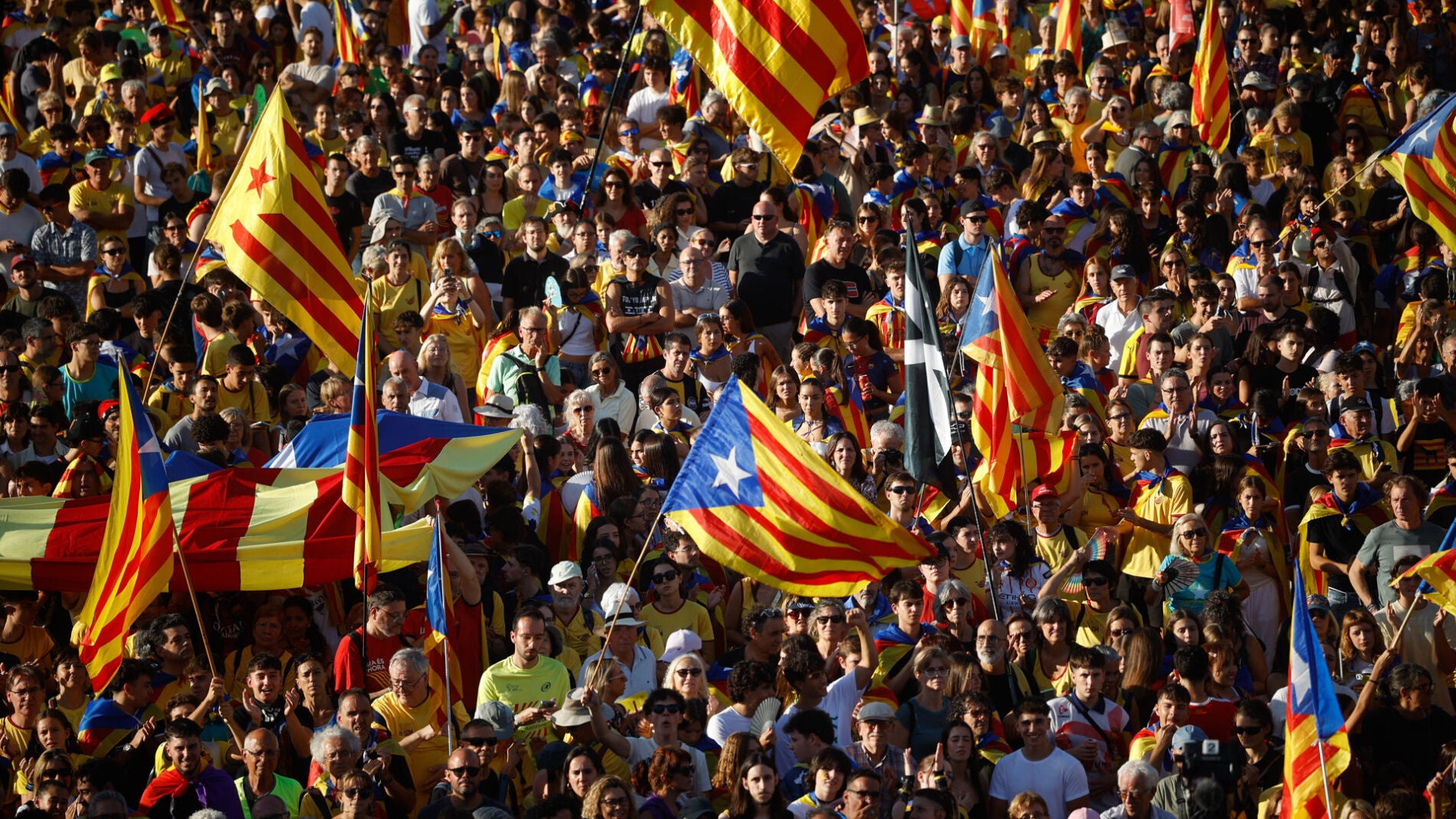
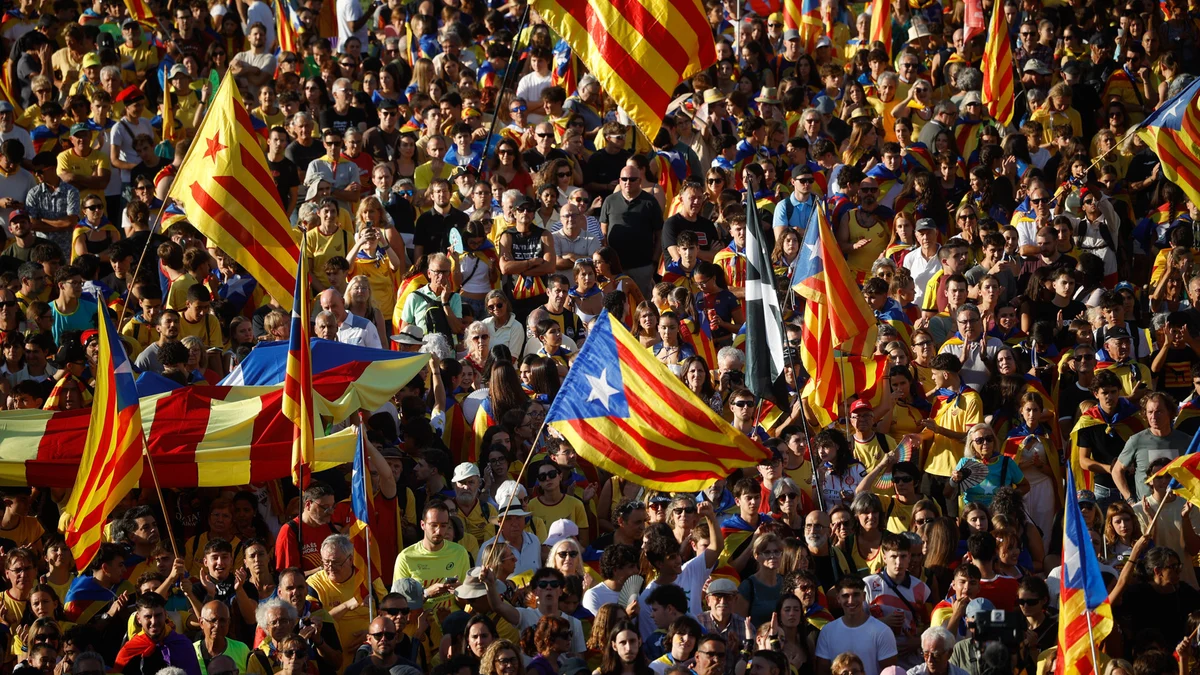
The launch immediately recalled Aliança Catalana, the Catalan party led by Sílvia Orriols, which was founded on the same two premises: opposing uncontrolled immigration and taking an openly anti-woke position.
Although the two parties differ in several respects, their emergence points to a shared tension inside the independence movement. It is a clash between a left that has absorbed much of contemporary progressivism and newer currents that believe this shift has sidelined the defence of national identity, which was supposed to be nationalism's main reason for existing.
Decades of Nationalist Identity Politics
For decades, Catalan and Basque independence movements built their message around defending a collective identity, language and culture distinct from Spain's. Sabino Arana, founder of the Basque Nationalist Party (PNV), conceived the Basque nation in ethnic and racial terms, linking belonging to the Basque people with purity of blood and surnames. Early nationalist circles went as far as requiring members to prove they had four Basque surnames.
As the academic Julen Zabalo noted in 2004, nationalist parties, despite their differences, shared a concept of the nation based on defining a community of their own that was distinct from everyone else, which meant drawing boundaries that excluded ethnic groups or populations seen as outsiders.
Multiculturalism as a Political Strategy
Many nationalist leaders later embraced progressive politics in what appeared to be an effort to weaken the presence of the Spanish language. Multiculturalism offered a politically correct, democratically respectable way of resisting what nationalists saw as Spain's cultural assimilation of their regions.
For nationalist parties, the arrival of residents who did not speak Spanish as a first language gave an opportunity to expand the use of Catalan, the best documented case, and to stop new arrivals folding directly into the Spanish-speaking community. The academic Adolfo Campoy-Cubillo, in a 2013 study on how Maghrebi communities were represented in Catalonia, wrote that Catalan nationalism viewed the assimilation of immigrants into Castilian culture as an obstacle to its national project, and that schooling immigrant children in Catalan helped reduce that risk and preserve the linguistic balance Catalan authorities considered necessary for the language's survival.
These new formations, however, argue that the greater danger was never Spanish, which they also criticise, but the independence movements themselves. They say those movements' outright opposition to Spain ended up fuelling migration tensions in their own territories while they backed any woke position purely to set themselves apart.
Not Allies of the Spanish Right
These new parties should not be confused with more moderate nationalist figures, nor read, as some interpretations have suggested, as uneasy allies of Spanish conservatives. The professor Lluís Orriols, in his analysis "De Puigdemont a Orriols: auge de la derecha radical en la Cataluña postProceso," describes them as a reinvention of extremist Catalan nationalism under the banner of the new culture wars that, whether by coincidence or strategy, the right has championed in recent times.
Links to ETA and a Push for Independence
ELE is driven by a journalist who built much of his career at EGIN, regarded as a mouthpiece for the Basque separatist group ETA, and at GARA, a publication also linked to the abertzale independence movement.
Sílvia Orriols, founder and leader of Aliança Catalana, systematically refuses to speak Spanish, and her platform includes a unilateral declaration of independence should her party win an absolute majority in the Catalan Parliament.
Old Nationalism in New Wrapping
This anti-woke turn has not made these parties less nationalist. Instead, it has given old obsessions a new wrapping. What they now present as a fight against progressivism remains, to a large degree, a demand for cultural homogeneity and a national identity defined against everything considered foreign.
They are not new allies of the Spanish right, but heirs to an independence tradition that has found in the 21st century's culture wars a chance to reinvent itself. Catalan and Basque nationalism have, in effect, split into two camps: one trying to save its nation by making it multicultural, the other by reviving the near-racial criteria of more than a century ago. Both remain convinced, at bottom, that the goal is to break away from Spain.
Test yourself
What is Euskal Langileen Ezkerra (ELE)?
Who founded and leads Aliança Catalana?
What does Sílvia Orriols' political platform include?
Have your say
Do you see anti-woke nationalist parties as a genuine ideological shift or a rebranding of older nationalism?