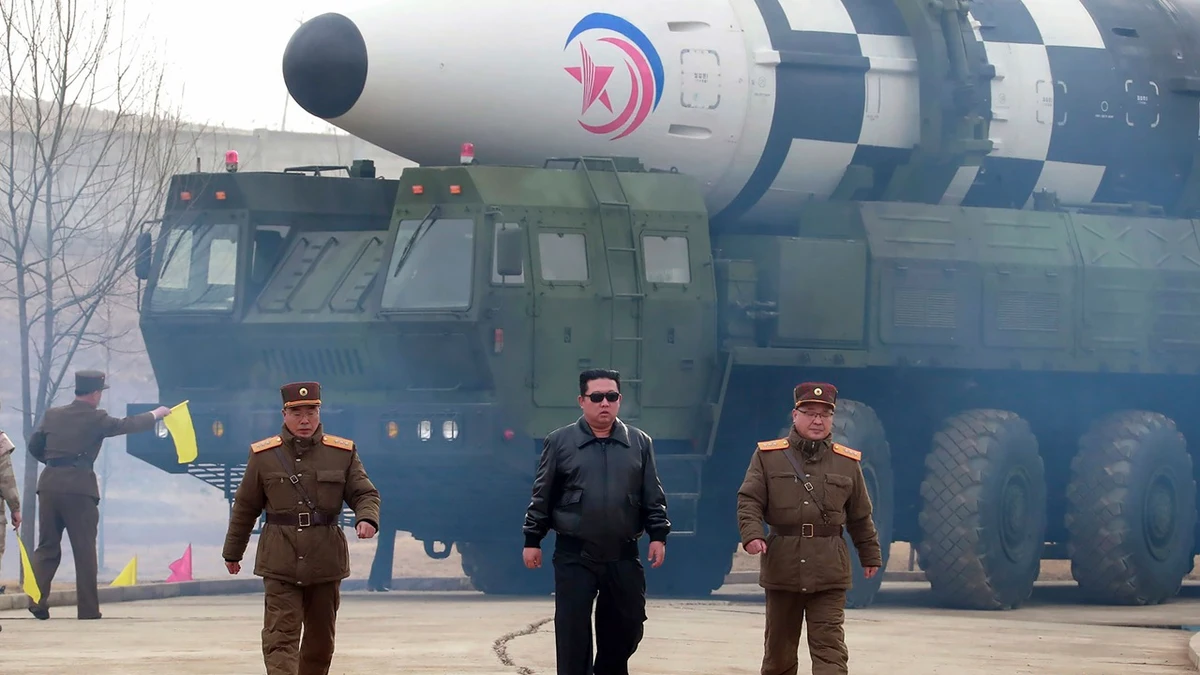
North Korea has tested a new strategic cruise missile fitted with a dispersal warhead designed to saturate targets across six hectares, state media reported.
The country announced on November 3, 2026, that the trial took place the previous day under the supervision of General Kim Jong-sik, a senior official on the Central Military Commission of the ruling Workers' Party of Korea.
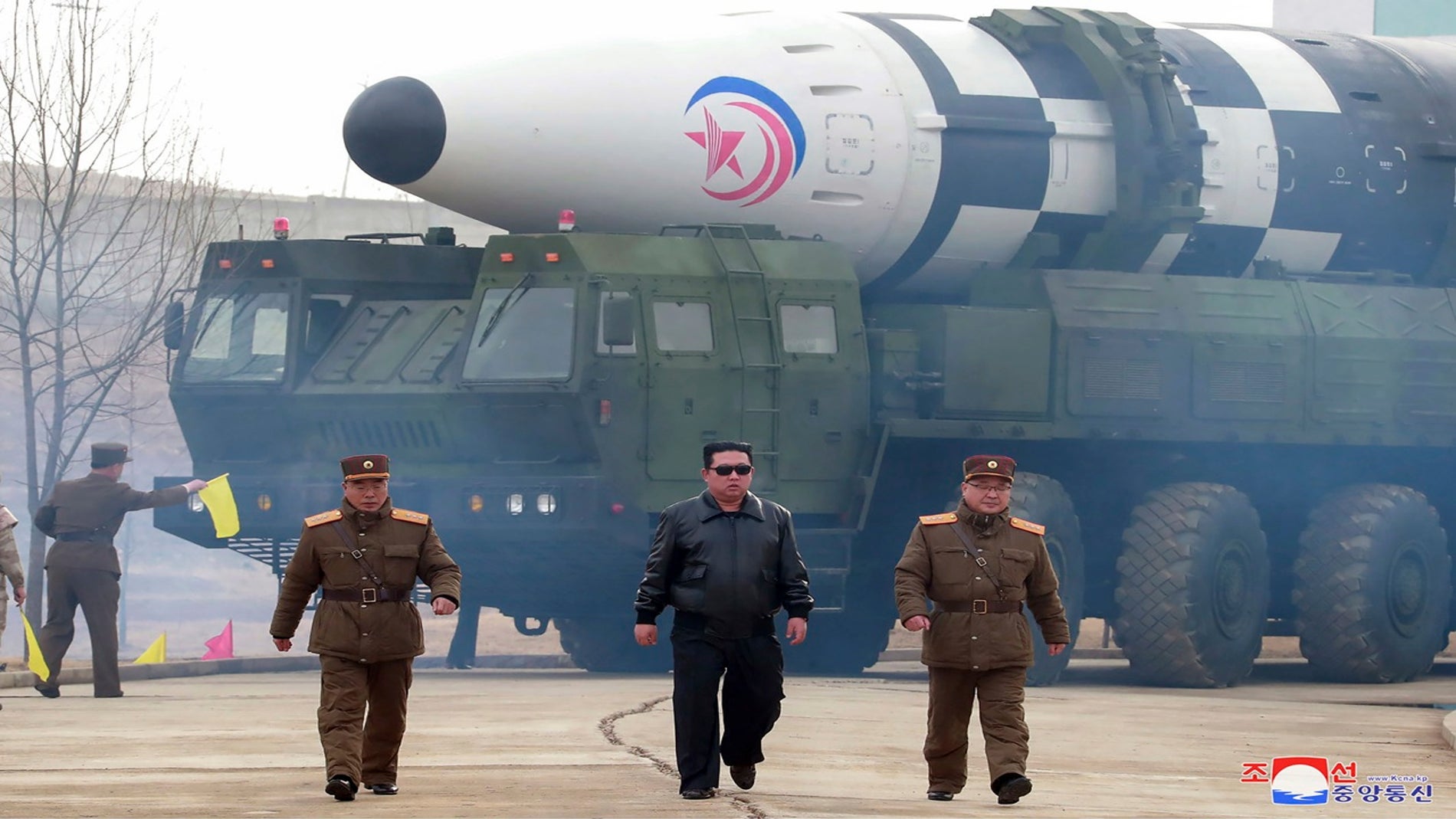
According to the state-run Korean Central News Agency, the trial evaluated both the explosive power of the medium-sized warhead and the flight characteristics of the missile during a vertical attack. North Korea's Missile Administration claimed that the payload could devastate an area between five and six hectares, equivalent to roughly 50,000 to 60,000 square metres, by releasing a heavy concentration of explosives.
Pyongyang did not disclose key specifications of the test, withholding details about the flight path, total range, and environmental conditions of the launch. Military analysts emphasize that the destruction radius remains an unverified figure provided solely by North Korean authorities rather than an assessment confirmed by independent inspectors.
Dispersal warheads and terminal guidance
The key development claimed by Pyongyang is the deployment of a dispersal warhead on a low-flying cruise missile. Unlike standard munitions that focus their destructive energy on a single impact point, a dispersal warhead carries multiple smaller submunitions. These bomblets spread across a designated area, making the weapon suited for striking dispersed targets such as troop formations, logistics hubs, and airbase runways.
North Korean weapons engineers also stated that the test evaluated the projectile during a steep vertical dive. Technical agencies in Pyongyang claimed to have improved the missile's terminal maneuverability, allowing it to adjust its descent angle to match the specific geographical contours of a target. While such capability could widen operational choices, available data remains insufficient to confirm whether guidance accuracy or real-world effectiveness has substantially improved.
Strategic cruise missiles differ significantly from ballistic missiles in their flight profile and propulsion. Powered by air-breathing jet engines, cruise missiles travel at subsonic or low supersonic speeds while hugging the terrain at low altitudes to slip beneath radar coverage. Ballistic missiles, by contrast, rocket into the upper atmosphere or space along high parabolic arcs before plummeting toward their targets at hypersonic velocities.
The use of cluster munitions has long generated scrutiny across international defense communities due to the risk of unexploded bomblets leaving hazardous remnants on the ground. More than 100 countries have signed the Convention on Cluster Munitions prohibiting their stockpiling and use. However, major military powers, including North Korea, the United States, Russia, and South Korea, are not signatories to the agreement.
Expansion of North Korea's missile arsenal
The cruise missile launch occurred only days after North Korea announced another weapons trial involving a dispersal warhead mounted on a tactical ballistic missile. During that earlier test, Pyongyang claimed the ballistic system could saturate an area of between 12 and 13 hectares with explosive submunitions.
Taken together, the two consecutive tests reflect a concerted effort by the North Korean military to diversify the payloads fitted across its diverse missile classes. The Missile Administration stated that its objective is to engineer several varieties of specialized warheads and deploy them to operational frontline combat units before the end of 2026.
The Missile Administration operates as North Korea's central defense body tasked with directing research, industrial manufacturing, and procurement for the country's expanding missile inventory. Overseeing the launch was General Kim Jong-sik, a prominent rocket scientist who has served for years at the core of the state's strategic weapons development. General Kim holds a key seat on the Workers' Party Central Military Commission, the high-level organ that directs North Korea's armed forces.
Regional defense monitoring and verification
News of the test was reported internationally by agencies including Reuters, South Korea's Yonhap news agency, and the defense publication Interesting Engineering. Coverage across global outlets underscored that published technical claims rely almost exclusively on statements issued by the North Korean regime.
The South Korean military stated that it maintains comprehensive surveillance, tracking, and response readiness to deal with any potential security threats. South Korean forces operate advanced early warning radars, reconnaissance aircraft, and maritime monitoring systems in coordination with United States forces stationed in the region to track northern weapons tests.
The trial represents another milestone in Pyongyang's long-term modernization program, but defense analysts urge caution regarding North Korea's assertions. Experts note that the test does not prove the missile has attained the destructive potential, range, or operational reliability claimed by state media, with all three parameters still requiring independent verification.