

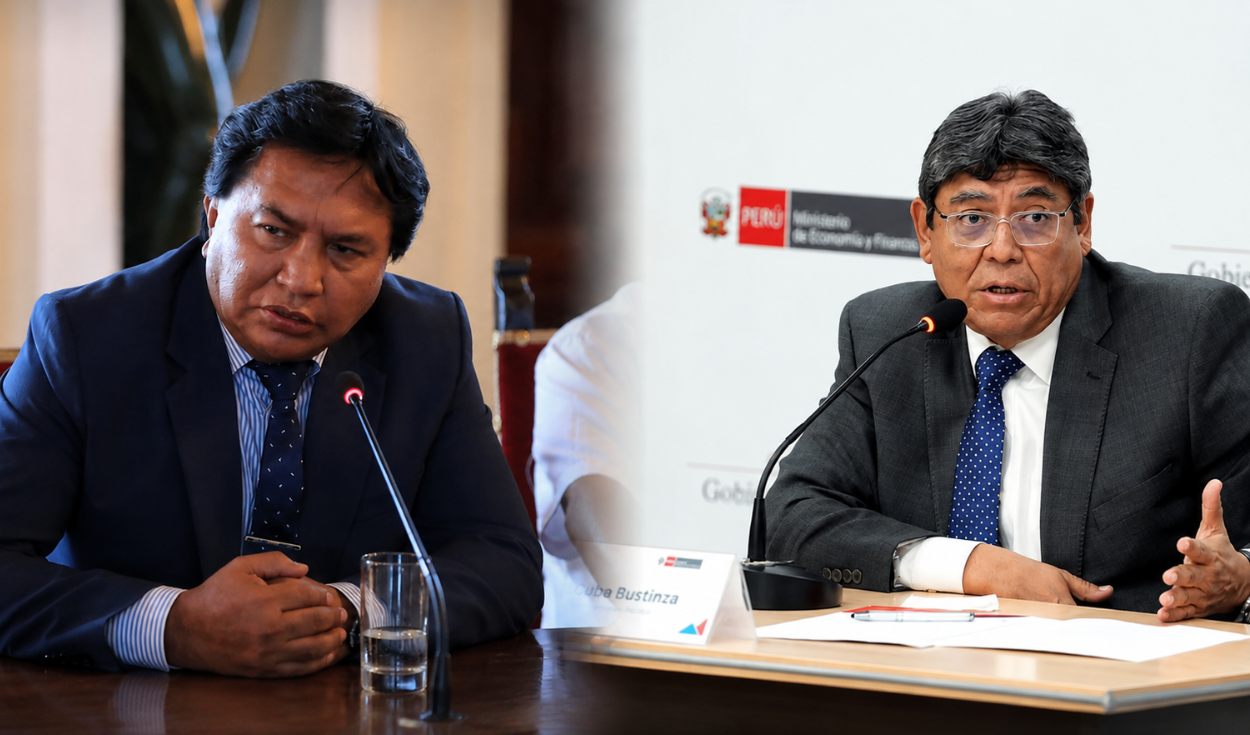
Lucio Castro, general secretary of Peru's main teachers union SUTEP, confirmed the group will meet Economy Minister Elmer Cuba next week to discuss pension increases.
The meeting, announced by Castro in an interview with La República, aims to address pension adjustments for retired and former educators across Peru, though the exact day and time remain to be confirmed.
Castro said the union decided to attend after Minister Cuba backed down from his initial stance, which had labeled the proposed pension rise as an illegal act and refused to process its implementation.
The Single Union of Education Workers of Peru, widely known as SUTEP, is the nation's primary labor organization representing public school teachers and educational staff. The Ministry of Economy and Finance oversees national budget planning, fiscal policy, and public sector compensation in Peru.
Ministerial position shift
According to Castro, Economy Minister Elmer Cuba modified his initial opposition to the regulation establishing higher pensions for retired teachers.
Castro stated that the minister originally declared the measure unlawful and insisted that his office would not process it. However, Cuba subsequently invited SUTEP to a formal meeting to discuss teacher pensions, indicating that the executive branch is now evaluating a rational pension increase.
The SUTEP leader said the union values the minister's decision to retreat from his initial position, opening a channel for direct negotiation.
The reversal follows public concern among retired educators over static pension payouts amid rising living costs in South America's fifth-most populous nation.
Union stance and economic priorities
Castro declined to specify a target figure or percentage for the pension increase prior to the meeting. He explained that SUTEP intends to evaluate the proposal presented by the Ministry of Economy and Finance before defining its official position.
The union leader recognized that the Peruvian state faces competing budget priorities. He specifically cited citizen insecurity and emergency funding required for prevention and logistical operations related to the El Niño climate phenomenon.
The El Niño phenomenon periodically brings heavy rainfall, coastal flooding, and agricultural disruptions to northern Peru, requiring substantial emergency state expenditure.
Because of these national challenges, Castro emphasized that negotiations must be rooted in dialogue and involve potential concessions from both sides.
He added that SUTEP hopes the talks will yield concrete agreements, noting that the union has not publicly promoted an alternative monetary figure to the amount set out in existing pension rules.
Proposed review of tax exemptions
During the interview, Castro outlined potential financing mechanisms to generate public funds for retired teachers' pension demands.
He called for a review of corporate tax exemptions currently granted by the state. Castro noted that approximately 426,000 teachers have paid fifth-category income tax on their earnings every year since 2017, arguing that the burden of funding public improvements should not rest solely on workers.
In Peru, fifth-category income tax is levied directly on formal payroll employees whose annual earnings exceed the national tax-exempt threshold.
Castro urged Congress to examine corporate tax benefits during the current legislative term under the principle of tax justice, estimating that closing corporate tax exemptions could return more than 20 billion soles to the Public Treasury.
Additionally, Castro argued that individuals and organizations operating in the private education sector should be required to pay taxes from which they have historically been exempt.
The union leader clarified that these revenue proposals represent SUTEP's policy recommendations rather than measures agreed upon with the Ministry of Economy and Finance.
Collective agreement and 2027 budget
The scheduled meeting with Minister Cuba will also serve to follow up on broader commitments made by the government to public education workers.
Castro recalled that SUTEP signed a collective agreement with the government on July 15. The agreement established commitments to improve working conditions, upgrade educational infrastructure, provide student nutrition, and expand training programs for workers.
SUTEP expects the executive branch to include these commitments in the 2027 Public Budget bill. Under Peruvian law, the executive branch must submit its annual national budget proposal for the following year to the Congress of the Republic by August 30.
Castro stressed that the August 30 deadline is critical, as the draft budget will reveal whether the government's signed commitments are supported by funding allocation.
Dialogue with the labor ministry
Castro also commented on recent public statements by Labor Minister Juan Sheput regarding potential talks with teachers and educational assistants.
The union leader stated that SUTEP remains willing to converse with any government authority proposing dialogue as a necessity.
However, Castro emphasized that future conversations must focus on addressing labor rights and structural problems in the education sector, rather than creating further political confrontation.


