Middle-aged people around the world are increasingly caught between raising children who still depend on them and caring for elderly parents who need care, according to Carlos Velo Higueras, a psychology professor at the Universidad Europea de Valencia (UEV) in Spain, who discussed the phenomenon known as the "sandwich generation" in an interview with the EFE news agency.
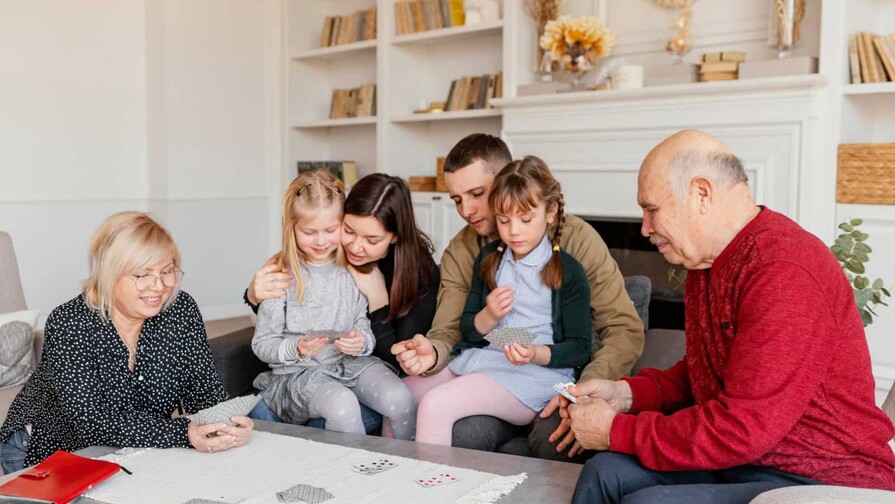
Velo said the phenomenon itself is not new, but it now tends to last longer because people are living longer, having children later, retiring later, and because children are leaving home later than in the past.
He added that the pressure felt by members of the sandwich generation does not depend only on their personal circumstances.
Multiple pressures at once
Velo pointed to economic and social factors that compound the strain, including longer commuting times, the gradual erosion of purchasing power for much of the population, and a rising ratio between productivity demands and workload over recent decades.
He said this combination of personal, economic and social circumstances narrows the time available for rest and the access to outside help, which in turn deepens the sense of fatigue and overload felt by the person responsible for family care.
In the workplace, Velo said the situation can limit a person's career path, increase absenteeism, push someone to cut their hours or turn down promotions and transfers, and in some cases lead them to leave their job altogether, noting that tiredness also affects performance at work.
He said the lack of time can also create tension at home, particularly when caregiving duties are not shared evenly among family members, a burden that in most cases falls on women, who are the main informal caregivers of dependent elderly relatives.
Mental and physical toll
When caregiving tasks fall on a single person, Velo said, that person has less time for themselves and may feel guilty for being unable to do everything, experiencing anticipated grief, conflicting feelings of love and resentment, social isolation and a loss of identity.
He said the strain can also damage physical health, citing disrupted sleep, a higher cardiovascular risk, a weaker immune response and reduced self-care among those affected.
To begin correcting the imbalance in responsibilities, Velo suggested making the division of labour visible by listing tasks, the hours they take and who carries them out, because, as he put it, what is not seen does not get shared.
He recommended turning to available resources such as social services, dependency assessments, day centres, telecare and associations of family caregivers, as well as delegating or outsourcing what is possible and accepting concrete help when it is offered.
Self-care should also be part of the daily routine, Velo said, stressing the importance of not neglecting sleep, physical activity and one's own medical appointments, and of setting aside even a brief moment for oneself.
A global phenomenon
Velo described the sandwich generation as a global phenomenon in its causes, though uneven in its intensity and form. He said it is present in southern European countries sometimes described as "familist" or Mediterranean, as well as in Asian countries such as China and Japan, where rapid population ageing combines with cultural norms of filial duty.
Asked about the age range of the sandwich generation, Velo said there is no universal definition, with scientific literature usually placing it between 40 and 59 years old, a criterion used by the Pew Research Center in the United States, while other authors extend the range to 35 to 54.
He added that women predominate both in caring for children and for elderly relatives, although this can vary by country.
The upside and downside of age
Velo said age brings cognitive resources that make people in this group more capable, resourceful and stable, but that this does not spare them from clashing with limited physical resources and time.
He said these are life stages that usually coincide with peak career success and productivity, which in many cases is cut short when family care demands are very high, requiring the person to rethink their self-image and personal expectations.
How each situation plays out, he said, depends above all on surrounding conditions such as formal support, workplace flexibility and how care is divided within the family, more than on age itself.
Velo said it is essential to involve and distribute responsibilities within the family, with members taking on different tasks or otherwise easing pressure in other areas.
He also said it is important to complement family care with formal resources and social services that give the caregiver some respite, such as home help, day centres, telecare, temporary stays in residential care and, where applicable, financial benefits.
Every family has its own social and material limits, so the way it copes can vary, Velo concluded, adding that the key point to keep in mind is that pushing any family member to the brink of physical or mental collapse tends to be harmful for everyone involved.
Test yourself
Who described the "sandwich generation" phenomenon to EFE?
What age range does scientific literature typically assign to the sandwich generation, according to the article?
According to Velo, who most often ends up as the main informal caregiver of dependent elderly relatives?
Have your say
How do you think caregiving for children and elderly parents should be shared?
Where it happened
Madrid, Spain