

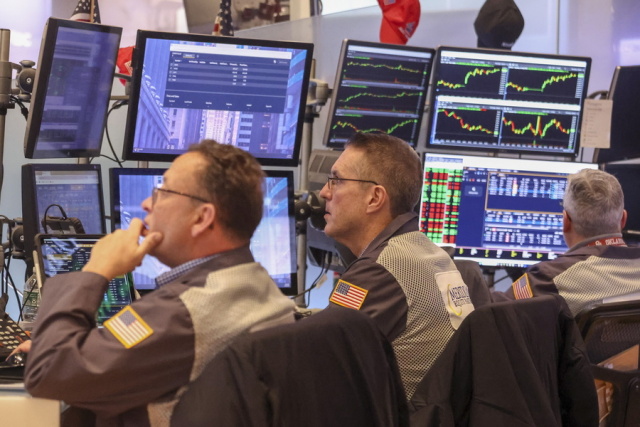
Wall Street stocks dropped on Thursday, September 10, 2026, marking a fourth consecutive session of declines across all major indexes as surging crude oil prices and accelerating wholesale inflation reinforced expectations of an immediate interest rate hike by the Federal Reserve.
The Dow Jones Industrial Average fell by 0.60 percent to close at 52,064 points, while the benchmark S&P 500 index slipped 0.58 percent to 7,591 points. The tech-heavy Nasdaq Composite recorded a fall of 0.65 percent to end the trading session at 26,081 points.
Spike in Treasury Bond Yields
Government bond yields climbed back to multi-year highs across the board as selling pressure persisted in the fixed-income market. The yield on the benchmark 10-year US Treasury note rose to 4.954 percent, while the 30-year bond yield reached 5.365 percent, marking its highest level since 2007. Short-term debt also saw heavy selling, with the 2-year Treasury yield gaining more than 14 basis points to reach 4.569 percent, its highest level in two years.
The bond market had already experienced severe pressure during the previous trading session following an announcement by the US Department of the Treasury regarding its debt buyback program. The Treasury revealed plans to buy back up to $6 billion in government bonds with maturities ranging from 10 to 20 years, effectively tripling its previous target. However, the measure disappointed a portion of investors who had anticipated a broader buyback package of up to $10 billion.
Surging Oil Prices and Geopolitical Tensions
Surging energy prices played a decisive role in dampening market sentiment throughout Thursday. Brent crude futures surged past $107 per barrel as escalating geopolitical tensions in the Middle East intensified concerns over potential disruptions to global oil supplies. West Texas Intermediate crude similarly spiked above $102 per barrel, driving US diesel prices above $5 per gallon for the first time since 2022.
Crude oil prices have now surged by nearly 40 percent since the collapse of the ceasefire between the United States and Iran in early July. The sharp rise in energy costs has fed directly into broader economic anxiety, raising input costs across transportation, manufacturing, and consumer goods.
Wholesale Inflation and Rate Expectations
Fresh economic statistics published by the Bureau of Labor Statistics confirmed that price pressures flared up in August, even prior to the latest surge in crude oil. The overall Producer Price Index rose by 0.4 percent month-on-month and 5.4 percent on an annual basis. Economists had anticipated a monthly increase of 0.4 percent and an annual rate of 5.3 percent.
The producer price data highlighted a sharp resurgence in energy costs during August, marking the largest monthly gain for the wholesale index in three months. Financial analysts noted that if upcoming Consumer Price Index figures confirm heightened inflation risks, the Federal Reserve will find it difficult to leave interest rates unchanged at its upcoming monetary policy meeting on September 16.
Several central bank officials had indicated in recent statements that their interest rate decision on September 16 would depend heavily on incoming inflation data. Following the wholesale report, money market traders increased the probability of a rate hike next week to 72 percent, while fully pricing in a rate increase by October.
Clark Bellin of Bellwether Wealth commented that inflation remained a persistent problem for the economy. He noted that while central bank rate adjustments cannot directly reduce elevated crude oil prices, the core mandate of the Federal Reserve is to react decisively to broader inflationary pressures.
Jeffrey Roach of LPL Financial offered a similar assessment, arguing that as long as the conflict with Iran continues, inflationary pressures will become increasingly entrenched in the economy, bringing an interest rate hike closer.
Central banks internationally are already responding to similar pressures. Earlier in the session, the European Central Bank enacted its second interest rate hike since the outbreak of the war with Iran, as rising crude prices reinforced market expectations of sustained monetary tightening across global economies.
Tech Stocks Fall as Retailers and Apple Diverge
Equity markets saw renewed selling across technology companies, particularly semiconductor manufacturers. Shares of Nvidia, Intel, and Micron Technology faced significant downward pressure over concerns that higher borrowing costs and elevated energy prices could slow broader economic growth and corporate spending.
Retail stocks presented a mixed picture across the floor. American Eagle Outfitters suffered sharp losses of approximately 16 percent as investors reacted to concerns surrounding sales momentum and consumer demand, despite the retailer maintaining its full-year financial outlook. Department store operator Macy's also traded lower, even though the company upgraded its full-year earnings guidance.
Bucking the broader market decline, Apple shares jumped by more than 3 percent. Investors responded positively to the technology company's array of new products unveiled the previous day, particularly sales projections for its new foldable smartphone, the iPhone Duo. The device was priced at $1,999, which positioned it near the lower end of market expectations that had capped potential pricing at $2,500.
SpaceX also recorded stock gains following the successful launch of a satellite mission for the US Space Force. The launch boosted investor expectations for expanding commercial and defense opportunities in satellite services.
Energy sector stocks advanced across the board, as the explosive rally in crude oil prices brightened revenue and profit prospects for major oil companies.


