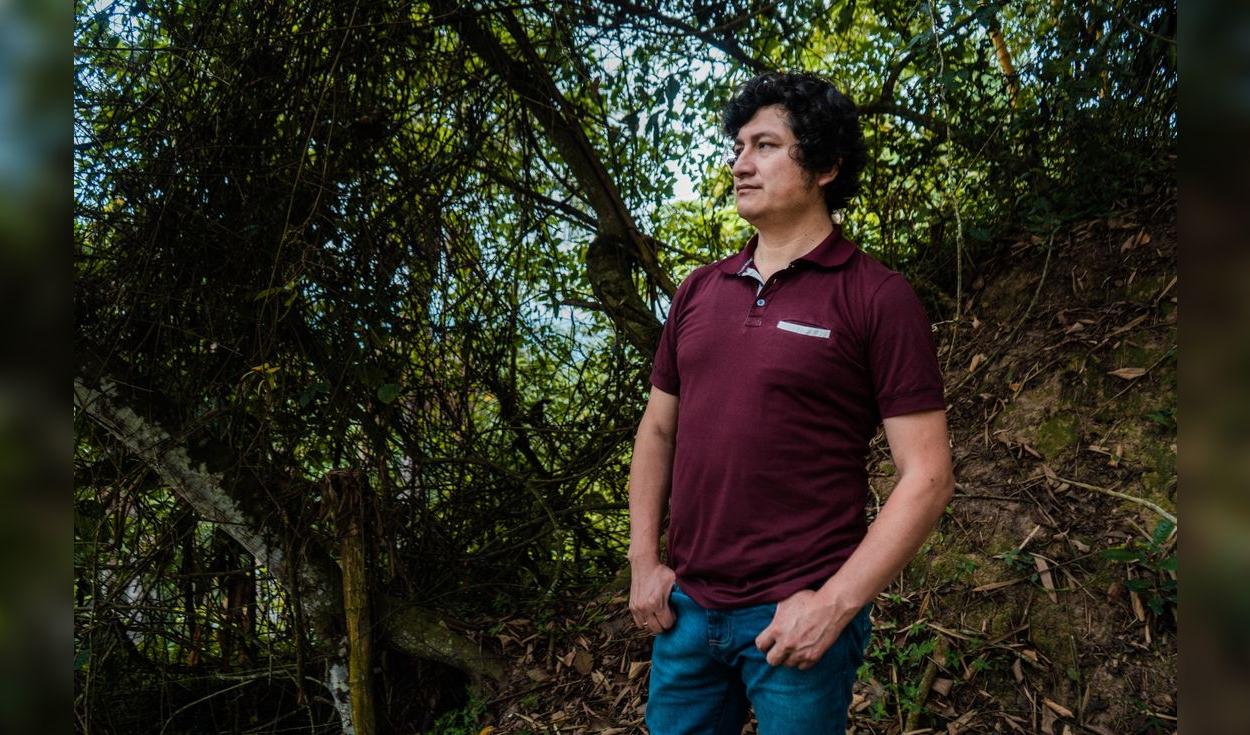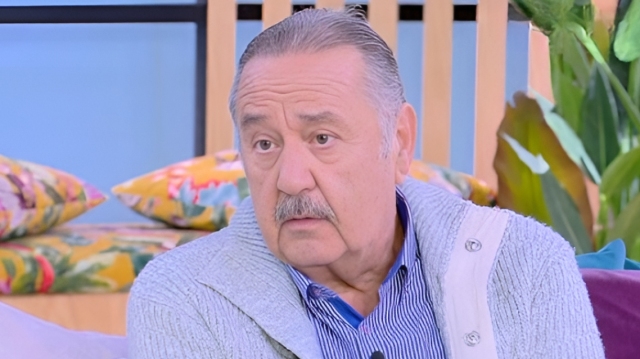
Merengue star Wilfrido Vargas has been ordered to pay 14 million Dominican pesos in damages to fellow musician Juan Valdez over copyright infringement.
The sentence was handed down on October 28, 2026, by Judge Nidia Victoria Jorge Taveras in the Second Chamber of the Civil and Commercial Court of First Instance of the National District in Santo Domingo. The court established that Valdez participated in creating the famous 1990s hit El baile del perrito not only as its musical arranger, but as a genuine co-author who composed parts of its lyrics and musical structure.
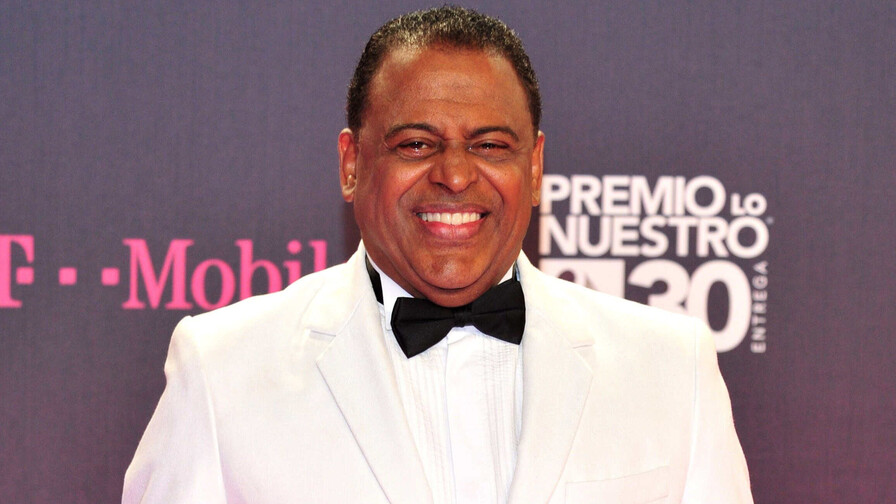
Wilfrido Vargas and his commercial entity, Corporacion Wilfrido Vargas, S.R.L., were found jointly liable for copyright violations after the court determined that the track had been exploited, broadcast, and distributed commercially for more than three decades without formally crediting Valdez. The court awarded Valdez 12 million pesos in moral damages and two million pesos in material damages, reducing the 100 million pesos originally claimed by the plaintiff.
Alongside the monetary award, the tribunal ordered the publication of the operative terms of the judgment in a national newspaper of record, with all advertising expenses borne by Vargas and his company. The defendants were also condemned to pay all court costs generated during the civil proceedings.
Vargas, a trumpet player and bandleader, is internationally recognized as one of the principal architects of modern merengue, the high-tempo national dance music of the Dominican Republic. During the 1980s and 1990s, his orchestra achieved worldwide commercial success by blending traditional accordion and tambora rhythms with bright horn arrangements, synthesizers, and theatrical stage performance. Valdez, an accomplished Dominican pianist, composer, and arranger, worked closely with Vargas during this peak period of international expansion.
Audio evidence from studio cassette
The court based its decision on documentary evidence, audio recordings, witness testimony from fellow Dominican musicians, and admissions made by Vargas himself in his published memoirs. A central piece of evidence was an original studio cassette tape, preserved over decades and later digitized for forensic examination, which recorded working sessions and creative exchanges between Vargas, lyricist Frantoni Santana, and Valdez during the development of the song.
According to the judgment, the recorded audio captured Vargas expressing clear dissatisfaction with an initial melodic line and directly asking Valdez to create and develop an alternative musical proposal. The court concluded that this interaction proved Valdez's direct role in composing the section known as part B of the piece.
That particular passage constitutes one of the most memorable segments of the track, featuring a lively spoken dialogue between a stern father who disapproves of the provocative dance style and a spirited young woman who enthusiastically defends its popularity among youth.
Musicians testify to co-authorship
Testimony provided by prominent figures in the Dominican music industry proved decisive in corroborating the audio recordings. The court heard statements from musicians Ramon Orlando, Alejandro Abrahan Martinez Rodriguez, and Santiago Delgado Veloz, all of whom testified that Valdez contributed significantly to the track as a co-author.
Orlando, an influential merengue bandleader, arranger, and pianist, testified that he had listened to an original recording of the song and estimated that Valdez's creative contribution represented approximately 70 percent of the completed work. While Judge Jorge Taveras noted Orlando's assessment in her ruling, the court did not assign a specific mathematical percentage to Valdez's co-authorship in the formal judgment.
The court also weighed admissions found in Vargas's 2018 autobiography, Me volviste loco, Wilfrido. In the book, Vargas described the genesis of El baile del perrito and explicitly included Valdez among the composers who contributed creative ideas to shape the song, listing him alongside Frantoni Santana, Winston Paulino, Rosa Pontier, and other studio collaborators. The judge ruled that this published acknowledgment strongly reinforced the audio recordings and the witness accounts submitted to the court file.
Defence arguments on arranger credits
Throughout the legal proceedings, the defence for Vargas contended that Valdez had participated exclusively in the capacity of an arranger. Defence attorneys argued that Valdez had been fully compensated for his arrangement services at the time of production and had received appropriate credit in the liner notes of the 1990 album Itinerario, on which the track was originally released.
The defence maintained that providing an arrangement does not automatically grant co-authorship status, nor does it generate long-term patrimonial or property rights over an underlying musical composition. Furthermore, Vargas's legal team petitioned the court to dismiss the lawsuit entirely under the statute of limitations, arguing that more than 30 years had passed since the track was written and recorded.
Judge Jorge Taveras firmly rejected the defence's claim of prescription, citing the legal framework set out in Dominican Republic Law 65-00 on Copyright. The judge ruled that moral rights in intellectual property are inalienable and never expire, while economic claims can be pursued throughout the author's natural life. The court concluded that Valdez contributed to both the musical arrangement and the original composition, and that restricting his recognition solely to the arrangement violated his statutory rights.
Three decades of missing royalties
In setting the financial compensation, the court underscored that El baile del perrito achieved massive domestic and international commercial success, becoming a fixture of Latin music playlists without Valdez receiving public credit as a co-author. The ruling emphasized that this persistent omission had inflicted profound damage on Valdez's professional standing, reputation, and artistic career across more than 30 years.
Addressing the economic damages, the court noted that calculating the exact sum of lost royalties since the early 1990s was impossible. The decades that had elapsed, combined with disparate global distribution channels, vinyl records, cassettes, compact discs, radio broadcasts, and modern streaming platforms, prevented a precise accounting. The judge therefore fixed material damages at two million Dominican pesos under statutory provisions, while awarding 12 million pesos for moral injury.
In addition to the monetary damages, Valdez petitioned the court to order that his name be officially incorporated into registries held by music publishers, collective rights management societies, and digital platforms. The measure aims to ensure that he is properly credited and receives his rightful share of all future royalties generated by the enduring hit.
What happens next
The operative part of the ruling must be published in a national newspaper at the expense of Wilfrido Vargas and his company, alongside payment of legal costs.
Test yourself
How much in total damages was Wilfrido Vargas ordered to pay to Juan Valdez?
What key piece of audio evidence helped prove Juan Valdez was a co-author of the song?
Why did the judge reject the defence argument that the 30-year-old claim had expired?
Have your say
Should musical arrangers who contribute original melodic ideas automatically receive songwriting credits?
Where it happened
Santo Domingo, Dominican Republic