

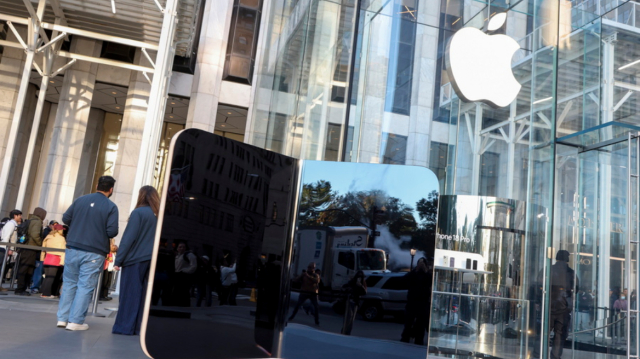
Apple shares fell about 2.8% in after-hours trading on Monday despite the company reporting record fourth-quarter revenue of $114.5 billion.
The California technology giant beat Wall Street forecasts for the fourth quarter of its 2026 fiscal year, posting a 12% rise in sales compared with the same period a year earlier. Financial analysts had anticipated revenue of $113.5 billion. Apple recorded quarterly net profit of $30.7 billion, while earnings per share reached $2.10.
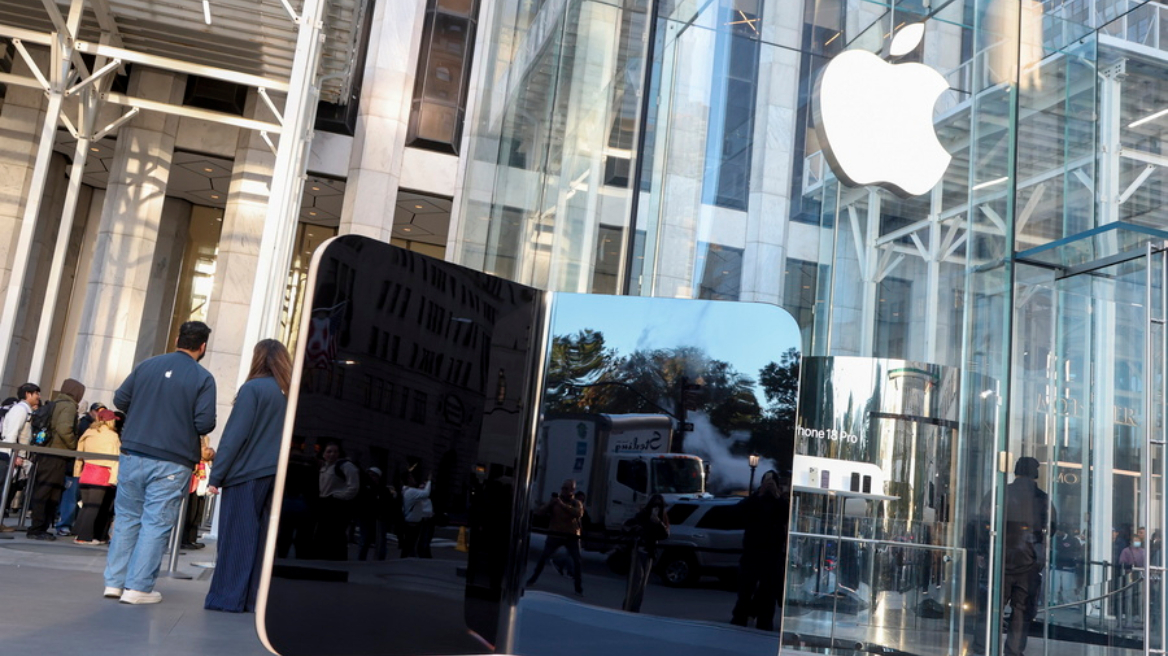
Investors reacted with caution to the announcement, sending the stock lower in extended trading as attention shifted to warnings over rising component costs, supply bottlenecks, and potential pressure on profit margins. The retreat illustrated the narrow margin for error facing the company following months of steep share gains.
Valuation risks and market records
The earnings report came days after Apple overtook semiconductor designer Nvidia on Friday to become the most valuable publicly traded company in the world for the first time since July. The rally lifted Apple's market capitalisation to $5.03 trillion.
Nvidia, which manufactures the specialized graphics processing units that power artificial intelligence systems, had traded places with Apple at the top of Wall Street as tech firms poured capital into AI computing. Apple, however, mounted a sustained market comeback over recent months.
According to an analysis by Bloomberg, Apple stock has climbed approximately 25% from its late-June lows, adding nearly $1 trillion in market value. The advance was underpinned by dependable revenue growth and substantial free cash flow, the cash generated after deducting operating expenses and capital spending. Those cash reserves made Apple an attractive shelter for investors wary of the immense capital expenditure being committed to artificial intelligence by rival tech giants.
Yet that market surge has created significant valuation risks. Apple shares now trade at roughly 36 times estimated earnings for the next 12 months, nearly double the valuation multiple of the benchmark S&P 500 index. The valuation ranks among the highest recorded for Apple since 2008, leaving the equity price sensitive to even minor shortfalls against expectations.
Ben Carriu, co-chief investment officer at Tandem Investment Advisors, an asset management firm that holds Apple shares, told Bloomberg that the company stood in the 99th percentile of its historical valuation. Carriu said that when an asset is priced at such high levels, substantial risk emerges if anything unexpected happens. He noted that while markets currently view Apple as a safe haven, investors could quickly reassess the premium they are willing to pay if future growth comes in softer than expected.
The foldable iPhone Duo
Central to Apple's commercial prospects is the newly released iPhone Duo, the company's first foldable smartphone and one of the most significant design transformations in the history of the product line. Released last month with an entry price of $1,999, the device is a pillar of Apple's commercial strategy to lift revenues by selling more expensive hardware.
Foldable mobile devices rely on flexible display panels and intricate mechanical hinges, an engineering format designed to double screen real estate while remaining pocket-sized. Apple described customer demand for the Duo as more than exceptional, with order backlogs pushing estimated shipping dates into 2027.
Financial analysts warned, however, that prolonged wait times do not necessarily prove extraordinary consumer demand. Extended shipping queues can also stem from tight supply limits and constrained production yields during the initial rollout of complex hardware.
Early durability concerns have also surfaced. Reports of cracked screens on certain devices following limited use could foster reluctance among everyday consumers who prefer to wait before purchasing early-generation technologies.
Despite those hurdles, market projections remain substantial. Bloomberg Intelligence estimated that the iPhone Duo could generate between $28 billion and $32 billion in revenue during the 2027 fiscal year. The high initial price is also expected to elevate the average selling price of the broader iPhone portfolio, assuming shoppers opt for the foldable device rather than the cheaper Pro and Pro Max configurations.
Cost pressures and full-year results
The latest figures confirmed sustained momentum across Apple's wider business. The company generated $479 billion in total revenue across the 2026 fiscal year, representing an annual increase of 15%.
However, company leadership highlighted mounting operational headwinds for the December quarter, traditionally the company's most lucrative sales period because of holiday shopping. Management warned of cost pressures tied to elevated memory component prices and continuing investments in artificial intelligence development.
In response to those expenditures, Apple forecast a gross profit margin between 45% and 46% for the December quarter. In corporate accounting, gross margin measures the proportion of revenue retained after subtracting direct manufacturing costs. The projected range represents a retreat from the 47.9% gross margin achieved in the September period.
Wall Street focus has now shifted to real-world sales numbers for the iPhone Duo, Apple's ability to maintain cash flow growth, and its capacity to defend profit margins in an environment of rising production costs. With its market capitalisation hovering near $5 trillion, the company faces the challenge of not only expanding its revenue, but proving that its business can justify the exceptionally high expectations already reflected in its share price.


