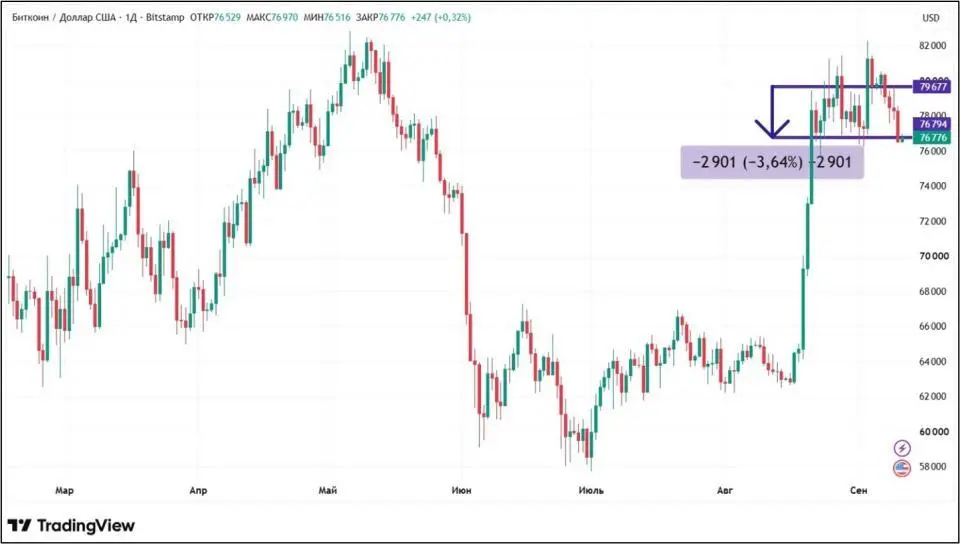
Oil prices climbed above $100 a barrel for the first time since July as fighting between the United States and Iran intensified, and the shock spread into cryptocurrency markets. Bitcoin, the largest cryptocurrency by market value, fell 3.64% over the week of September 4 to 11, 2026, dropping below $77,000 after four straight losing trading sessions from Monday to Thursday.
The renewed slide in bitcoin followed a wider escalation in the Middle East. The United States and Iran continued exchanging strikes and disrupting shipping through the Strait of Hormuz, while Houthi forces in Yemen attacked targets in Saudi Arabia and blocked the Bab-el-Mandeb strait. Brent crude oil jumped to $105 a barrel, its highest level since May.
The spike in oil prices threatens to push inflation higher and makes it less likely that the US Federal Reserve will cut its key interest rate at its next meeting, scheduled for Wednesday, September 16.
The US Department of Labor's producer price index for August added to the inflation picture. The measure, which tracks wholesale prices, rose 0.4% from July, in line with forecasts. The core index, which excludes volatile food and energy costs, rose 0.2%, slightly better than expected. Year-on-year, the headline producer price index rose 5.4%, above the forecast of 5.3%, while the core annual figure rose 4.6%, matching expectations.
Spot bitcoin exchange-traded funds broke a three-week streak of inflows, recording net outflows of $449.44 million. The largest share, $234.24 million, came out of the ARK 21Shares Bitcoin ETF, run by Ark Invest and 21Shares.

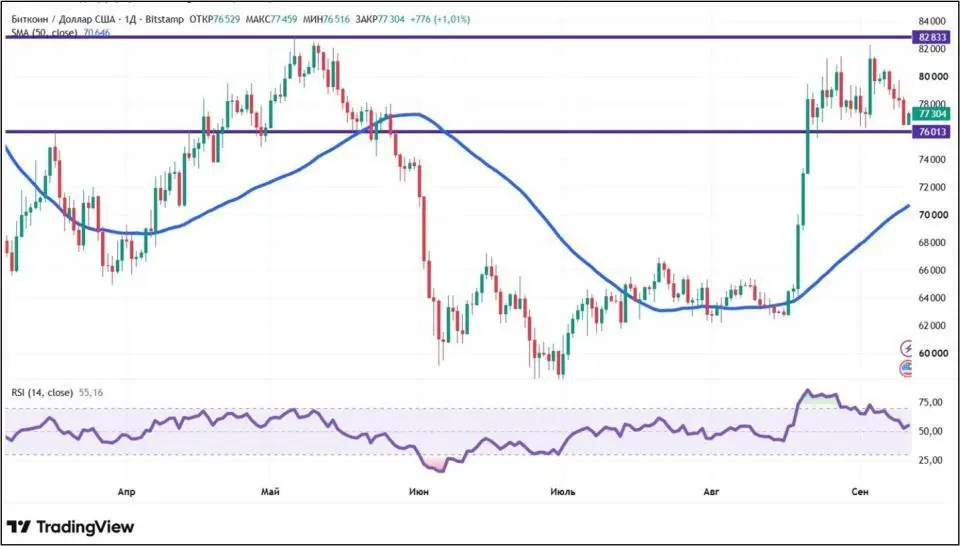
Technical indicators still point to an underlying uptrend. Bitcoin remains above its 50-day moving average, and the relative strength index, a momentum gauge, sits above the 50 mark that favors buyers. Support and resistance levels on the daily chart are unchanged from the previous week, at $76,013 and $82,833.
The Crypto Fear and Greed Index fell 18 points from the previous week to 56, a reading that still points to greed rather than fear dominating investor sentiment.
Ethereum Holds Steady Despite the Selloff
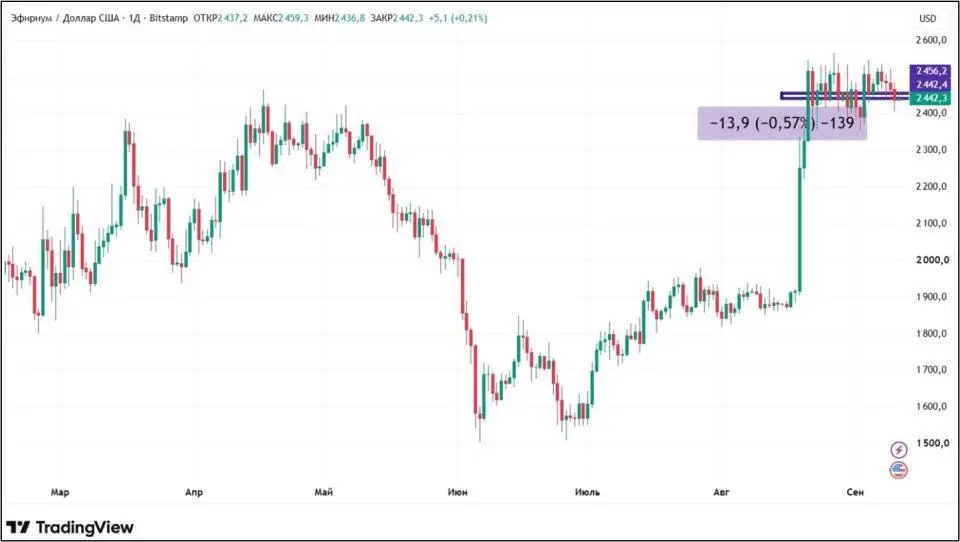
Ether, the second-largest cryptocurrency, slipped 0.57% over the same week. It has drifted between $2,400 and $2,500 for three straight weeks, rarely breaking out of that range, with each of the last seven trading sessions moving less than 1.5%.
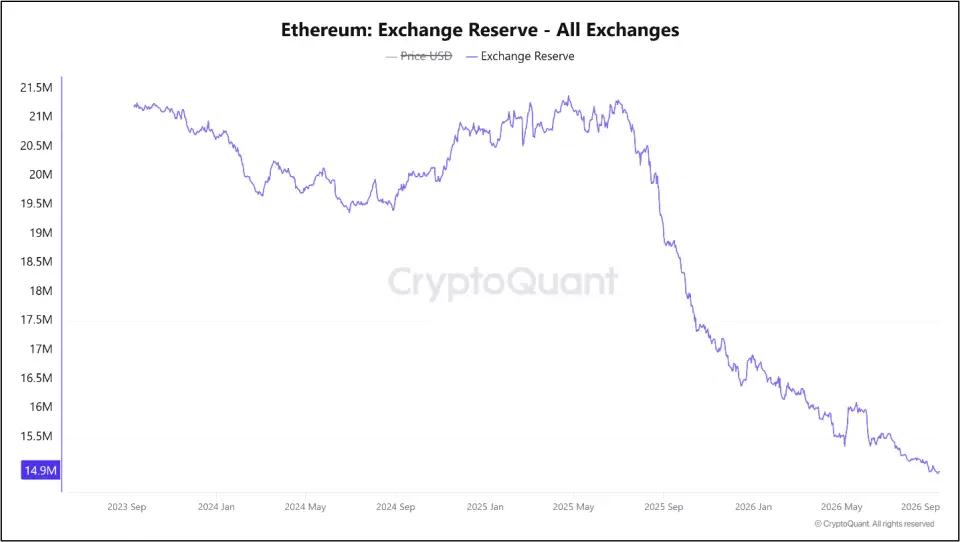
Despite the largely negative backdrop from the Middle East conflict and US inflation data, ether has avoided a sharper drop because so little of it sits on exchanges. On September 8, the amount of ether held on exchanges fell below 14.8 million coins, a multi-year low, a sign that traders are holding onto the asset or locking it up in staking rather than selling it.
Spot ether ETFs also snapped a three-week run of inflows, recording an outflow of $19.3 million. Most of that, $17.29 million, came from the Grayscale Ethereum Trust.

The Ethereum Foundation published two documents outlining planned changes to the network. One covers the upcoming Hegota hard fork, for which 62 proposed Ethereum Improvement Proposals drew 397 review comments from 60 experts across nine teams within the foundation's Protocol Cluster, the group that develops the network's base layer. The second document sets out the project's current and long-term goals, one of which is resistance to quantum computing threats, a target the foundation aims to reach by December 2029.
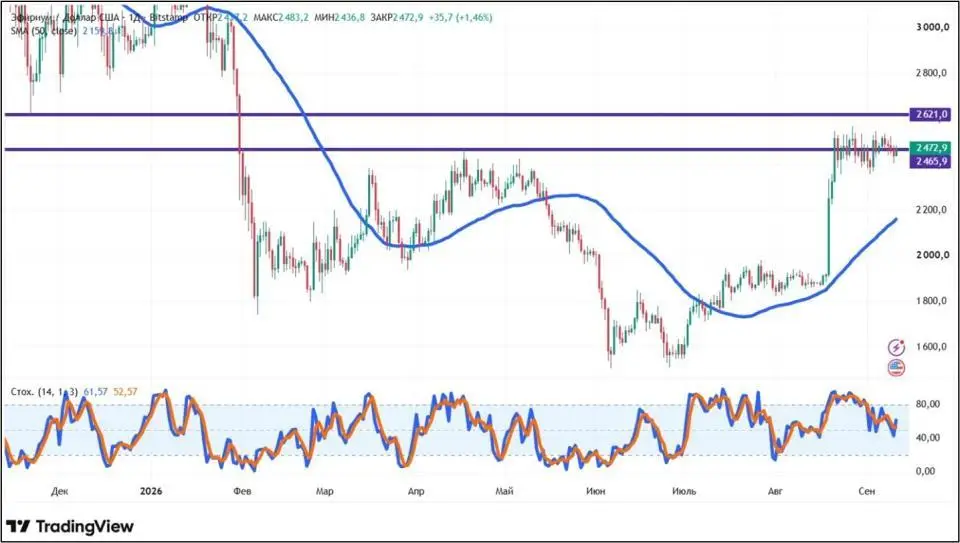
On the charts, ether has consolidated near its $2,465.90 support level for a third straight week. The price remains above its 50-day moving average and the stochastic oscillator, another momentum indicator, sits above 50 in buyers' favor, but ether has yet to test resistance at $2,621.
Zcash Extends Its Rally
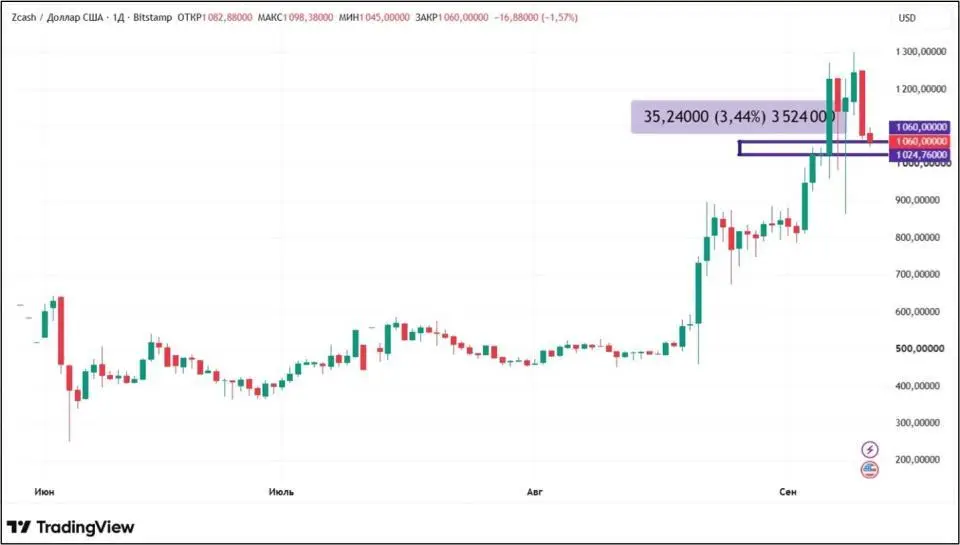
The privacy-focused cryptocurrency Zcash kept climbing, gaining 3.44% over the week and rising more than 25% at its peak. The main driver is investor demand for Grayscale's spot Zcash ETF, known as ZCSH. Assets under management at the fund passed $500 million last week, with the fund holding more than 550,000 ZEC, nearly 3% of the total supply. Cumulative inflows into ZCSH have topped $70 million since it began trading.
Dogecoin Loses Ground and an ETF
Dogecoin's troubles continued. The largest memecoin by market value dropped out of the top ten cryptocurrencies by market capitalization in early September. US investment firm Bitwise has now decided to shut down its spot Dogecoin ETF, known as BWOW, with the fund's last trading day set for October 14. Bitwise attributed the decision to a strategy review and weak investor demand. Spot Dogecoin ETFs overall recorded zero net flow last week, the first time that has happened since July.
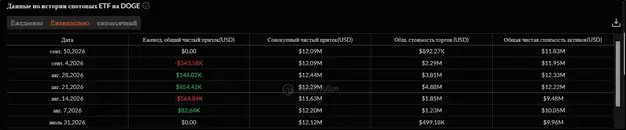
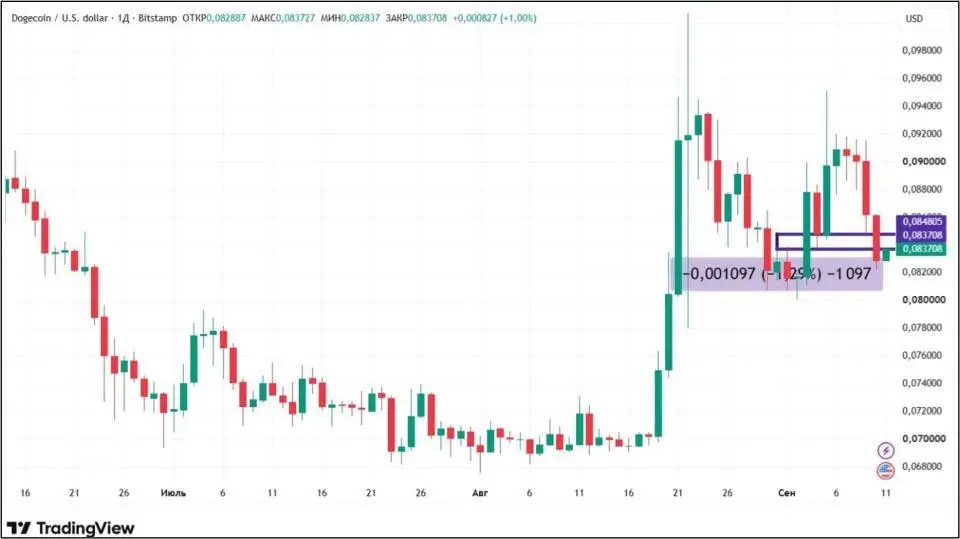
There was one bright spot: since September 7, Dogecoin has been available on the Solana blockchain through the Sunrise protocol. The move gives Dogecoin holders direct access to applications on Solana without needing to set up a bridge network, a step that could boost Dogecoin's liquidity and its position in decentralized finance. Trading volume for the memecoin on the new blockchain reached $19 million in its first 24 hours. The Solana integration has not yet shown up in Dogecoin's price, however; DOGE lost a further 1.35% of its value between September 4 and 11.
Near Protocol Jumps on Cross-Chain Demand
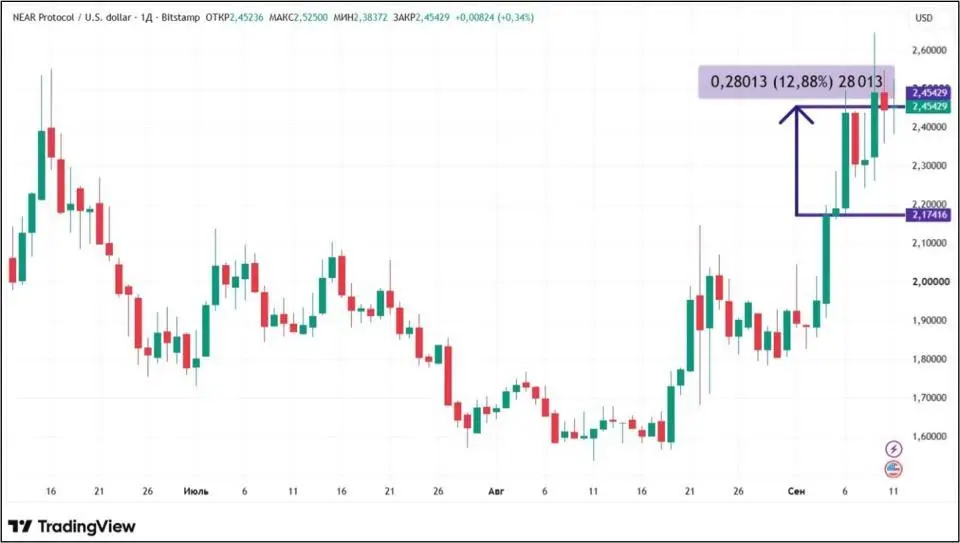
Near Protocol had a strong week, gaining 12.88%. The main catalyst was growth in Near Intents, a protocol that lets users move assets between different blockchain networks; the volume flowing through it climbed to $27 billion.
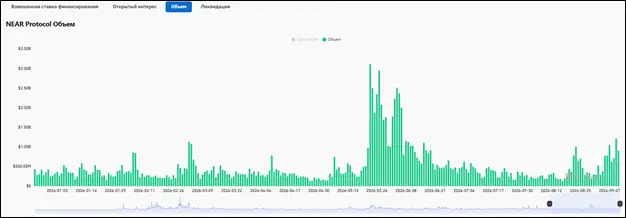
The growing popularity of that infrastructure has pushed up trading activity in the token itself. On September 10, Near Protocol's trading volume reached $1.21 billion, its highest level in more than three months.
Outlook
The week closed with a moderate decline across major cryptocurrencies. The latest escalation between Iran and the United States drove oil to $105 a barrel, stoking inflation expectations and reducing the odds of a cut to the Federal Reserve's key interest rate. With cheaper credit looking unlikely in the near term, investors have largely chosen to wait on the sidelines or sell off digital assets.