

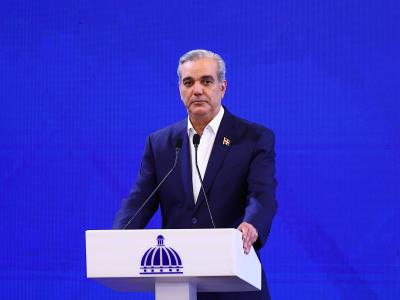
Dominican President Luis Abinader announced on Wednesday that his government is working to negotiate a reciprocal tariff agreement with the United States as quickly as possible. Speaking at the Second International Investment and Nearshoring Forum of the Dominican Republic, Abinader said the deal aims to protect favorable export conditions and maintain foreign investment inflows.
The push for a new trade arrangement follows decisions by Washington last month to impose new duties ranging between 10% and 12.5% on 66 countries, including the Dominican Republic. American officials introduced the measures after arguing that affected nations were not doing enough to block goods manufactured with forced labor from entering their domestic markets.
Trade negotiations and economic impact
According to a statement from the presidency, Abinader assigned the negotiation task to the new Dominican foreign minister, Victor 'Ito' Bisono. The president stated that the minister's chief objective is to secure a reciprocal tariff agreement in the shortest timeframe possible, arguing that such terms are deserved and necessary for the Caribbean nation.
The United States remains the primary trading partner of the Dominican Republic. Official data shows that bilateral trade in goods between the two nations exceeded $18.9 billion last year.
The Dominican Republic is a Caribbean nation sharing the island of Hispaniola. Its economy relies heavily on free trade zone industrial parks, which provide tax incentives for export-oriented manufacturing, as well as nearshoring initiatives designed to relocate supply chains closer to North American markets.
Challenges and future investment goals
Addressing the forum, President Abinader acknowledged that the current international landscape presents significant challenges. He called for joint efforts among the government, local industry, and private investors to strengthen free trade zones, describing the sector as a central pillar of the local economy.
Despite recent global economic disruptions, Abinader maintained that foreign direct investment in the Dominican Republic has continued to grow, adding that the country expects to improve its results by the end of the year.
Looking ahead, the president highlighted the need to attract higher value-added industries to the country. He called for expanded investment in technology sectors, medical device manufacturing, and the potential assembly of semiconductors.


