
The Dominican Republic's General Directorate of Internal Taxes, known as DGII, reported that the tax on electronic bank transfers and checks and the personal income tax were the two levies that contributed most, in relative terms, to the increase in national tax revenue between January and October 2026, compared with the same period of 2025.
DGII is the state agency responsible for collecting domestic taxes in the Dominican Republic, including income tax and taxes on financial transactions, separate from the customs duties collected at the country's ports and airports.
The agency said the increase in personal income tax revenue was driven mainly by improving conditions in the labor market and by wage growth.
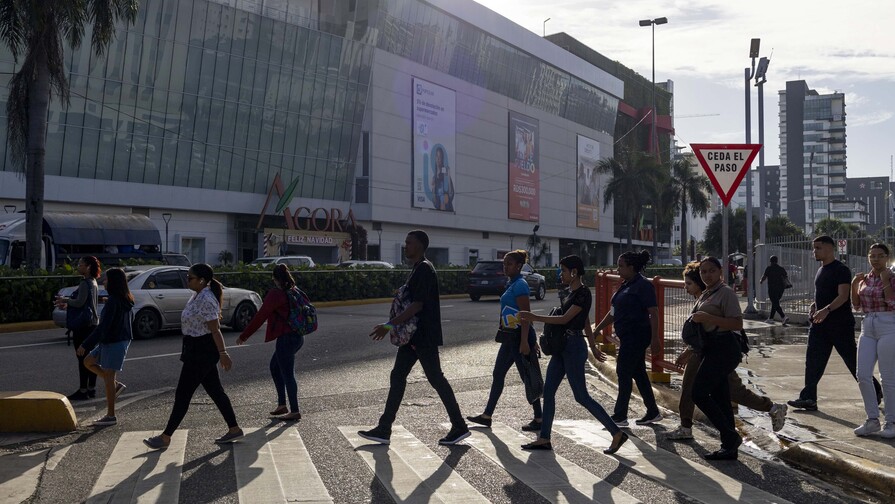
The personal income tax, widely known by its Spanish-language initials ISR, for Impuesto Sobre la Renta, is withheld directly from workers' pay on a sliding scale, so new hires or pay increases can lift collections even without any change to the tax rate itself.
Electronic Transfer Tax Rises 23.5%
The tax on electronic transfers recorded the largest relative increase of the two levies, climbing 23.5% in the first ten months of 2026 compared with the same period last year. That represented an absolute increase of 3,883 million pesos.
The rate applied to this tax was changed under the Plan Anticrisis, a package of measures the government presented in the middle of the year, which raised the levy from 0.15% to 0.20%. Over the ten months through October, the tax brought in 20,402.7 million pesos to the DGII. The tax is applied to most transactions processed through the banking system, including by check, and is one of the government's standing sources of revenue independent of a taxpayer's income level.
Personal Income Tax Rises on Wage Growth
DGII's total collections between January and October reached 834,850.1 million pesos, an absolute increase of 68,679.7 million pesos over the same period of 2025. The transfer tax and the personal income tax together accounted for 32.3% of that increase.
Personal income tax revenue rose 16.4% so far this year. The tax brought in 129,541.4 million pesos, which is 18,268.3 million pesos more than the DGII collected between January and October 2025.
That growth was driven largely by the income tax withheld from salaried workers, which rose 17.4%, equivalent to 15,209.3 million additional pesos. DGII said in its report that the increase reflected a 12.8% rise in the number of salaried workers subject to the tax and a 14.3% increase in the amount withheld from their pay.
Itebis Posts the Largest Absolute Gain
The tax on the transfer of industrialized goods and services, known as Itebis and similar to a value-added tax, posted the largest absolute growth of any levy the DGII collects. It contributed 26,546.1 million pesos more than in the same period last year, a rise of 14.8%. Itebis is applied to most goods and services sold in the country and is one of the Dominican government's largest sources of tax revenue, alongside income tax.
DGII Meets Its Collection Target
The DGII, the Dominican state's main revenue-collecting agency, met its target for the January-October period, reaching a compliance level of 100.1%. That left collections 749.8 million pesos above what had been estimated for the ten months.
October alone told a different story. DGII collections that month totaled 83,680.6 million pesos, equivalent to 96.8% of the target set for October, or 2,801.3 million pesos less than estimated.
DGII publishes its collection figures each month as part of broader government efforts to track fiscal performance against the budget approved by Congress.
Test yourself
By how much did the Dominican Republic's personal income tax revenue rise in the first ten months of 2026?
What change did the Plan Anticrisis make to the electronic transfer tax rate?
What percentage of its January-October collection target did the DGII meet?
Have your say
Do you think taxes like the electronic transfer levy should be raised to boost government revenue?
Where it happened
Santo Domingo, Dominican Republic