
Brazil's Supreme Federal Court President Edson Fachin is considering transferring the Banco Master case to the full plenary bench to broaden judicial participation.
The proposal includes the option of returning the inquiry's rapporteur role to Justice André Mendonça, while ensuring that subsequent rulings are made by the expanded collective court rather than a smaller panel.
A faction within the court views the initiative as a way to balance the rapporteur's authority and prevent an easy majority from forming inside the five-member Second Panel.
According to a source close to Fachin, the move is also driven by the fact that two regular members of the Second Panel, Justices Dias Toffoli and Nunes Marques, are legally disqualified from judging the case.
The Supreme Federal Court, based in Brasília, serves as Brazil's highest judicial authority and typically operates with 11 justices divided into two five-member chambers and a full plenary bench. However, the court is currently functioning with 10 justices because one seat remains vacant awaiting a presidential appointment and Senate confirmation.
Quorum challenges in the second panel
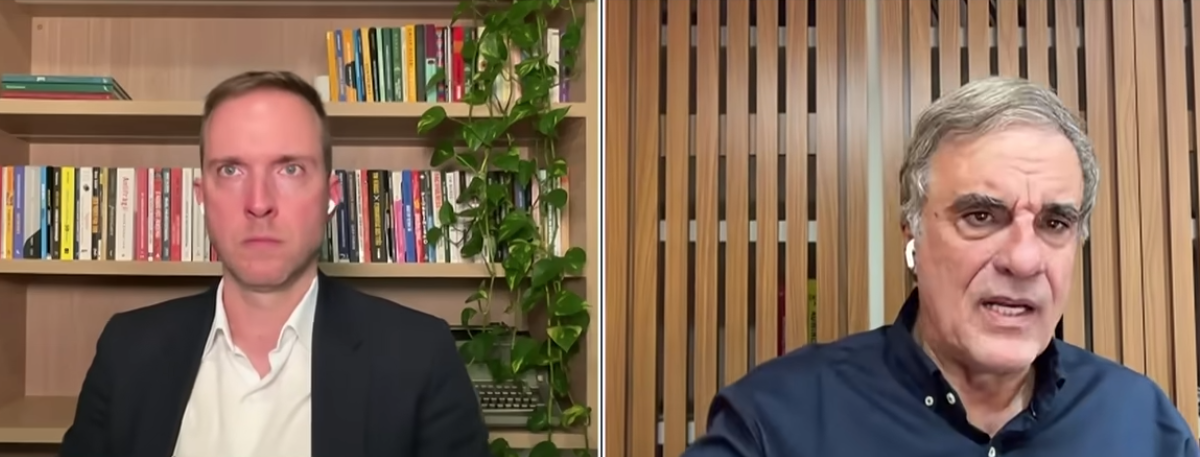
The jurisdictional dilemma sparked intense discussion on Tuesday during the CNN Brasil program O Grande Debate, where commentators Vinicius Poit and José Eduardo Cardozo assessed whether the investigation belongs before the full court or the Second Panel.
Poit, a former federal deputy, outlined the court's current lineup to explain the practical difficulties facing the bench. The First Panel comprises Justices Flávio Dino, Cármen Lúcia, Alexandre de Moraes, Cristiano Zanin, and Luiz Fux, while the Second Panel brings together Gilmar Mendes, Dias Toffoli, Nunes Marques, André Mendonça, and Fachin.
With Toffoli facing a conflict of interest and Nunes Marques legally barred, Poit pointed out that only three justices would remain qualified to hear the matter in the Second Panel: Mendes, Mendonça, and Fachin.
Poit acknowledged that having only three judges available made for an awkward and diminished proceeding regardless of the legal merits, noting that three members constituted too small a group for such a sensitive case.
Questions over political convenience
Despite the low numbers, Poit questioned whether Fachin was acting out of genuine technical necessity or political calculation. He argued that political motives and convenience were at play, asking whether moving the inquiry to the plenary might serve to halt the progress of the investigation.
Poit warned that relocating the proceedings for political convenience rather than on solid procedural grounds would create serious institutional problems for the judiciary.
He also highlighted news reports indicating that several justices had complained about a Federal Police report linking Nunes Marques, Moraes, and Toffoli to the case, and had requested that the document be rewritten.
Procedural rules and plenary authority
Cardozo, a former Brazilian justice minister, took the opposite view, arguing that sending the case to the full plenary was the most appropriate and lawful solution.
Cardozo explained that while the internal regulations normally assign such matters to the Second Panel, the same rules allow a case to be referred to the full plenary, typically upon the rapporteur's request or by a vote of the panel itself.
He described the current state of affairs as objectively unusual. Under court practice, Fachin steps away from ordinary chamber duties while serving as chief justice, which further reduces the available panel quorum, and the number of excluded judges could rise further.
Cardozo noted that news reports have identified three justices who may be disqualified from the matter, including one from the First Panel and two from the Second Panel. In his view, having so many sidelined judges makes a trial in the smaller chamber entirely unviable, meaning cases with these characteristics must go before the full bench.
Dispute over federal police inquiry
Cardozo also addressed the controversy surrounding the Federal Police report, rejecting accusations of improper judicial interference. Based on his reading of the reporting, he maintained that the justices had not applied improper pressure, but had instead demanded a necessary technical correction.
Under Brazilian constitutional law, Supreme Court justices can only be placed under criminal investigation if the court's competent body grants formal authorization. Cardozo stressed that the original police report exceeded its legal limits by contextualizing allegations and suggesting investigative targets without prior court approval.
Banco Master, a Brazilian financial institution, and its controlling shareholder, businessman Daniel Vorcaro, have become central figures in the ongoing investigation, drawing widespread scrutiny across Brasília's legal and political circles.
Fachin is not expected to make a definitive ruling on whether to reassign the case until the Federal Police submit official reports detailing the connections between supreme court justices and Vorcaro.