

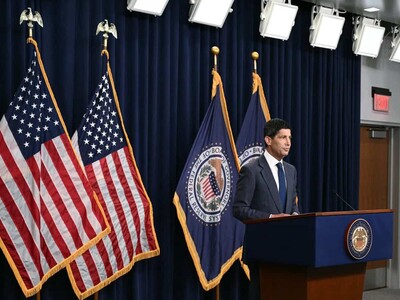
The U.S. Federal Reserve decided on Wednesday to hold its interest rates steady, in a divided vote.
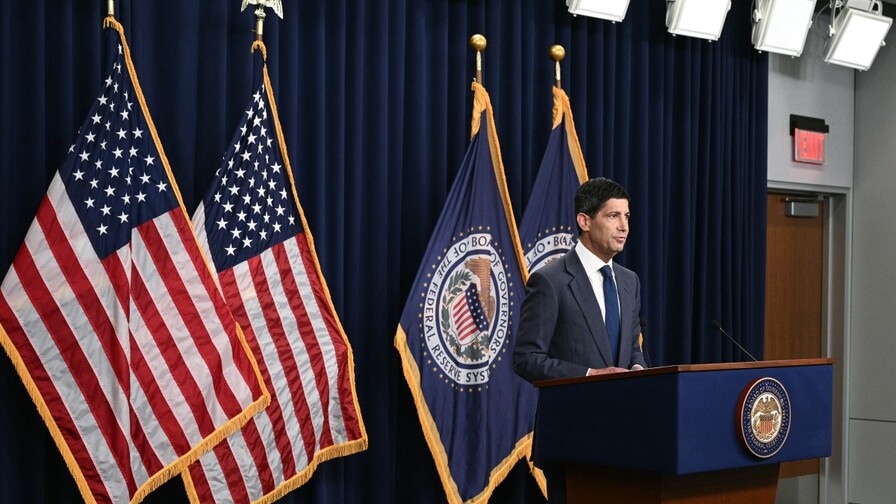
Amid persistent inflation driven by the war in the Middle East and pressure from President Donald Trump to cut rates and boost credit, the Fed's Federal Open Market Committee kept its benchmark rate in a range of 3.50 to 3.75 percent, the fifth consecutive time it has done so.
Three of the twelve voting participants favored a 0.25 percentage point increase.
Market Expectations
The market had expected this outcome. According to CME's FedWatch tracking tool, about two thirds of analysts had anticipated the decision, while a third had bet on a rate increase.
That degree of divided opinion among specialists is unusual on the eve of a decision. It stemmed in part from new Fed Chair Kevin Warsh's decision to stop giving advance signals about the central bank's direction.
In his first public statements as chair, Warsh reaffirmed that the institution would focus on restoring price stability, without offering any indication of the method it planned to use.
A rate increase would have represented an unfavorable scenario for President Trump, who has promised to lower both prices and borrowing costs, since higher rates mean more expensive credit.
Diverging Views on the Committee
Several FOMC members had said they were considering an increase. Christopher Waller said in mid July that the Fed needed to be ready to tighten monetary policy to avoid a repeat of the 2020-2021 inflation episode during the Covid-19 pandemic.
Waller ultimately voted for the status quo, but his colleagues Beth Hammock, Lorie Logan and Neel Kashkari did not.
Before naming Kevin Warsh, whom he does not hide wanting a more accommodative monetary policy from, Trump waged a fierce campaign against Jerome Powell, who had held the Fed chairmanship for eight years.
Inflation Data
Trump kept up pressure on the central bank until the last moment, saying on Monday that the inflation report had been very good, with costs falling quickly.
In fact, inflation has risen again in recent months, mainly because of the war in the Middle East following U.S. and Israeli bombings in Iran.
In May, the PCE index, which the Fed favors for setting monetary policy, reached 4.1 percent, 0.3 percentage points higher than in April and up 1.2 points since February.
Since then, energy prices, the main driver of the current inflation spike, have come back down, though they remain much higher than at the start of the year and highly volatile depending on how hostilities develop.
June's PCE data will be released Thursday, the day after the Fed's decision.
Most analysts say the fact that inflation is tied to energy suggests it could be temporary.
The labor market, meanwhile, continues to show strength. Unemployment remains low at 4.2 percent, though that figure is partly explained by a decline in labor force participation, which stands at its lowest level since the pandemic.
The Fed has a dual mandate to keep inflation in check, with a target of 2 percent annually, and to achieve full employment.


