Ferrari habitually presents its founder as a near-saintly figure of engineering virtue, but a motoring writer who recently drove the brand's new 849 Testarossa Spider argues that the sanitized portrait is historically false and ultimately undermines the cars it is meant to celebrate.
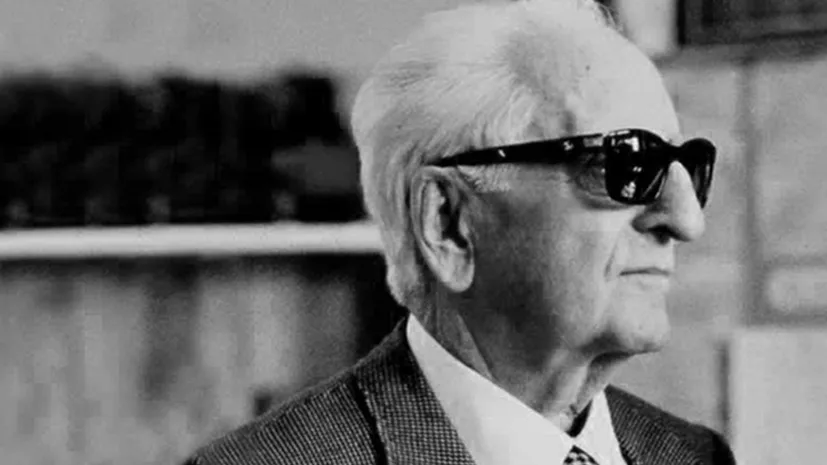
Sam Philip, writing for TopGear, says that at every technical presentation and in every press release, Enzo Ferrari appears rendered in the black-and-white glamour of a film star, invoked in reverential tones as the guiding conscience of the company he founded. Ferrari has described the teachings of its founder, his visionary spirit, his drive to boldly redefine the limits of the possible, and his deeply rooted passion for motorsport as forces that continue to define who the company is today.
Philip says that language paints Enzo as a pure, sanctified spirit of engineering and that the characterization is at odds with the man anyone who actually knew him would recognize.

Enzo, Philip notes, treated his customers with contempt and his racing drivers somewhat worse. He would cut off his closest allies at the slightest suspicion of disloyalty. He also maintained a secret second family. Philip adds that Enzo died fewer than 40 years ago and that many people who worked with him are still alive, making the mythology difficult to sustain.
Philip reaches for a classical analogy to describe what Ferrari has done. The ancient Greeks understood that gods could be brilliant and capricious at the same time, he writes, while the Romans preferred deities who embodied order and civilization. If Enzo resembled any kind of god, Philip argues, he was a Greek one. Ferrari has quietly promoted him to the Roman pantheon.
The distortion matters, Philip contends, because it shapes how the cars themselves are presented and understood. The 849 Testarossa Spider he drove is a 1,000-horsepower machine wrapped in carbon fiber that can reach British motorway speed limits in two and a half seconds, with performance that is effectively inaccessible on a public road. Philip describes it as inherently irrational, a fiction that exists in permanent mismatch with the world it operates in.
Ferrari, steered by its saintly image of Enzo, tends to reduce such machines to pure engineering objects: lateral grip, downforce, lap times. But people also buy supercars for reasons of ego, excess, and the appeal of owning something expensive and loud that nobody else has. Supercars, Philip writes, are a little bit stupid.
Enzo himself understood this. An obituary cited in the piece noted that the founder deeply loathed the fact that most of his cars were ordered by wealthy people attracted by the prestige of the name, who were possibly incapable of driving a Ferrari properly.

Recasting Enzo as a medieval saint clutching a wrench does not honor what makes the cars genuinely interesting, Philip argues. Saints are boring, he concludes. Humans are interesting, and so are supercars, for exactly the same reason.