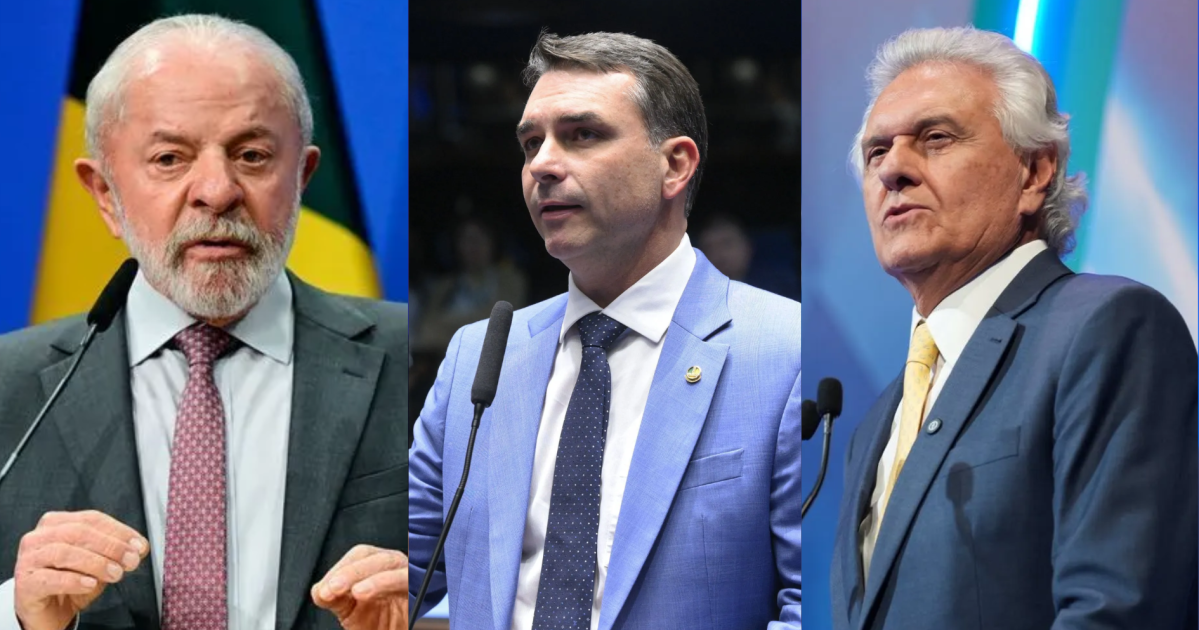
The presidential campaign of Flávio Bolsonaro has accused Brazilian Supreme Court Justice Flávio Dino of improperly intervening to restore online posts containing false claims.
The legal team representing the Liberal Party presidential candidate issued a formal statement on Sunday, September 27, objecting to Dino's decision to overturn an injunction granted in the Superior Electoral Court. Dino had invalidated an order that removed viral posts falsely asserting that Flávio planned to strip Our Lady of Aparecida of her status as the patron saint of Brazil.
Lawyers for the campaign argued that an outside judicial authority had overstepped its jurisdiction by striking down an electoral ruling on content already confirmed to be false. The campaign expressed deep perplexity that an order restoring a lie to the informational environment came from an authority chosen deliberately through a targeted petition rather than ordinary case distribution, within a proceeding that possessed a different scope and could not properly be expanded.
Dispute over satirical social media post
The dispute originated with an order issued on Friday, September 25, by Justice André Mendonça, who acts within the Superior Electoral Court on a petition filed by Flávio. Mendonça granted an injunction ordering the immediate removal of a publication on the social media platform X by Brazilian comedian Antonio Tabet.
Tabet's online post featured an image of Our Lady of Aparecida alongside text claiming that the militia family hated Black women so much that they had decided to attack the saint. The message referenced claims that the senator would remove the Catholic icon's official title if elected to the presidency.
In his initial ruling, Mendonça ordered platforms to take down the publication immediately and prohibited the sharing of identical content or equivalent narratives under penalty of a daily fine of 30,000 reais. He also directed digital platforms to carry out a mass removal of publications based on the same claim.
Tabet challenged that order by filing an application directly with the Federal Supreme Court. The comedian argued that his post was legitimate political satire that did not name Flávio explicitly, and contended that forcing its removal amounted to unconstitutional prior censorship.
Dino ruled in Tabet's favour, revoking Mendonça's injunction. He instructed the Superior Electoral Court to be notified and ordered digital platforms to restore Tabet's post, alongside any other publications that had been taken down on the same grounds. In his reasoning, Dino stated that state intervention in the distribution of news and personal opinion must be treated as exceptional, adding that legal protections for religious freedom had to be upheld.
Origins of the religious controversy
The controversy surrounding Our Lady of Aparecida began spreading online on the evening of September 23, when social media accounts started circulating claims about Flávio's intentions regarding the patron saint. The viral messages alleged that the candidate would revoke her official status if he won the presidential election.
The online claims relied on remarks Flávio made in August, when he released a video explaining his absence from the first presidential debate broadcast by television network TV Band. In that recording, the senator stated that upon becoming president, one of his first official acts would be to decree that Brazil belongs to the Lord Jesus Christ.
Flávio denied the allegations on Thursday, September 24, using his official social media accounts to insist that there was no possibility whatsoever of any such proposal being put forward. The candidate blamed the viral narrative on political opponents, attributing the creation of the posts to what he described as a Workers' Party militia.
Comparisons with past electoral rulings
Flávio's campaign lawyers cited earlier controversies to argue that the electoral judiciary should be allowed to operate without outside interference. The legal team noted that the Superior Electoral Court had handled other contentious political matters without intervention from individual Supreme Court justices.
Among those examples, the campaign pointed to claims linking President Luiz Inácio Lula da Silva of the Workers' Party to the organized crime faction Primeiro Comando da Capital, commonly known as the PCC. The campaign also recalled how candidate Romeu Zema of the New Party used puppets during his campaign to mock Supreme Court justices without facing this kind of external court intervention.
The campaign argued in its statement that it sounded strange that in the most viral and damaging misinformation case affecting the electoral environment, an outside judicial instance intervened to restore a blatant falsehood to the internet.
Divisions within the Supreme Court
Dino's decision unfolds against the backdrop of existing institutional divisions within the Federal Supreme Court. Dino is known as one of the closest allies of Justice Alexandre de Moraes in tensions involving the court and Banco Master.
In that controversy, Dino raised a procedural motion and requested a formal case review that froze for up to 90 days the consideration of whether to open an investigation against Moraes regarding messages exchanged with Vorcaro.
The dispute over the online posts also marks another direct disagreement between Dino and Mendonça. Dino previously granted an injunction overturning a decision by Mendonça that had removed Federal Police Director-General Andrei Rodrigues from office, returning the police chief to his post.
Institutional role of the electoral courts
Under the Brazilian judicial system, the Superior Electoral Court holds primary responsibility for overseeing presidential campaigns and adjudicating disputes over campaign conduct, political advertising, and misleading campaign material. The court is composed of judges drawn from both the Supreme Court and other federal tribunals to manage election disputes swiftly during campaign periods.
Our Lady of Aparecida holds immense cultural and religious prominence in Brazil as the nation's principal Catholic patron saint. With candidates competing fiercely for religious voters across Catholic and evangelical communities, disputes touching on national faith symbols remain among the most sensitive battlegrounds in the presidential race.