Former Greek deputy prime minister Evangelos Venizelos said an undersea power cable linking Greece and Cyprus will not resolve outstanding territorial disputes with Turkey.
Speaking in an interview with journalist Giorgos Kouvaras on public television network ERT, Venizelos warned that Athens cannot count on allies such as France or the United States to settle its maritime borders.
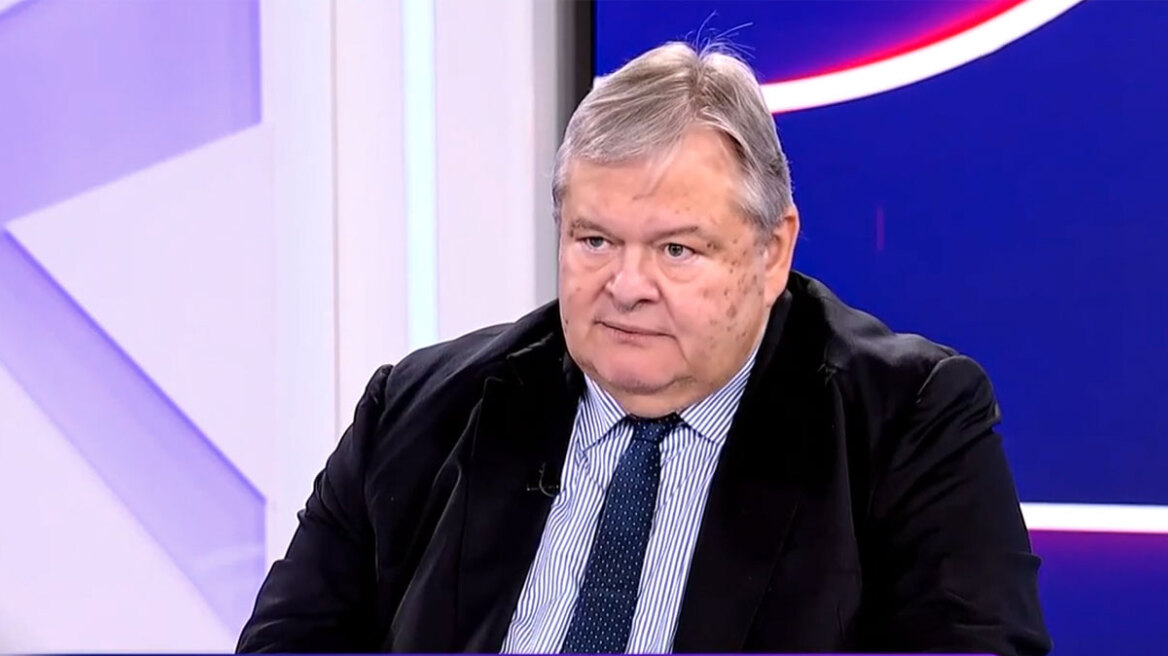
The former foreign minister cautioned that amateurism in foreign policy is dangerous, stressing that bilateral agreements or international courts remain the only ways to establish maritime boundaries.
Venizelos said the planned electricity interconnection between Greece, Cyprus, and Israel has faced years of financial hesitation from Cypriot authorities alongside serious geopolitical obstacles.
He pointed to the 2024 Kasos incident, when seabed surveys for the cable were disrupted following Turkish naval moves.
While subsea cables have operated in the region since 1974, when the Aphrodite telecommunications link was laid between Crete and Cyprus, Venizelos warned that laying a power line will not settle deeper territorial conflicts.
Greece still has pending maritime delimitation issues with Turkey, Libya, and Albania, having concluded only a partial agreement with Egypt and a complete accord with Italy.
Venizelos noted that Ankara continues to press demands over the demilitarisation of Aegean islands and contests the ten-nautical-mile Greek national airspace.
Undersea cables and maritime law
Venizelos explained that international law distinguishes between undersea cables and energy pipelines.
Pipelines require formal consultation over their route, whereas states enjoy an established right to install subsea cables under specific international rules.
However, he stressed that installing a cable does not establish rights over the continental shelf or an exclusive economic zone.
When a neighbouring country objects, even without a valid legal foundation, it creates a practical reality that must be resolved through diplomacy.
Venizelos also clarified that NAVTEX alerts concern navigational safety at sea rather than defining continental shelves or economic zones.
Both Athens and Ankara have formally submitted their maritime claims to the United Nations, alongside ongoing disagreements regarding search and rescue jurisdictions.
International legal rulings also show that the degree of influence granted to islands during maritime boundary delimitation depends on specific geographic circumstances.
French diplomacy and foreign allies
Addressing reports of a French diplomatic note verbale sent to Turkey regarding French survey vessel operations, Venizelos noted that such documents are formal written state communications rather than casual conversations.
He clarified that he does not know whether Paris actually delivered the document or what text it contained.
He also noted reports that the French ambassador to Ankara met a Turkish deputy foreign minister, while declining to endorse claims about the outcome.
Venizelos rejected talk of political concessions, arguing that Greek politicians share equal patriotism and want the best for the country.
However, he warned that state officials must master technical and legal details, repeating that amateurism carries serious risks.
Venizelos reminded viewers that France pursues its own economic and strategic interests in the Eastern Mediterranean, pointing out that a French company is building the cable and the survey ship flies the French flag.
Franco-Turkish relations are not determined solely by Greek concerns or the cable project, meaning Greece cannot rely on Paris or Washington to fix its Turkish dispute.
While international alliances remain essential, Venizelos emphasized that military arms spending and foreign partnerships cannot substitute for direct negotiations, boundary treaties, or rulings from international courts.
National strategy and government handling
Asked whether Prime Minister Kyriakos Mitsotakis and Foreign Minister Giorgos Gerapetritis are handling the cable dispute effectively, Venizelos declined to offer televised instructions.
He stated that government policy will be judged solely by its results: whether the power cable is actually laid and what legal fallout stems from official diplomatic papers.
Venizelos criticized the lack of genuine consensus across Greek political parties on external relations.
While parties agree on broad references to international law, they have failed to build a common strategy for concrete disputes, creating a united front in rhetoric rather than practical policy.
He cited the Zurich and London syndrome, recalling the intense domestic opposition that greeted the 1959 treaties establishing the Republic of Cyprus.
The persistent fear of being accused of making national concessions continues to discourage Greek leaders from taking diplomatic initiatives.
Recalling his past description of Greece as an ungovernable country, Venizelos argued that the political system suffers from an inability to forge a long-term national strategy.
Economic strains and coalition government
Turning to domestic matters, Venizelos acknowledged recent economic progress but said Greece has failed to achieve the rapid growth expected after its lengthy financial crisis.
He highlighted the high cost of living, declining consumer purchasing power, the emergence of the working poor, and widening social inequality, describing inflation as the worst form of taxation.
While nominal growth in gross domestic product and tax revenues improves state fiscal balances, Venizelos noted it does not automatically raise living standards for citizens.
He called for a new social, developmental, and productive pact focused on economic competitiveness and social cohesion.
Venizelos argued that broad coalition governments could help resolve major national problems, though he acknowledged that the political conditions for such partnerships do not exist today.
Reflecting on the coalition administrations that governed during the financial crisis, he observed that single-party rule works only up to a point and cannot provide the broad consensus Greece requires.
Party relations and judicial accountability
Venizelos dismissed suggestions that his praise for Mitsotakis at the United Nations Security Council indicated a political rapprochement with the prime minister.
He stated that he seeks to maintain open dialogue with all political figures on critical national and constitutional issues.
The former socialist leader reaffirmed his loyalty to PASOK and his support for its leadership, saying the party must highlight its historical role in managing the debt crisis and preserving national stability.
While hoping PASOK performs strongly, Venizelos noted that the ongoing wiretapping scandal has strained relations with New Democracy, while serious differences also remain with former prime minister Alexis Tsipras.
He viewed Tsipras's recent political initiative as an attempt to replace Syriza following internal party divisions, while characterizing former prime minister Antonis Samaras as operating within a fragmented conservative landscape.
On proposals to refer politicians to special courts, Venizelos cited the historical trials of former prime ministers Andreas Papandreou and Konstantinos Mitsotakis.
He argued against criminalizing political debate, maintaining that special courts should be reserved only for blatant and egregious cases where strong evidence of wrongdoing exists.
When asked about returning to active frontline politics, Venizelos refused to discuss personal ambitions, warning that such speculation would weaken the independence and authority of his public interventions.
He concluded that the patriotism of political figures is tested during moments of national crisis, pointing to the wartime question of what one did when the nation called.