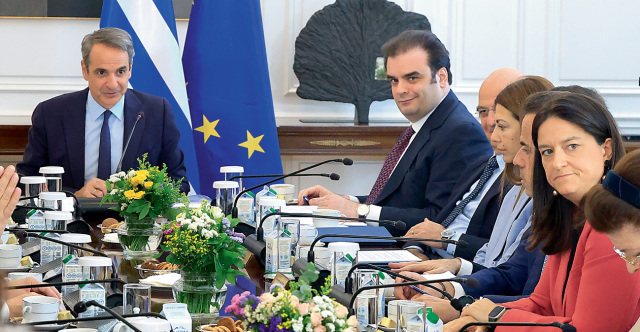
Greek Prime Minister Kyriakos Mitsotakis is preparing a package of tax relief and subsidy measures targeting freelancers, farmers, pensioners and private sector workers, to be unveiled at the Thessaloniki International Fair, according to Protothema. The measures are designed to win back voters the ruling New Democracy party has lost since the 2023 election.
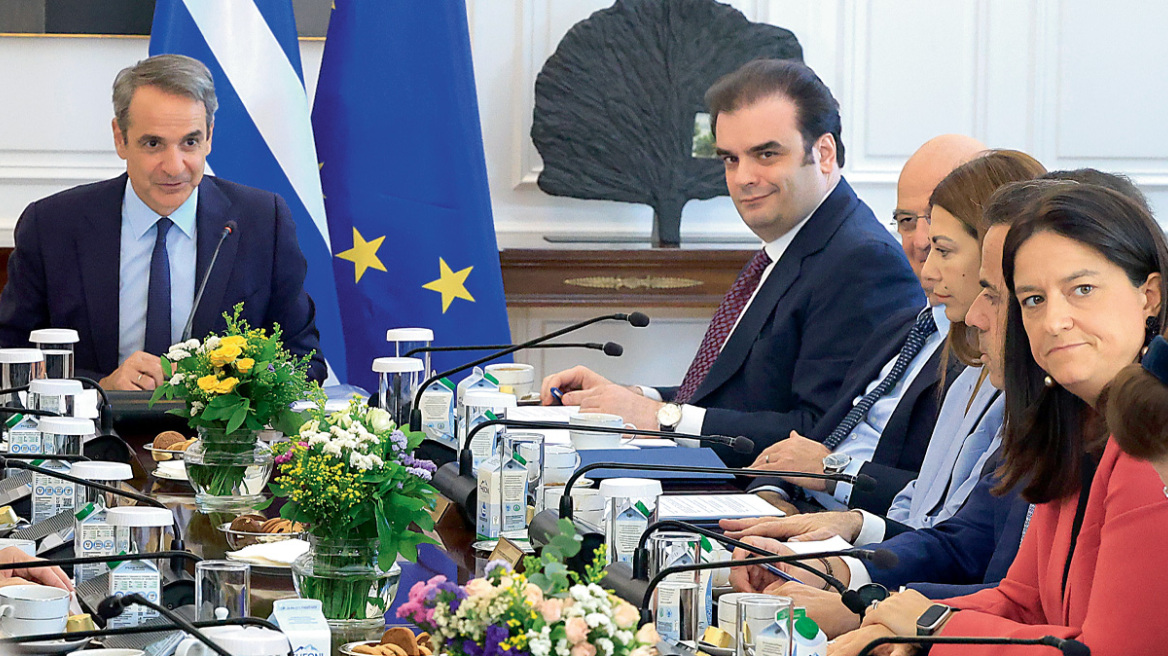
The Thessaloniki International Fair, known by its Greek acronym DEth, is an annual trade exhibition that Greek prime ministers traditionally use to announce economic policy for the coming year. This year's announcements are expected to shape government spending through the next national election.
Election strategy behind the timing
Mitsotakis and his aides at the Maximos Mansion, the prime minister's office, have chosen May 2027 for the next national election as a strategic date. New Democracy currently polls between 29.5% and 31%, short of the roughly 35% needed for an outright majority. About 30% of undecided voters, representing 10 to 12% of the electorate, or three to four percentage points, had voted for New Democracy in 2023.
If the party could win back all of those voters, it would come close to the majority threshold and stand a strong chance of governing alone, since no other party appears willing to join a coalition with a New Democracy that falls just short. The plan is built on three expectations: that by May 2027 a contest between Alexis Tsipras and PASOK for second place will convince voters there is no credible alternative government, that a volatile international climate will push the electorate toward stability, and that this year's Thessaloniki Fair benefits will ease discontent in areas where New Democracy dominated in 2023. Officials note that measures announced at last year's fair began showing up in polling once voters felt the financial impact earlier this year.
Freelancers and the self-employed
Self-employed professionals gave New Democracy just over 50% of their vote in 2023, according to exit polls, partly on the strength of pre-election pledges from official Giorgos Katrougalos to reconnect their social insurance contributions to actual income. Six months later, in December 2023, the government passed a presumptive income assessment system for the self-employed amid strong public backlash, affecting around 400,000 voters.
The change raised roughly 450 million euros a year in state revenue, but New Democracy lost nearly half its support among freelancers, both in polling and in the European election. Corrections are now considered inevitable: officials are weighing scrapping the presumptive tax from 2027 and cutting the advance tax payment, currently 80% for most companies.
Farmers and the shadow of Storm Daniel
The farming vote has historically tracked the overall election winner. New Democracy topped 40% among farmers in both 2019 and 2023, reaching an estimated 48% in the last election, according to exit polls.
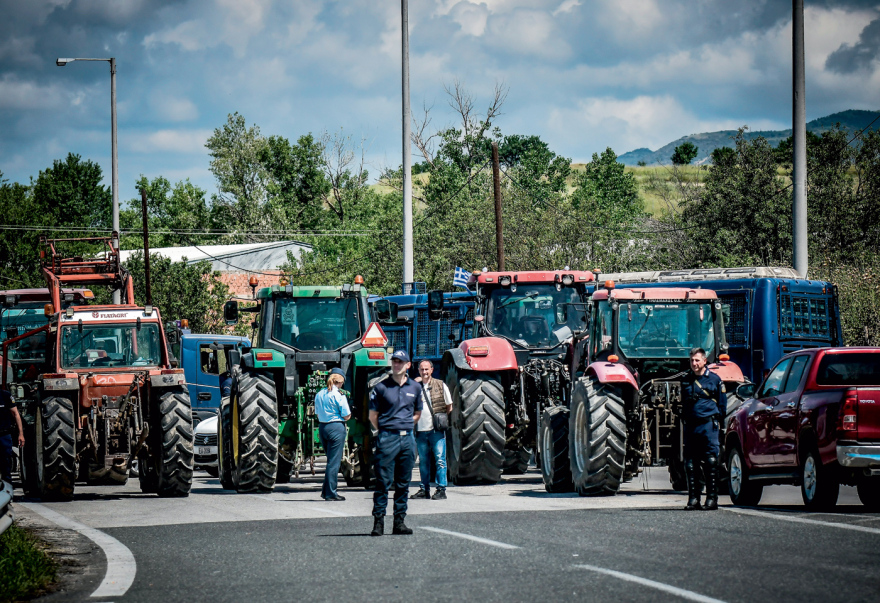
The second round of the 2023 election was held on June 25. On September 4 that year, Storm Daniel struck Thessaly, flooding around 750,000 stremmas of land and wiping out roughly a quarter of Greece's total agricultural and livestock production. Thousands of farmers remain in limbo, which has affected their voting behavior.
A month later, the New Democracy regional governor of Thessaly, Kostas Agorastos, failed to win re-election in the first round and lost decisively in the runoff. Pollsters see Thessaly as the party's biggest regional problem, with the political climate shaped first by the Tempi rail disaster, then by Storm Daniel, and more recently by a scandal at agricultural payments agency OPEKEPE that disrupted farm subsidy payments for months. Production costs, which spiked with the war in Ukraine, are rising again because of conflict in the Persian Gulf and disruption to the Strait of Hormuz.
The government is discussing measures to offset production costs, including continuing a 15% subsidy on fertiliser costs even though some price rises have reached 30%, along with tax measures and financing tools for farmers. It also plans to seek a strong share for agriculture from a 1.5 billion euro energy relief fund set aside for 2026 to 2028, covering projects such as energy storage, electrical interconnections and home energy autonomy through heat pumps and solar panels.
Private sector wages and inflation
The minimum wage has risen 41.5% since 2019, from 650 euros to 920 euros gross on a 14-month basis, covering 600,000 workers. The average wage has climbed 24% since New Democracy took office, reaching 1,340 euros, and two in three of the country's nearly 2.5 million private sector employees now earn more than 1,000 euros a month, up from 36% in 2019. The government wants to end its term with a minimum wage of 950 euros or more and an average wage of 1,500 euros.

Greece still shares last place in the European Union with Bulgaria for per capita GDP, at 68% of the EU average in purchasing power terms. Food prices have turned negative in real terms and further supermarket price cuts are expected under a "gentlemen's agreement," yet the cost of living has consistently ranked as Greek society's top concern in polling over the past five years.
New Democracy took 36.7% of the private sector vote in 2023, below its national score, after roughly 40% in 2019. Measures under discussion include a further cut to social insurance contributions and changes to tax brackets, since rising average wages have pushed many workers into higher brackets, eating into their nominal pay gains on top of inflation's toll from indirect taxes. Officials are also discussing softening the taxation of in-kind benefits such as meal vouchers, company cars and private insurance cover provided by employers.
Pensioners and the 2026 cutoff
Pensioners, also numbering around 2.5 million voters, were a stronghold for New Democracy in 2023, with almost one in two backing the party, a gap of more than 27 percentage points over Tsipras's SYRIZA in that age group. Current polling shows the party still performs strongly among those over 55.
A major sore point is the "personal difference" mechanism, under which some pensioners do not receive the annual increases given to 1.8 million other retirees, because those increases are used to gradually eliminate the difference. The government has announced this will end on December 31, 2026, meaning 670,000 pensioners in this category will receive normal increases, expected around 2.5%, from 2027.
Officials are also discussing changes, though not abolition, to the Special Solidarity Contribution, a levy first introduced in the summer of 2010 as one of Greece's earliest austerity measures. It applies on a sliding scale to combined pensions above 1,468 euros and can reach 14%. The main proposal would adjust the brackets and change the calculation method, since pensioners currently pay the higher rate on their entire pension once they cross a threshold, rather than only on the amount above it, as happens with income tax.
Distressed borrowers and young voters
Around 1.5 million people are struggling with non-performing loans transferred to loan servicing firms, according to Bank of Greece data, one of the most damaging legacies of the country's bailout years. The finance ministry, which has seen a rise in complaints that servicers ignore favourable settlements or avoid arrangements required under existing law, is preparing to intervene alongside the central bank.
Among voters aged 17 to 24, New Democracy led SYRIZA in both rounds of the 2023 election, a traditionally hard group for established parties to win over. Last year's Thessaloniki Fair brought a package of tax exemptions for those under 30, and this year's fair is expected to unveil "My Home III," a successor to the "My Home II" housing scheme after its funds ran out.
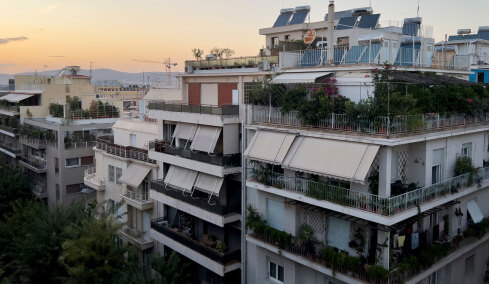
Housing is expected to be the centrepiece of this year's fair, with incentives planned for long-term leases and heavy subsidies for renovations intended to bring more properties onto the market and ease rental prices.