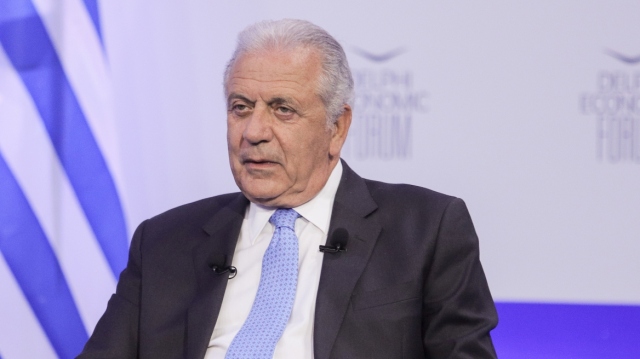
The Greek Parliament will vote on Thursday, September 17, on whether to lift the parliamentary immunity of Member of Parliament and former European Union Commissioner Dimitris Avramopoulos following a Belgian arrest warrant linked to the Qatargate corruption investigation.
The parliamentary Ethics Committee has already unanimously recommended lifting the Greek lawmaker's immunity. The decision follows a formal request submitted by Avramopoulos himself through a detailed memorandum delivered to committee members.
In his memorandum, Avramopoulos rejected all allegations against him, asserting that he has no connection to the investigation and remains fully at the disposal of Belgian judicial authorities to prove his innocence.
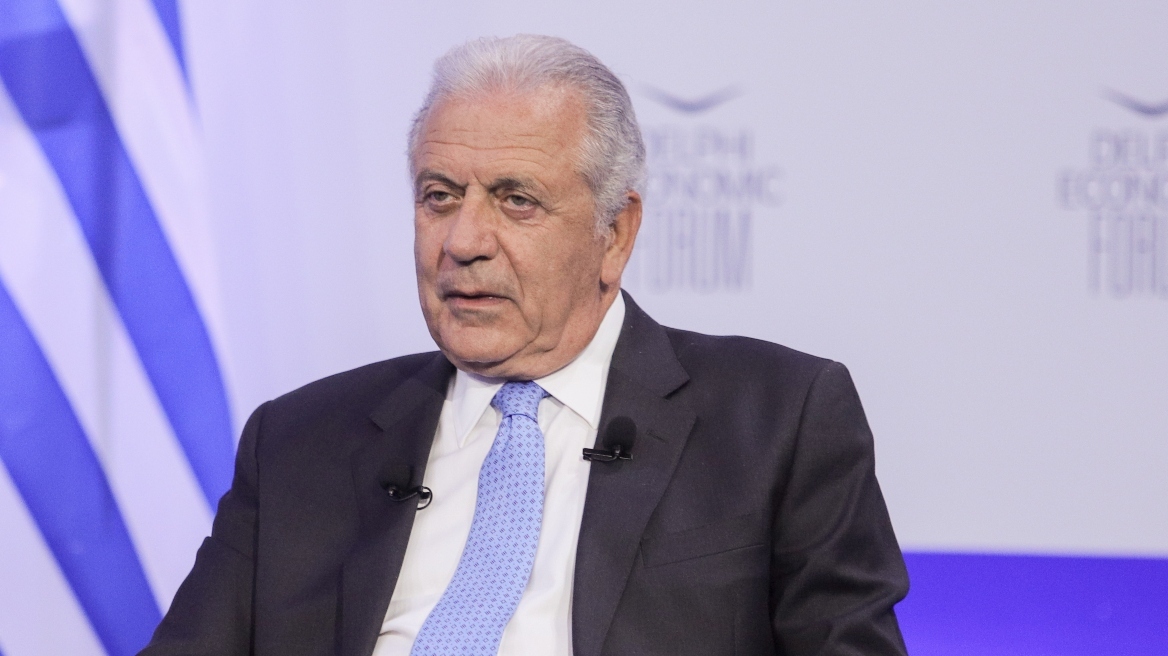
Avramopoulos is a veteran Greek politician who currently serves as a Member of Parliament in Athens. Between 2014 and 2019, he served as the European Commissioner for Migration, Home Affairs and Citizenship in Brussels. Under Greek law, parliamentary immunity protects elected representatives from legal prosecution or arrest unless Parliament votes to lift that protection.
Ethics committee memorandum
Addressing the Ethics Committee, Avramopoulos stated that he wished to present the essential facts of the case with complete clarity and respect for the committee's institutional role. He categorically denied any involvement in the unlawful acts cited in the European arrest warrant and maintained that he never participated in any illegal activity connected to Qatargate.
Avramopoulos clarified that he was not asking Parliament to replace the judiciary or pass judgment on the merits of an ongoing judicial probe. Instead, he said he felt an obligation to lay out the exact facts and their chronological sequence for his colleagues in Parliament.
The Qatargate scandal centers on allegations that foreign governments attempted to influence European Union political and economic decision-making through financial payments and gifts. Belgian federal prosecutors have led a widespread criminal investigation into suspected corruption, money laundering, and criminal organization involving current and former European officials.
Timeline of involvement
Detailing his timeline, Avramopoulos noted that his term at the European Commission concluded in November 2019, marking the end of his duties as EU Commissioner for Migration, Home Affairs and Citizenship. He stressed that after November 2019, he held no official position within the European Commission, possessed no decision-making authority, and had no role in EU policy choices.
Avramopoulos also addressed his past involvement with Fight Impunity, an international non-governmental organization. He stated that during his time on the group's Honorary Board, he was completely unaware of any unlawful activity by individuals associated with the organization. He added that he did not participate in any matters concerning Qatar or any other non-EU country, was never asked to lobby European institutions, and never undertook any lobbying effort.
Fight Impunity was established as a Brussels-based human rights campaign group before becoming a focal point of Belgian judicial inquiries into illicit lobbying. A European arrest warrant allows judicial authorities in one EU member state to request the arrest and surrender of a suspect residing in another member state.
Belgian judicial invitation
Addressing his response to Belgian investigators, Avramopoulos acknowledged that Belgian judicial authorities invited him for examination in 2025. He explained that his decision not to respond at the time did not reflect any attempt to evade justice or refuse explanations to Belgian authorities.
He stated that his stance was based on legal advice and procedural strategy provided by his attorneys, who assessed how the invitation interacted with his parliamentary immunity. Looking back, Avramopoulos noted that had he responded to the 2025 invitation as he personally preferred, he would have appeared before investigators, answered every question, and submitted all relevant evidence.
Avramopoulos expressed his belief that responding earlier would have allowed the case to proceed smoothly without resulting in a European arrest warrant. He urged that the issuance of the warrant be understood through the sequence of these prior procedural steps rather than as an intentional effort on his part to avoid judicial scrutiny.
Voluntary cooperation
Avramopoulos stated that once the full procedural situation became clear, he declared his unreserved readiness to cooperate entirely with Belgian prosecutors. He confirmed his intention to travel voluntarily to Belgium, submit to questioning, and address every query from judicial authorities.
Emphasizing that he is not seeking preferential treatment or using parliamentary immunity to shield himself from scrutiny, Avramopoulos requested the opportunity to present official documentation and facts to clear his name. He concluded his memorandum by stating that he relies entirely on the judgment of the parliamentary Ethics Committee regarding the vote on his immunity.