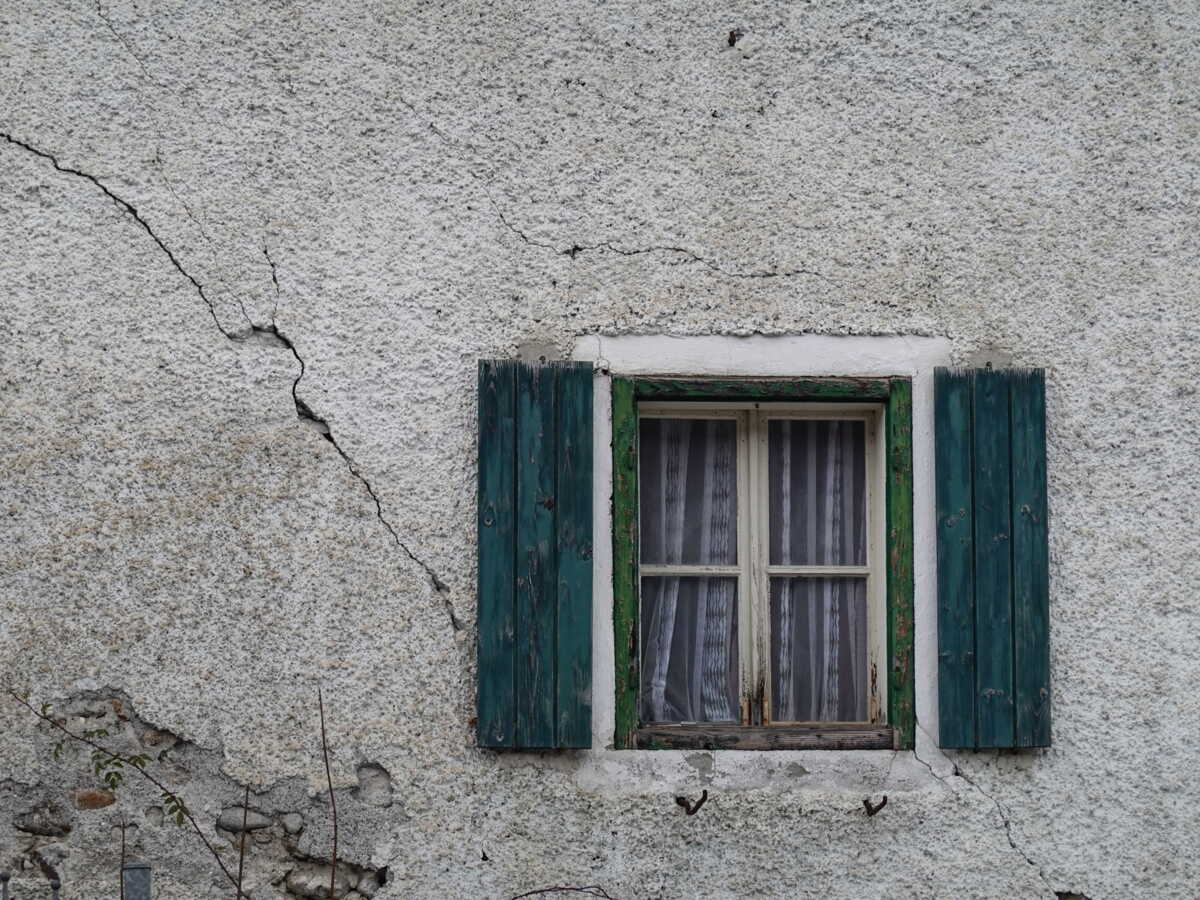
About 12 million individual houses in France, more than six in ten homes, are potentially exposed to clay shrink-swell damage, according to a new risk map published in January 2026. The figure sits at the center of a bill before the French National Assembly that aims to make it easier for homeowners to get compensated for drought-related cracking.

The bill addresses damage caused by retrait-gonflement des argiles, or RGA, a phenomenon in which clay soil swells and shrinks as heavy rain follows drought, cracking foundations and warping walls. It was adopted by the National Assembly's finance committee on Wednesday, November 25, and is due for a second reading and public vote on Thursday, December 3.
Julie Laernoes, a member of parliament from the Ecologist and Social group and the bill's rapporteur to the finance committee, described the scale of the risk as a real climate time bomb.
Years of legislative back and forth
The bill was tabled by ecologist lawmakers including Sandrine Rousseau and Julie Laernoes. The National Assembly adopted it at first reading on April 6, 2023, but the Senate rejected it on May 30, 2024. Its return to the Assembly floor marks the latest step in a process that has run for more than three years.
Rising cost of drought damage
Laernoes said RGA damage already accounts for 53% of claims made under France's natural disaster insurance scheme over the past ten years, according to figures from the Caisse Centrale de Reassurance, the state reinsurer that backs the scheme. She said the toll is set to keep rising as heatwaves followed by heavy rain, the conditions that drive clay shrink-swell, become more frequent.
For 2026 alone, the hottest year ever recorded, she put the cost of RGA damage at 5 to 6 billion euros. She said that can mean tens or even hundreds of thousands of euros for households whose properties are gradually losing value, sometimes becoming uninhabitable and impossible to sell, while they keep paying off a mortgage.
A denial of compensation
Laernoes said people affected by RGA face what she called a real denial of compensation. She said the average time to settle RGA-related claims reaches 60 months, a delay she described as humanly unbearable and politically unacceptable.
She added that this is the outcome even when everything goes well, meaning in cases where a victim's right to compensation is recognized in the first place. In 2025, only 6% of RGA victims obtained that right, according to Laernoes, who called the proportion unacceptable. She said this is largely because it currently falls to victims to prove that RGA caused the cracks in their homes, a burden that leads to many claims being refused.
Shifting the burden of proof
Article 2 of the bill, described as its core provision, would introduce a presumption of causality. When a municipality is officially declared to be in a state of natural disaster, damage would be presumed to have been caused by RGA, reversing the burden of proof. Laernoes said it would then fall to the insurer to show that RGA was not the determining cause of the damage.
A Senate report dated May 22, 2024, which examined an earlier version of the bill, found that this reversal could lengthen average assessment times by one to three years. The same report estimated the change would be particularly costly for the natural disaster insurance scheme, at 230 million to 290 million euros a year.
Other changes in the bill
The version adopted by the finance committee also includes other changes. Insurers would cover the cost of counter-expert assessments and soil studies, expenses currently paid by homeowners whose policies lack expert-fee coverage. Experts and repair companies would need official certification, and their liability would extend for ten years. The order recognizing a natural disaster could also cover a twelve-month period when further ground movement is expected.
What it would mean for existing claims
Homeowners already dealing with RGA damage should not expect much from the bill, which would not apply to claims already underway. The current legal deductible for drought-related claims stands at 1,520 euros, compared with 380 euros for other natural disasters.
Nothing is settled yet. If the National Assembly adopts the bill on December 3, it will have to go back to the Senate, which rejected the previous version in 2024.
What happens next
The National Assembly is due to hold a second reading and public vote on the bill on December 3, 2026; if it passes, the bill returns to the Senate, which rejected an earlier version in May 2024.
Test yourself
How many French houses are potentially exposed to clay shrink-swell damage, according to the new risk map?
What share of RGA victims obtained the right to compensation in 2025, according to Julie Laernoes?
What change would Article 2 of the bill introduce?