

Federal Reserve Chairman Kevin Warsh sent Wall Street stocks lower on Friday after delivering a hawkish warning on inflation during his address at Jackson Hole.
The Dow Jones Industrial Average dropped 0.02 percent to close at 53,559 points, while the S&P 500 fell 0.25 percent to 7,711 points and the tech-heavy Nasdaq Composite declined 0.52 percent to 26,402 points.
Stock markets had opened Friday's session with gains before sentiment reversed following the speech. Despite the final session losses, Wall Street completed a profitable week driven primarily by a surge in semiconductor manufacturer Nvidia. Over the five-day trading period, the S&P 500 and Nasdaq rose less than 1 percent, while the Dow Jones gained roughly 1 percent, marking its first winning week in three weeks.
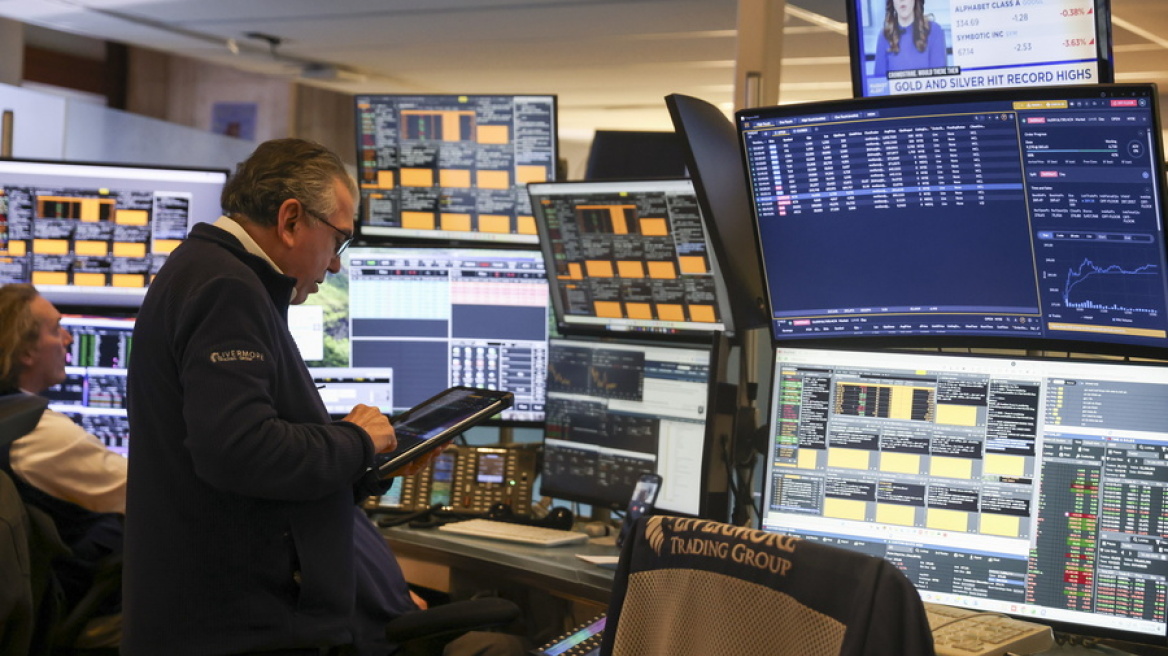
The Federal Reserve serves as the central bank of the United States, managing monetary policy to promote maximum employment and price stability. Stock markets had initially rallied earlier in the week as investors weighed corporate earnings and economic data, but sentiment shifted as central bank leaders gathered for their annual policy discussions.
Inflation Warnings at Jackson Hole
In his first major public address since taking charge of the central bank, Warsh addressed a wide range of topics at the Jackson Hole economic symposium, touching on artificial intelligence, central bank communications, and the overall state of the American economy.
The Jackson Hole Economic Symposium is an annual conference hosted by the Federal Reserve Bank of Kansas City in Wyoming, where global central bankers, economists, and policymakers gather to discuss international financial policy.
Warsh centered his message on price pressures, stating that underlying inflation trends in the United States had not shown material improvement. He emphasized that restoring price stability remained the primary priority for the Federal Reserve.
Warsh explained that his benchmark for policy was ensuring underlying inflation moved toward the central bank target clearly and at sufficient speed, adding that officials still had work to do if that standard was not met. He confirmed that the central bank had no intention of altering its 2 percent inflation target, noting that financial conditions were not currently restrictive and that interest rates remained the primary tool for fulfilling the central bank mandate.
Rate Hike Expectations and Treasury Yields
Wall Street analysts quickly parsed the central bank chief's remarks. Capital Economics noted that Warsh delivered a significantly clearer and more hawkish message than in his previous press conference. The firm stated that while rate increases were not guaranteed, the Fed chairman signaled a willingness to back monetary tightening if economic growth remained robust and inflation proved stubborn.
Seema Shah of Principal Asset Management observed that although upcoming economic data might show improvement, the risk of an interest rate hike at the September policy meeting had increased. She noted that positive market reactions to policy clarity indicated investors valued explicit guidance, even when accompanied by a stricter tone.
Following the remarks, financial market traders significantly raised their expectations for monetary tightening. Money markets shifted to price in a probability of over 59 percent for an interest rate hike at the upcoming September 16 policy meeting, up from approximately 35 percent the previous day, while at least one rate increase before the end of the year was viewed as nearly certain.
Bond markets reacted immediately to the shifted policy outlook, with short-term government debt bearing the brunt of the sell-off. The yield on the benchmark 2-year US Treasury note surged by 12 basis points to reach 4.35 percent, whereas the 30-year Treasury yield remained virtually unchanged with only a minor rise. A basis point represents one hundredth of a percentage point, and short-term yields are particularly sensitive to changes in Federal Reserve interest rate projections.
The shift in rate expectations boosted foreign exchange and commodity markets. The US dollar strengthened against major currencies, while spot gold prices declined. Cryptocurrency asset Bitcoin also experienced selling pressure, dropping below the $80,000 threshold.
Labor Market Data Ahead
Financial market participants now turn their focus to upcoming economic reports ahead of the Federal Reserve meeting. Crucial labor market indicators scheduled for release next week include job openings data, the ADP private sector employment report, and the official monthly Jobs Report due on Friday, September 4.
The ADP National Employment Report measures private payroll growth based on enterprise data, serving as a key precursor to the comprehensive employment report issued by the US Department of Labor.
Krishna Guha of Evercore pointed out that remaining economic releases would likely demonstrate further gradual progress, suggesting that Warsh himself was likely hoping for positive data to emerge before the September meeting.
Technology Stocks and Corporate Movers
Stock movements within the technology sector were mixed during Friday's trading. Advances across the majority of the Magnificent Seven mega-cap technology firms helped cushion broader market losses. E-commerce giant Amazon, iPhone maker Apple, Facebook parent Meta Platforms, and Google parent Alphabet all posted share price gains.
Conversely, electric vehicle manufacturer Tesla and chipmaker Nvidia closed lower. Nvidia dropped over 4 percent on Friday, giving back a portion of gains from a massive rally the previous day that had added more than $440 billion to its market valuation. The decline in Nvidia pulled down other semiconductor equities, including Marvell Technology and Advanced Micro Devices.
Digital payments provider PayPal recorded a sharp plunge of nearly 13 percent after private equity firm Advent International and payment processing company Stripe abandoned their effort to acquire the business.
Among notable gainers, enterprise search company Elastic jumped roughly 20 percent following quarterly financial results that topped analyst expectations and an upgraded corporate guidance. Apparel seller Gap gained ground after beating earnings forecasts and raising its full-year outlook. Enterprise software firm Workday advanced on strong demand for artificial intelligence applications, while Domino's Pizza rose alongside strength in the consumer discretionary sector. Energy major Chevron also logged substantial gains amid reports that the company is in talks to expand its oil production footprint in Venezuela, signaling ongoing efforts by American energy firms to reinforce their presence in the nation's petroleum industry.


