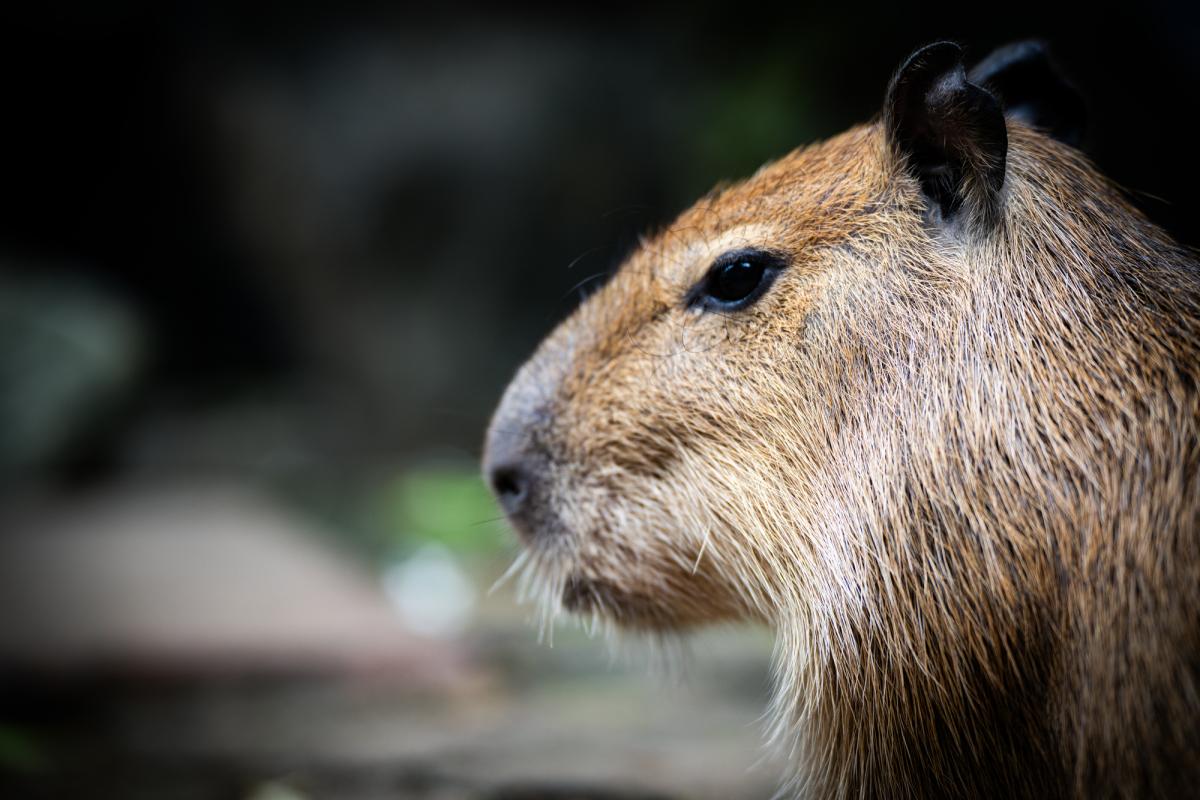
Scientists have identified a new species of ancient giant rodent in southern Thailand that lived around 34 million years ago and may have looked like a capybara, weighing as much as a large dog. The species has been named Yakamys sirindhornae, according to a report by Discover Magazine.
Researchers found a back tooth and a fragment of a front tooth belonging to the animal in a clay layer within a coal seam. The team said the teeth pointed to an animal that could have resembled a capybara in build and size.
Study co-author Virginie Millien said in a press release that the capybara is the largest living rodent today, but that very large rodents are not unique to modern ecosystems. She said giant rodents have emerged repeatedly throughout the later evolution of the group, mostly in South America, and that this discovery suggests Southeast Asia also played an important role in the early evolutionary history of large rodents.
What the teeth revealed
According to the researchers, the shape of the second lower molar and the microscopic structure of the lower incisor's enamel allowed the team to place Yakamys sirindhornae within Ischyromyidae, an early family of rodents.
To estimate the animal's weight, the researchers applied seven different models based on the ratio between tooth size and body mass in living rodents. The models produced an average estimate of 30 kilograms.
Millien said the figure is only an approximation, since estimating the body mass of fossil animals carries considerable uncertainty.
Filling a gap on the map
The researchers said the two teeth are enough to place Southeast Asia on the map of early giant rodents. The team said it hopes to find more fossils that could reveal what it was actually like to be a giant rodent in this part of the world.
What happens next
The research team said it hopes to find more fossils that could show what it was like to be a giant rodent in Southeast Asia.
Test yourself
What is the newly identified rodent species called?
Roughly how old is the fossil, according to researchers?
What was the average body mass estimate the researchers calculated for the animal?
Have your say
Do discoveries like this change how you think about ancient rodents?
Where it happened
Thailand