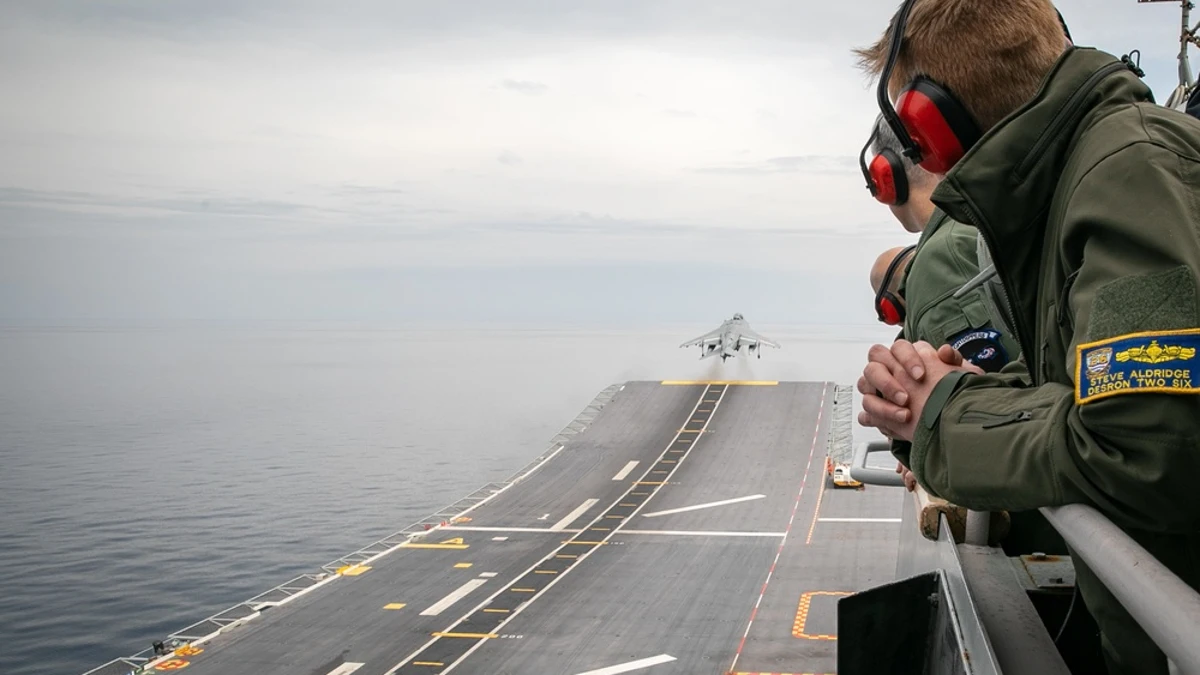
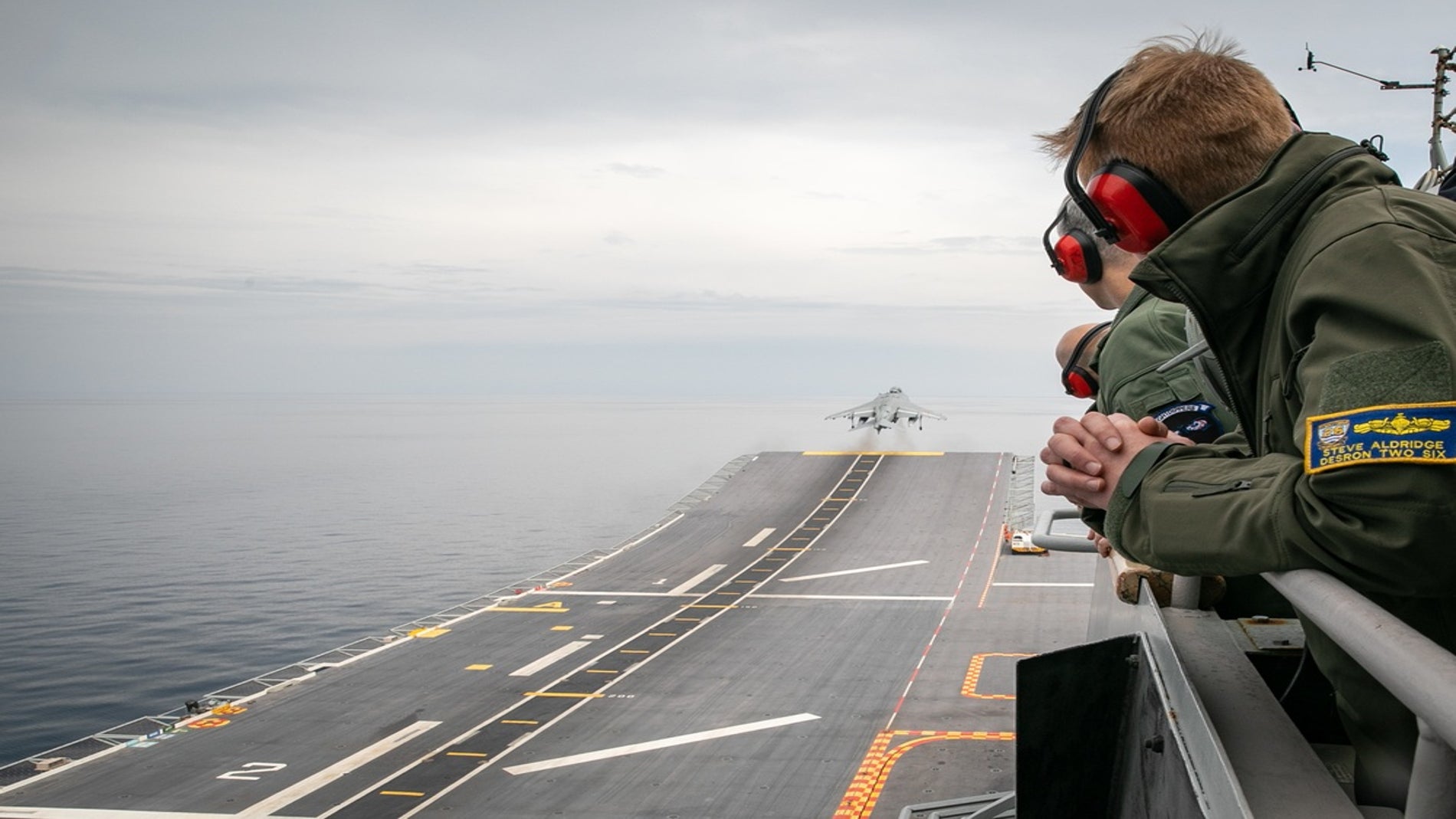
Spain's Harrier jump jets are approaching the end of their working lives, according to Vice Admiral Ignacio Paz García, who heads the Plans Division of the Spanish Navy's General Staff. Paz said the Harrier fleet's life cycle is coming to an end, though he did not give a date for when the aircraft would be withdrawn.
Paz made the comment in an interview published in the Anuario de la Defensa Naval en América Latina y España 2026, a defence yearbook put out by Grupo Edefa. His remark points to a looming need rather than announcing a fixed retirement timeline.
In the interview, Paz said the Navy is weighing several options to preserve its fixed-wing aviation launched from ships. He described an aspiration to field a fifth- or sixth-generation aircraft, but did not name a specific model, set a budget or give a firm schedule for the future carrier that would operate it.
The Harrier is a vertical and short takeoff and landing jet that the Spanish Navy flies from the Juan Carlos I, a Navantia-built ship that combines the roles of aircraft carrier and amphibious assault vessel. Any successor aircraft would need to operate from the same deck or from whatever vessel eventually replaces it.
A jet that must fit the ship
Navantia's own description of the Juan Carlos I shows why the choice of aircraft matters so much. The ship combines air operations, amphibious capability and transport in a single hull, with a flight deck, hangars, cargo areas and a floodable dock for landing craft.
Navantia says the vessel is built to operate vertical takeoff aircraft alongside different types of helicopters. That makes compatibility between any new jet and the flight deck a decisive factor in choosing a replacement for the Harrier. It also means a distinction has to be drawn between manned combat aviation and other aircraft carried on board, since adding new technology does not mean every aircraft on deck performs the same mission.
Navantia also presents the ship as a platform able to coordinate naval, land and air forces, using its communications and control systems to carry out command functions. The renewal of its air component falls within that wider set of connected capabilities, which can also be used to deliver aid or respond to humanitarian emergencies.
Air support is also being renewed
The debate over the Harrier's successor comes as Spain renews other air support assets. Airbus announced on 11 April 2025 that the first Spanish A330 MRTT had entered service with Ala 45, based at Torrejón air base. It was the first of three aircraft Spain bought in 2021 and converted at its Getafe plant.
The programme adds transport and in-flight refuelling capacity built with significant Spanish engineering work. According to Airbus, the aircraft refuels other planes using a hose and basket system and carries a basic fuel load of 111 tonnes. It can transport up to 300 troops or 45 tonnes of cargo, and can be fitted with medical evacuation equipment.
Those capabilities underline how important logistical support has become for keeping air operations running far from a home base, whether that support comes from a tanker aircraft or from a ship like the Juan Carlos I.
Paz framed the Navy's goal as preserving the continuity of its carrier-based aviation. The interview sets out the problem facing the Navy and the ambitions behind it, but leaves open exactly which aircraft, ship and timeline will eventually be chosen.
Test yourself
Who said the Harrier jets' life cycle is nearing its end?
What kind of aircraft does Paz say the Navy aspires to for a replacement?
How much fuel can Spain's new A330 MRTT carry as a basic load?
Have your say
What should Spain prioritize when choosing a replacement for the Harrier jets?
Where it happened
Madrid, Spain