

Greek politician Giorgos Pappas has outlined a proposal by political party ELAS to record valuables in bank safety deposit boxes under a comprehensive asset registry.
Speaking during an interview on SKAI radio, Pappas explained that the plan introduces a temporary patriotic contribution equal to one percent of net wealth. The tax would target the economically strongest one percent of natural persons in Greece.
Pappas said the tax would not function as a surcharge added on top of existing taxes. Instead, tax authorities would calculate one percent of an individual net wealth and subtract taxes already paid during the year, requiring payment only if a positive balance remains.
SKAI radio is a major commercial news and political broadcasting network based in Athens. In Greece, tax administration efforts have long sought to establish a comprehensive digital database, known as the Periousiologio, to catalog all individual physical and financial wealth for taxation.
Wealth tax mechanics and asset tracking
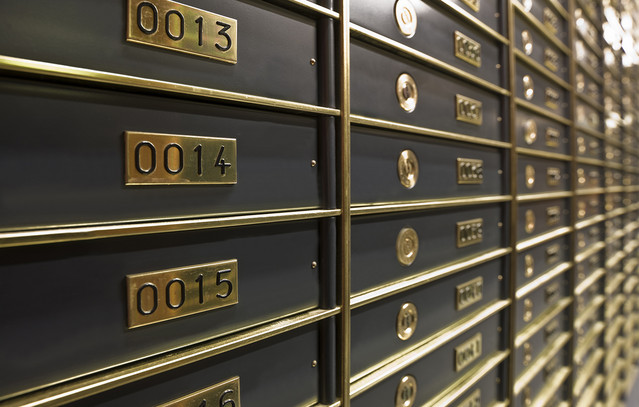
The proposal extends wealth tracking to assets not usually captured on standard tax returns. Pappas highlighted bank safety deposit boxes specifically, indicating that the registry could cover real estate, bank accounts, stocks, investment assets, jewelry, and other high-value items stored in bank vaults.
Pappas noted that the ELAS measure applies directly to natural persons rather than corporate entities. For assets held through corporate structures, tax inspectors would use the Ultimate Beneficial Ownership Registry to identify the individual who ultimately owns the wealth.
The Ultimate Beneficial Ownership Registry is an official database established across European Union member states to prevent financial secrecy by identifying individuals who exercise ultimate control over corporate entities. However, Pappas acknowledged that identifying assets held abroad by Greek tax residents in foreign registries remains an open challenge, warning that audits and cross-checks could take years.
Pappas clarified that the one percent wealth levy is not intended to be a permanent tax. He said the contribution would instead be imposed for a limited period of several years.
Political origins of the asset registry
Efforts to establish a central asset registry in Greece are not starting from scratch. Creation of the system was originally planned under governments led by SYRIZA, and ELAS stated that the legal framework for the registry has been in place since 2018.
SYRIZA, the Coalition of the Radical Left, served as the governing party of Greece from 2015 to 2019 under former Prime Minister Alexis Tsipras. Despite receiving statutory backing in 2018, the asset registry was never brought into full operation by tax authorities.
The resurgence of the asset registry in current political proposals has renewed concerns previously voiced by the market. Past objections focused on practical implementation challenges, data security, privacy protections for personal wealth, and potential negative impacts on broader economic activity.
Economic package presented in Thessaloniki
The proposed patriotic contribution forms a core element of a broader economic program unveiled by Alexis Tsipras in Thessaloniki.
Thessaloniki is the second-largest city in Greece, located in the northern region of Central Macedonia. It serves as the venue for the annual Thessaloniki International Fair, a major economic event where Greek political leaders traditionally present their policy platforms for the coming year.
The economic package outlined by Tsipras includes the abolition of the annual trade tax for self-employed professionals and the complete removal of tax advance payments for individual businesses. It also proposes reducing tax advance payments for corporations and doubling tax credits for families with children.
Further proposals include restoring debt repayment schemes allowing tax arrears to be settled in up to 120 monthly installments. The plan also calls for progressive taxation on company dividends, higher taxes on vacant commercial real estate held by legal entities, changes to gambling taxes, and the removal of tax breaks benefiting high-wealth individuals.
On indirect taxation, ELAS proposes lowering Value Added Tax to six percent on essential food and personal hygiene items. Value Added Tax, or VAT, is a general consumption tax levied on goods and services. The package incorporates additional policy commitments targeting wage levels, family support, bank borrowers, and business investment.
Fiscal costing debate and government pushback
According to financial estimates produced by the Tsipras economic team, the total four-year cost of the proposed package amounts to 7.39 billion euros. The team calculates permanent new revenues at 1.92 billion euros, resulting in a net expenditure of 5.47 billion euros.
Government officials have rejected the opposition fiscal estimates, arguing that the true financial impact is vastly higher. Government sources stated that the actual cost of the policy package reaches approximately 13 billion euros.
Government calculations indicate that the one percent patriotic contribution would yield only about 145 million euros in annual revenue. Officials argued this amount is entirely insufficient to offset the fiscal footprint of the promised tax cuts and spending programs.
The economic proposal from ELAS has sparked an intense political conflict over fiscal figures, with opposition leaders defending their revenue sources and government ministers accusing them of underestimating costs. At the center of the dispute remains the asset registry, as imposing an annual wealth tax depends on completely mapping individual assets that currently lie beyond the immediate view of tax authorities.


