Giovanni Maria Vian, the former director of L'Osservatore Romano, has published a new pedagogical book examining the modern relevance of the Bible.
The work, titled Los libros de Dios and published by Cristiandad, offers readers a guide to understanding Sacred Scripture through traditional church teaching and contemporary perspectives.
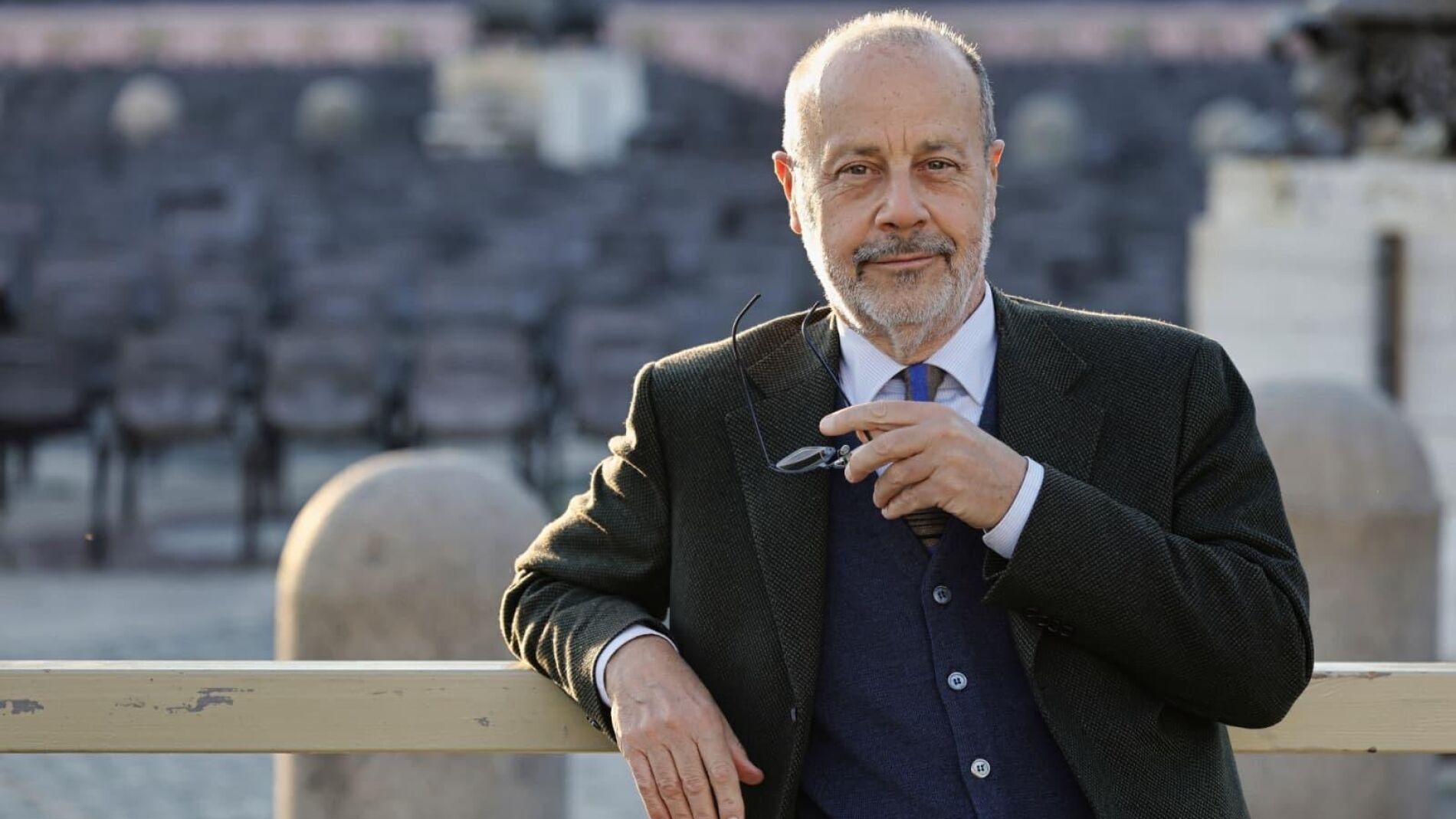
Vian, a specialist in ancient Christian literature philology, explained that first-time readers can start anywhere in the Bible. He stated that readers should open the text to any passage that catches their attention, even complex sections, because every book in the collection connects to and illuminates the others.
He noted that each biblical book presents a distinct narrative with the shared purpose of describing God searching for humanity and humanity searching for God. Vian emphasized that the Jewish Bible, known to Christians as the Old Testament, is essential because the New Testament is a re-reading in the light of Christ that relies entirely on Jewish scripture.
Citing former Pope Joseph Ratzinger, Vian said Ratzinger wrote that Christianity without its Jewish biblical roots would be like a plant without roots, destined to dry up. He recalled that during a second-century debate, radical figures attempted to remove the Old Testament, but the main Church defeated the effort and retained the text.
Rejection of Christian anti-Judaism
Vian rejected views that separate the judging God of the Old Testament from Jesus as savior, calling the distinction a false perspective. He stated that the God of Jesus is the same single God depicted throughout the Old Testament.
He pointed out that Ratzinger firmly rejected opposing the two testaments when he served as prefect of the Holy Office. Vian added that Christian anti-Judaism historically contributed to neo-pagan forms of Nazism and racist antisemitism, which must be completely rejected.
He reminded readers that Mary and the apostles were Jewish, noting that people often fail to reflect on their background. While the arrival of Christ brought fundamental changes, Vian warned that setting the Old Testament against the New Testament creates severe risks.
Historical evidence in the Gospel of John
When asked about his personal reading choices, Vian identified the Gospel of John as his primary reference text. He described the Fourth Gospel as the most impressive book in the Bible, noting that its opening passage about the Word existing with God before time echoes the creation narrative in Genesis.
Vian said the speeches attributed to Jesus in John contain deep historical roots that have been validated by archaeological discoveries. He cited the healing of the paralytic at the pool with five porches in Jerusalem as a key example.
Although scholars previously viewed the five porches as symbolic because traditional pools have four sides, archaeological excavations in Jerusalem later uncovered a pool structure matching the five-porch layout described by John.
Vian noted that the traditional symbol for John, featured at the Sagrada Familia basilica, is an eagle capable of flying high and looking directly into the sun. He added that Greeks refer to John as the theologian and encouraged people to read the Bible during summer vacations, stating that long biblical passages often surpass novels.
Migration themes and the nature of evil
Regarding the ongoing migration crisis in Ceuta, Vian said the biblical Exodus story of the Jewish people escaping slavery in Egypt comes to mind. He explained that the Bible frequently addresses migration because human life itself represents a journey.
Vian cited Philo of Alexandria, an ancient Jewish scholar influential in early Christianity, who interpreted the Jewish pilgrimage as an allegory for the journey of the human soul. He compared the motif to modern pilgrimages like the Camino de Santiago and classical works such as the Odyssey, noting that travelers use journeys to evaluate their lives.
Vian observed that the tragedy in Ceuta also highlights the reality of evil present throughout scripture. Citing Pope Paul VI, he explained that the devil should not be reduced to a simplistic horned image, adding that the Hebrew root of the word means accuser while the Greek root diabolos means one who divides.
He noted that John's Gospel and the Book of Revelation assure believers that the prince of this world has been defeated and will be cast into the lake of fire.
Revelation, artificial intelligence, and papal guidance
Vian clarified that Apocalypse means revelation and refers to understanding current conditions rather than predicting future events. Addressing artificial intelligence, he stated that AI is a tool whose value depends on human intent rather than an apocalyptic sign.
He warned that AI can be used constructively or maliciously for war, manipulating young people, or eroding critical thinking. Vian criticized both those who label AI as diabolical and those who accuse opponents of AI of being the antichrist, emphasizing that individuals must choose between Christ and the antichrist in their daily lives.
He cautioned against fundamentalist literalism when reading scriptures, calling literal interpretations dangerous in both Jewish and Christian contexts.
Regarding Pope Leo XIV, Vian said the pontiff reflects the spiritual line of Saint Augustine, whom Vian cites frequently for his commentaries on the Psalms and the Gospel of John, rather than aligning with a single biblical figure.