

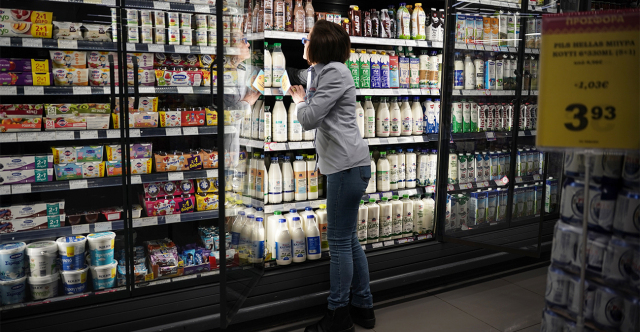
Greece's National Price Reduction Initiative has now added 1,150 product codes, with the government setting August 31 as the deadline for consumers to see the lower prices on supermarket shelves.
Development Minister Takis Theodorikakos presented the progress of the initiative to the Cabinet on Monday, at a time when the high cost of living remains a central concern for households despite a slowdown in food prices recorded in July.
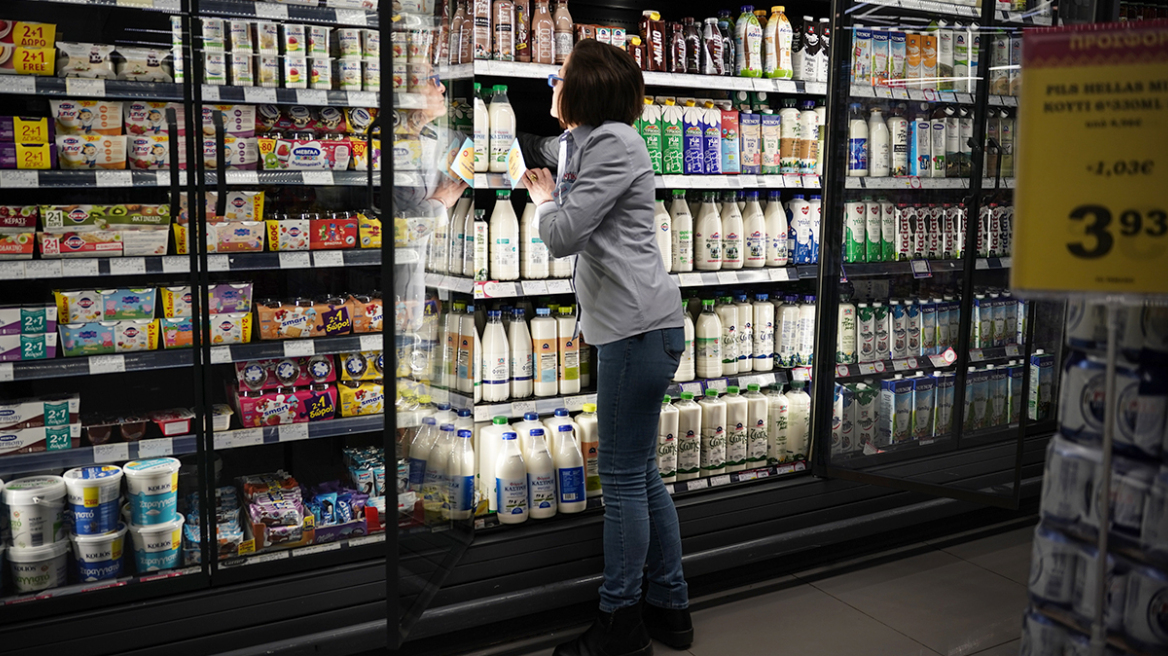
According to the figures presented, by August 20 the scheme had incorporated 750 codes of branded products and 100 codes of private label products, with the average price reduction on those items running at around 7 percent. So far, 62 suppliers and 10 supermarket chains are taking part.
The reductions span a wide range of everyday household goods, including dairy products, meat, pasta and pulses, as well as cleaning products, personal hygiene items, baby food and nappies.
School supplies included
A separate strand of the initiative targets the school supplies market ahead of the start of the new school year. Six retail chains are taking part in this part of the scheme, with price cuts applied to 300 codes of school items.
With the addition of the school supplies, the total number of product codes included in the initiative so far rises to 1,150: 750 branded products, 100 private label products and 300 school items.
That figure is not final. The list remains open, with new product codes and new suppliers being added daily, leaving room for the initiative to expand further before it is fully rolled out.
Getting to the shelf
The next critical step is for the agreed reductions to be reflected in the prices consumers actually find on the shelf. Under the initiative's timetable, the lower prices should be in place in supermarkets by August 31, putting into practice the outcome of the process carried out between the ministry, suppliers and retailers.
The move carries particular weight as the government tries to build a more direct buffer against the rising cost of living, with the emphasis this time on outright reductions in the prices of specific products rather than simply holding off new price increases.
Risks heading into winter
In his briefing to the Cabinet, Theodorikakos also addressed the risks that remain on the price front. He noted that despite the negative food inflation recorded in Greece in July, there was no room for complacency.
He said the wider geopolitical picture, including the two wars currently under way, continued to be a source of inflationary pressure, mainly because of the large rise in international oil prices. He described this as a factor that carries even greater weight as winter approaches, since it could once again affect costs for businesses and households.


