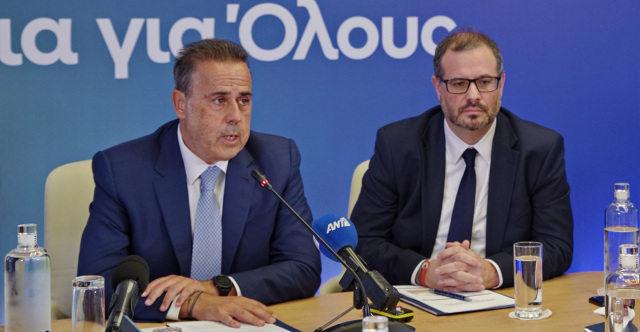
Greece's Ministry of Environment and Energy put a new framework into effect on September 14, 2026 that makes it simpler for households and businesses to produce and consume their own electricity, a practice known as self-consumption or net billing. The decision was signed by Environment and Energy Minister Stavros Papastavrou and Deputy Minister Nikos Tsafos.
The ministry described the move as part of a three-year roadmap to reduce energy costs, forming part of the Agreement for Progress and Prosperity that Prime Minister Kyriakos Mitsotakis presented at the 90th Thessaloniki International Fair, an annual trade exhibition where Greek governments traditionally unveil economic policy. The ministry had detailed elements of the roadmap the previous week.
The regulation followed a public consultation involving institutional bodies and citizens, along with an opinion from the Regulatory Authority for Waste, Energy and Water. The ministry also plans to allocate an additional 476 million euros through the Islands' Decarbonization Fund to expand self-consumption and grid flexibility and to lower electricity costs on Greek islands. It has already distributed more than 170 million euros from the Recovery and Resilience Fund for the "Photovoltaics on the Roof" and "Photovoltaics on the Field" programs, as well as an ongoing "Storage in Businesses" scheme.
Balcony Solar Panels Allowed for the First Time
For the first time, households will be able to install small photovoltaic systems with a maximum output of 800 watts, so-called balcony solar panels, for their own use, through a simplified electronic notification process. A dedicated digital portal being built by grid operator DEDDIE, the Hellenic Electricity Distribution Network Operator, is expected to launch by the end of the year and will cover systems with installed capacity of up to 1,000 watts that can also be paired with storage.
To protect the network, DEDDIE will work with the Hellenic Organization for Standardization to publish safety specifications, which installers must confirm through a signed declaration. A smart meter will be mandatory for every connection, and supplies must carry an active installer's declaration. DEDDIE will also be able to bar new balcony connections in parts of the network where absorption capacity is limited.
Standalone Batteries Now Permitted
The framework allows, for the first time, standalone storage systems installed without a renewable generation unit, solely to cover a consumer's own needs. It sets power limits relative to contracted consumption or generation capacity, conditions for injecting and drawing power from the grid, simplified licensing, an exemption from the guarantee letter requirement for low-voltage consumers, and priority processing of applications by the relevant grid operator. Combined with dynamic electricity tariffs, consumers will be able to store cheaper grid power during low-price hours and use it when prices are higher.
The ministry illustrated the mechanics with a bakery example. Without a battery, a bakery consumes solar output directly while it is generating; surplus output is injected into the grid and compensated based on day-ahead market revenue, while any shortfall is billed at the supplier's tariff. With a battery, if the bakery consumes 100 kilowatt-hours while its panels produce 120, the surplus 20 kilowatt-hours can be stored or injected into the grid, then drawn on later as output falls. Households follow the same logic, and a dedicated program for rooftop systems up to 10.8 kilowatts credits the value of surplus energy directly to the consumer's settlement bill.
Broader Access and Simplified Procedures
The new rules clarify settlement and clearing procedures, ease collective self-consumption in apartment buildings and residential complexes, and allow stations developed by a third party for a self-consumer's benefit. Consumers in a scheme can now be represented by different suppliers, and, under conditions, can switch between schemes or connect one supply to more than one station. Transitional provisions apply to existing stations so the move to the new framework happens without extra cost.
Special Procedure for Public Bodies
Local authorities, public and private-law legal entities of the public sector, and charitable foundations get a dedicated net billing and virtual net billing procedure for stations serving schools, health centres and hospitals, sports centres, street lighting networks, and water and sewage facilities. Savings from these stations will be credited directly as a discount on electricity bills.
Digital Registry and Smart Meters
The reform is paired with a modernization drive: faster smart meter rollout for anyone joining a self-consumption scheme, and the launch of an Electronic Registry of Self-Consumers to digitize record-keeping and allow faster information exchange between the bodies involved.
Protection for Projects Already Underway
Stations with net billing or virtual net billing arrangements that already hold a final connection offer or signed connection contract, but which could not begin operating before the new framework's publication, will have their validity period restart so construction can be completed.
Growth Since 2020
The ministry said 38,812 self-consumption systems with combined capacity of 1,128 megawatts have gone into operation since 2020, with strong household and business participation, compared with just 1,772 systems totalling 36 megawatts between 2015 and 2019. The consultation on the new framework ran for 15 days.
What Happens Next
DEDDIE is due to publish the safety specifications for balcony solar panels on its website by October 31, 2026, after which interested households can begin installing and connecting the systems.