

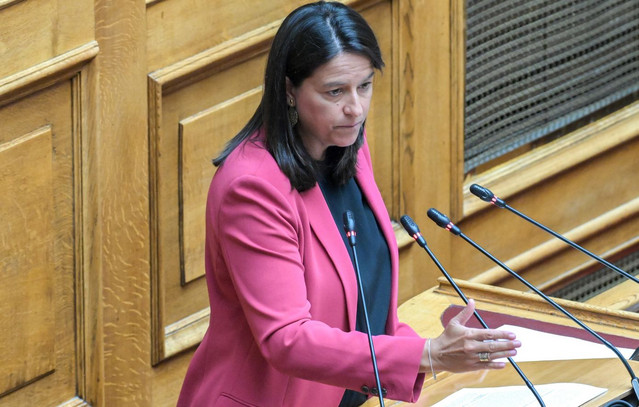
Greek Labour Minister Niki Kerameus told the Hellenic Parliament in Athens that the government is ending cuts to survivor pensions, triggering a sharp debate with opposition lawmakers over pension rights.
The new regulation abolishes a previous rule that reduced a survivor pension from 70 percent to 35 percent after the first three years if the beneficiary was employed or receiving their own pension. That reduction was originally introduced under the Katrougalos pension reforms of 2016, a major overhaul that restructured social security payouts across Greece.
According to the Ministry of Labour, approximately 8,500 beneficiaries who had already suffered the reduction will now have their pensions restored to 70 percent. In addition, more than 75,000 pensioners will no longer face the planned reduction, and authorities will not seek to recover retroactive amounts from them.
Kerameus told lawmakers that two factors caused the delay in resolving the issue: a complex legal situation and the necessity to secure adequate fiscal space. She said the required funding became available largely because of the expansion of the Digital Work Card, an electronic system designed to track employee working hours, which generated social security revenue significantly above initial targets.
Opposition demands for full restoration
Opposition parties rejected the government claims and argued that the measure offers only partial relief. Lawmakers from the centre-left PASOK party and the Communist Party of Greece, known as KKE, insisted that the new rules fail to cover all categories of survivor pensioners.
Critics focused on individuals who lost their spouse prior to May 2016, as well as ongoing unresolved issues surrounding supplementary pensions. The opposition demanded equal treatment for all beneficiaries regardless of when their spouse died, calling for all survivor pensions to be set at 70 percent without current distinctions.
Clash over extra monthly pensions
The parliamentary debate rapidly expanded into a wider confrontation over reinstating the 13th and 14th monthly pensions. These annual holiday bonuses, traditionally paid to Greek pensioners at Christmas, Easter and summer, were eliminated during the country's financial crisis bailout reforms.
New Democracy parliamentary spokesperson Notis Mitarachi defended the government position by arguing that the 13th and 14th pensions represent a total increase of about 16.5 percent. Citing official figures, Mitarachi said average pensions in Greece have increased by 17.5 percent since 2019, meaning recent raises have already exceeded the financial value of the two extra monthly payments in percentage terms.
PASOK rejected the government argument and demanded the full restoration of the 13th pension as an independent benefit. PASOK lawmaker Dimitris Mantzos told Parliament that internal party calculations show the measure would cost roughly 420 million euros in its first year and 840 million euros once fully implemented.
Representatives from KKE and the left-wing Course of Freedom party also accused the government of framing minor corrections as complete restoration of lost retiree income. While the new rules address immediate cuts for tens of thousands of widows and widowers, broader pension disputes regarding older claims, supplementary payouts and holiday bonuses remain unresolved ahead of future parliamentary battles.


