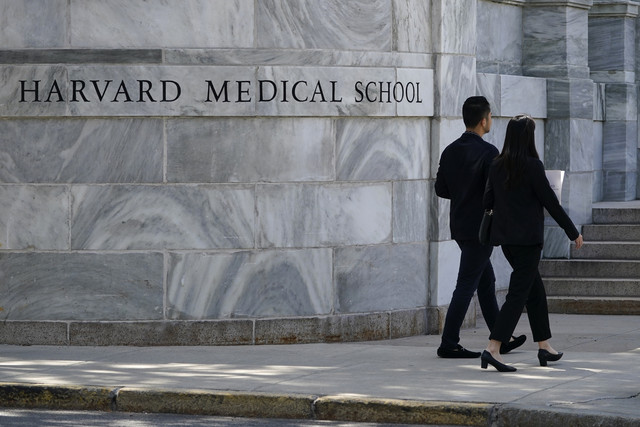
Harvard University has agreed a $53 million settlement in Boston to resolve lawsuits from families whose relatives' bodies were stolen from its medical school morgue.
The proposed agreement, filed in a Boston court, aims to settle civil litigation stemming from a black market body parts network uncovered in 2023. If approved by the court, the settlement will conclude three years of legal action brought by grieving relatives over one of the most macabre scandals in the institution's history.
Harvard Medical School, founded in 1782 in Boston, Massachusetts, is one of the oldest medical education institutions in the United States. The school relies on anatomical body donation programs for medical training and scientific research, receiving donor remains under strict agreements that they will be respectfully cremated and returned to families once educational work is complete.
Black market body parts ring
According to the U.S. Department of Justice, former morgue manager Cedric Lodge harvested human remains from donated corpses prior to their scheduled cremation. Federal prosecutors stated that Lodge removed brains, skin, hands, faces, organs, and severed heads from bodies stored at the medical school facility.
Instead of preparing the remains for cremation, Lodge funneled the stolen body parts to buyers operating on the black market. According to prosecutors, Lodge even allowed certain buyers to physically enter the Harvard Medical School morgue to inspect the human remains and select which parts they wanted to purchase.
Lodge also transported stolen body parts to his personal residence in New Hampshire. From there, he and his wife, Denise Lodge, conducted interstate sales to buyers located in several other U.S. states.
Human skin used for bookbinding
Disturbing details regarding the destination of the stolen remains emerged during legal proceedings. Prosecutors stated that human skin sold through the network was processed and used for bookbinding. In another transaction, a buyer purchased a severed human face.
Prosecutors emphasized that beyond the criminal violations, the scheme inflicted severe emotional damage on the families. Relatives were left unable to verify what had happened to the bodies of their deceased loved ones.
The civil lawsuits reached the Massachusetts Supreme Judicial Court, the highest tribunal in the commonwealth of Massachusetts. The state supreme court allowed the litigation to proceed, ruling on whether the university could be held legally accountable for failing to safeguard donor remains.
Sentencing and oversight review
The families argued in their lawsuits that Harvard should have realized what was happening much earlier. They asserted that the institution failed to take adequate precautions to stop an employee from stealing human tissue or granting black market buyers physical access to the morgue.
Harvard Medical School dismissed Lodge from his position in 2023 after the scheme was uncovered. University officials characterized the revelations as morally abhorrent, issued a public apology to the affected families, and announced a comprehensive review of security and oversight procedures for the body donation program.
Lodge pleaded guilty in 2025 to federal charges involving the interstate transportation of stolen human remains and was sentenced to eight years in prison. Denise Lodge was also convicted for her role in facilitating the illegal transactions.
The $53 million agreement resolves the civil proceedings arising from the scandal, ending a case that began with missing body parts at a university morgue and exposed a nationwide market in stolen human remains.