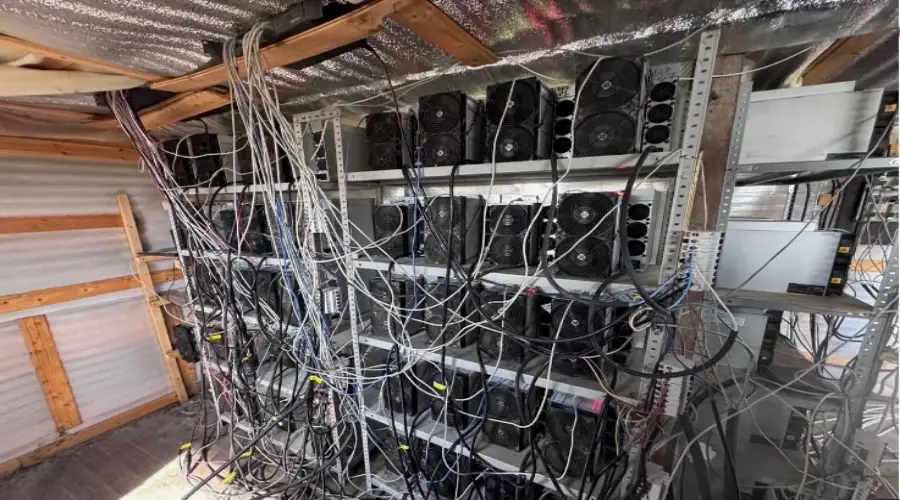
Russian developer Hash Maker has been stripped of its state support and ordered to pay 159 million rubles in penalties for running a cryptocurrency mining operation instead of building an approved data center in Lipetsk Oblast.
A court set the penalty at 5% of unfulfilled investments, which was capped at 5 million rubles under the agreement terms. However, authorities added 154 million rubles in back value-added tax owed after the firm used customs tax privileges.
Unfulfilled investment commitments
Court records show Hash Maker acquired resident status in a regional Special Economic Zone in 2021. Special Economic Zones are designated industrial areas in Russia that offer tax breaks and customs privileges to attract technological and infrastructure investment.
Under its contract with the regional administration, Hash Maker pledged to construct a data processing center and invest 4.6 billion rubles into software development, database creation, and information systems. However, the regional ministry of industry stated that the company invested only 835 million rubles and never began constructing the data center.
The ministry reported that the company's operations failed to match its approved business plan. Officials found that Hash Maker focused entirely on cryptocurrency mining, using all of its computing equipment to generate hashrate rather than create software. Modular server containers designed for crypto mining were positioned directly on the plot designated for the data center.
Despite the breach, Hash Maker notified local authorities in December 2024 that it had been officially registered in the state registry of cryptocurrency miners.
Regional crypto mining regulations
Cryptocurrency mining remains legal in Lipetsk Oblast, a region located in western Russia. However, Russian federal authorities have considered broader restrictions on energy-intensive digital asset extraction.
In May, the Russian government began evaluating a proposal to ban cryptocurrency mining across 19 regions powered by the Moscow electrical grid. If implemented, the measure would shut down mining across central Russia, affecting Moscow, Moscow Oblast, and 17 surrounding territories including Belgorod, Vladimir, Vologda, Voronezh, Ivanovo, Kostroma, Kursk, Oryol, Lipetsk, Ryazan, Bryansk, Kaluga, Smolensk, Tambov, Tver, Tula, and Yaroslavl Oblasts.
At present, federal authorities have imposed crypto mining bans only in Moscow, Moscow Oblast, and eight districts within Kursk Oblast. That regional ban takes effect on August 15 and is set to run through December 31, 2032, with options for unconditional future extensions.