

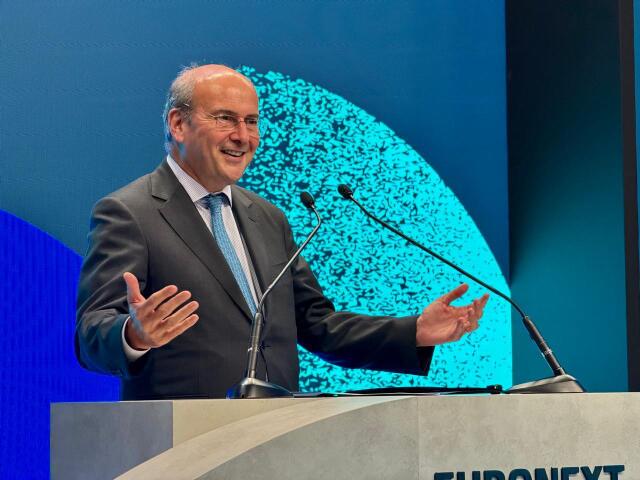
Greek Deputy Prime Minister Kostis Hatzidakis said the Athens Stock Exchange has turned a page, with Greece returning to developed markets, joining Europe's largest stock exchange group and once again drawing the interest of major international investors. He was speaking on September 15 at an event marking the 150th anniversary of the Athens Stock Exchange.
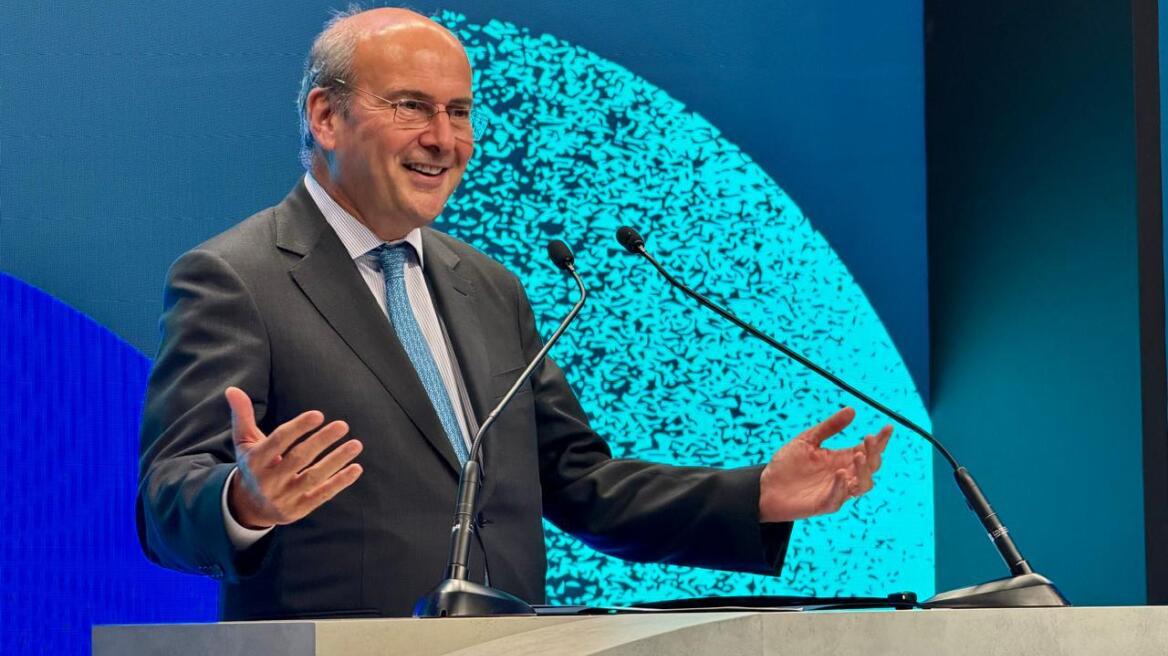
Hatzidakis pointed to two developments he said marked a new era for the Greek capital market: the Athens Stock Exchange's entry into the Euronext group, and the Greek market's return to developed-market status.
Joining Euronext
He described Euronext as the largest capital markets infrastructure in Europe, with about 1,800 listed companies, a combined market value of roughly 7 trillion euros, and almost a third of transparent share trading across the continent.
On developed-market status, he said the reclassification by the international index providers STOXX, S&P Dow Jones Indices and FTSE Russell would be formalized on September 21, with the next major step in market classification expected from MSCI in May 2027.
Hatzidakis said none of this had happened because someone decided to do Greece a favor. International markets do not operate on sympathy, he said, they assess data, and they see an economy growing steadily faster than the European average, a country running with fiscal discipline that does not spend beyond its means, and one that regained its investment grade some time ago. He said markets also see a government that has consistently pursued pro-investment policy, and the performance of the Athens Stock Exchange itself, which he said was one of only two markets worldwide to post positive returns for five consecutive years.
He said that momentum has continued into 2026, with the benchmark General Index up 26.2% so far this year, average daily trading value up 51.6% compared with last year, and foreign investors' share of total trading activity rising to 70%, from 64% at the end of 2025.
Capital raised and investment targets
Hatzidakis said total capital raised on the exchange so far in 2026 stands at 7.9 billion euros, while cash distributions to shareholders from listed companies remain at historically high levels.

He said the return to developed-market status raises Greece's profile with the international investment community, widens the pool of investors able to place money in the country, and could over time help increase liquidity, broaden the investor base and improve valuations. He linked this directly to a national goal for the next four years: raising annual investment in Greece from 45 billion euros currently to 65 billion euros, so that it exceeds 20% of GDP and reaches the European average. He said European funds have been and remain valuable, but no economy can base its growth solely on European subsidies.
He added that citing these figures was not an attempt to forecast the exchange's future course or predict share prices, saying government's job is not to make stock market forecasts but to create a stable, credible and investment-friendly environment.
Tax incentives and market reforms
Hatzidakis listed steps the government has taken in recent years to strengthen the Greek capital market, including cuts to taxation on corporate profits, dividends and capital raising. He cited a cut in the tax on interest from listed corporate bonds from 15% to 5%, a doubling of the deduction for costs of listing small and medium-sized companies, and expanded tax exemptions for investors in the alternative market.
He also pointed to modernized rules allowing securities to move from the Main to the Alternative Market and shares with multiple voting rights, along with reinforced supervision by the Capital Market Commission and the Bank of Greece. He said this approach would continue, with further incentives for companies to list, measures to widen participation by Greek savers, greater financial literacy efforts, and wider use of new investment and financing tools.
Turning to Europe, Hatzidakis said household savings across the continent total 33 trillion euros, much of it left in low-yield deposits, while European companies with promising ideas often struggle to find funding and look instead across the Atlantic. He said this is why Greece has backed a genuine Savings and Investment Union from the outset, arguing that a European economy of 450 million people cannot compete with the United States and China while split across 27 fragmented capital markets.
He said the next step is more listed companies in sectors where the Greek economy has tradition and comparative advantage, more Greek firms using the capital market to grow, more citizens participating in investment opportunities responsibly and with good information, and more international capital finding reasons to stay and invest in Greece. He said the ambition is for the Athens Stock Exchange to sit at the heart of a more productive, outward-looking and competitive Greece, one that does not merely seek capital for its growth but becomes itself one of Europe's most attractive investment destinations.
Hardouvelis marks 150 years of the exchange
Gikas Hardouvelis, president of the National Bank of Greece, also addressed the event. He said the Athens Stock Exchange's entry into Euronext opens a new chapter for the Greek capital market, and that its core mission remains converting savings into productive investment.
Hardouvelis reviewed the exchange's 150-year history, describing it as the country's second-oldest financial institution after the National Bank of Greece. It was founded in 1876, a few decades after the modern Greek state came into being, at a time when Greece was building ports, railways and major infrastructure and reconnecting with international capital markets. He said it began operating in 1880 with 10 equity securities, one corporate bond and six bonds of the Kingdom of Greece, before gradually developing into a central mechanism for raising capital for the state and for companies.
He said that over the following century it grew into a modern, organized capital market with strong institutions and rules, a path that, like Greece's own history, was not a straight line. The country went through wars, economic crises, currency turmoil and fiscal hardship, he said, but the exchange endured as the main institution linking the Greek economy to capital markets.
Four challenges for the future
Hardouvelis said the exchange still serves the same long-standing purpose today: turning savings into investment. He said joining Euronext is not simply an organizational change but reflects a deeper shift, as capital markets enter an era of major transformation defined by four challenges: financing growth, unifying European capital markets, adopting new technology and adjusting to geopolitical realignment.

On the first, he said the task for coming decades is not just accumulating capital but channeling it effectively into innovation, entrepreneurship and investment that lifts an economy's growth potential. For Greece, he said, the challenge is not only financing large, established companies but also funding new, outward-looking firms, startups, technology, exports and productive investment that will shape the country's economic model for decades to come.
He said organized exchanges must remain the place where liquidity concentrates and reliable price discovery happens, since liquidity is a market's strongest competitive advantage. He added that artificial intelligence is already changing how markets work, lowering the cost of processing information, widening investors' access to knowledge and improving investment decision-making, so that the markets of the future will be more intelligent as well as more digital.
A fourth challenge, which he said might prove the most decisive, is that capital markets are now taking on geopolitical significance, as Europe must simultaneously finance its technological autonomy, energy transition, digital transformation and defense capability.
Hardouvelis said that 150 years ago the Athens Stock Exchange connected Greece to the international capital flows of the age of steam, railways and the telegraph. Today, as a Euronext member, he said it is called on to connect Greece to a Europe of innovation, artificial intelligence, green transition and unified capital markets, one seeking not only greater prosperity but greater strategic autonomy.
He closed by saying the mission of exchanges has not changed: to convert savings into investment, innovation into productivity, and ideas into prosperity.


