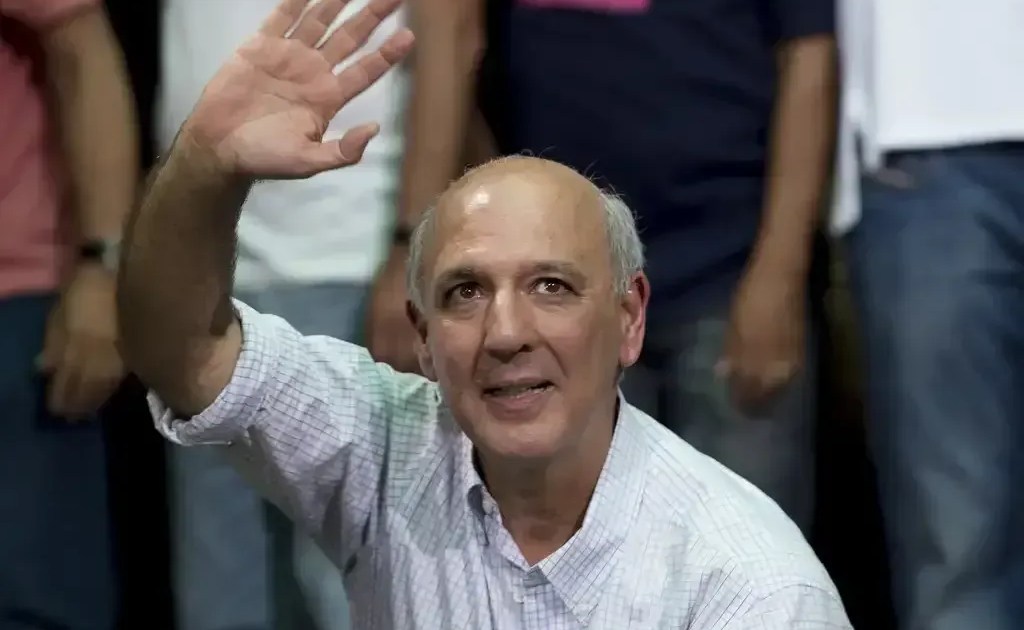
Former Federal District governor Jose Roberto Arruda has ended his political campaign after Brazil's Superior Electoral Court rejected his appeal to run in 2026.
The ruling on Thursday, 24 September 2026, officially excluded Arruda from the gubernatorial race and prompted the former governor to announce his departure from political life after consulting his legal team.
Arruda said that he respected the court ruling and confirmed that he would not file further appeals, stating that his path ended here. He added that he intended to dedicate his time to his family and personal life, noting that life was greater than politics and that he would follow Brazilian politics only from the outside.
Arruda also pleaded with voters not to cast ballots for him on election day, warning that any votes registered in his favor would be thrown out as invalid. He apologized to his supporters for having believed in his bid until the end and asked them not to select his name even if his bald head appeared on the digital ballot box screen.
Voting Machines And Ballot Status
Following the decision to bar Arruda, reporting justice Dias Toffoli ordered the court to notify the Regional Electoral Court of the Federal District immediately so officials could update electoral systems and remove the candidate from electronic voting machines.
Regional electoral authorities announced in an official note that Arruda's name and photograph would nevertheless still appear on voting machines across the capital. Officials explained that this occurred because the CAND Candidacy System, which compiles all candidate data used to prepare voting machines, had closed on 17 September 2026.
The electoral authority alerted voters that any vote cast for a candidate whose registration was denied would be recorded as null. Officials clarified that this nullity applied only to the vote cast for governor of the Federal District, while votes cast by the same elector for all other offices would remain valid and unaffected.
Brazil conducts its elections nationwide using direct recording electronic voting machines, where electors enter numeric candidate codes and review photograph confirmations on screen. In the Federal District, which encompasses the national capital of Brasilia, voters cast ballots for a district governor rather than state or municipal leaders.
Superior Electoral Court Ruling
The Superior Electoral Court issued its ruling during an in person session in Brasilia, turning down Arruda's appeal against an earlier regional decision that had denied his registration for the 2026 gubernatorial election.
The panel voted four to two to reject the appeal, sealing Arruda's official exit from the race under the guidance of reporting justice Toffoli. Justice Floriano de Azevedo Marques broke from the majority, arguing that the court should have treated the underlying cases as related and that Arruda's ineligibility had already expired at the end of July.
Justice Estela Aranha joined Marques in dissent. In his dissenting statement, Marques argued that slicing legal cases dealing with the same underlying fact and delays within the judiciary should not harm individuals by postponing their ineligibility.
The majority decision upheld a unanimous finding by the Regional Electoral Court of the Federal District, which declared Arruda ineligible because of convictions for willful acts of administrative misconduct committed while he was governor. The higher court agreed with the Electoral Public Prosecutor's Office that the convictions were separate legal matters, meaning the restriction had to be measured from an appellate ruling published in December 2018 and would run until December 2030.
Clean Slate Law And Pandora Scandal
Arruda previously served as governor of the Federal District from 2007 to 2010. His term collapsed during Operation Pandora's Box, a major 2009 corruption investigation that exposed a widespread bribery and kickback scheme involving senior officials and lawmakers in Brasilia.
The investigation resulted in seven separate convictions against Arruda for administrative misconduct. The earliest of those judicial convictions dates back to December 2014.
Those rulings brought Arruda under Brazil's Clean Slate Law, which prevents politicians convicted of corruption or administrative misconduct by a collegiate court from running for public office. Under current rules, the law sets a twelve year limit on ineligibility for successive convictions in related proceedings, with the clock running from the date of conviction after Congress amended the legislation last year to remove the previous rule that counted time from the end of a political mandate.
Arruda's lawyers maintained that the revised Clean Slate rules made him eligible to run starting in July of this year, calculating the twelve year window from an initial July 2014 decision. The regional court rejected that claim, ruling that the convictions were not all connected and that the twelve year restriction began only with a second collegiate conviction issued in 2018, agreeing with arguments from the electoral prosecution.
Campaign Reactions And Endorsements
Following his removal from the race, Arruda declined to endorse any of the contenders who remained in the Federal District contest. He offered public praise to four rival candidates: Kiko Caputo of the New Party, Ricardo Cappelli of the Brazilian Socialist Party, Paula Belmonte of the Brazilian Social Democracy Party, and Leandro Grass of the Workers' Party.
Arruda stated that all four competitors had conducted themselves in an elegant manner throughout the campaign and deserved his respect. In his statements to reporters, Arruda made no mention of candidate Celina Leão of the Progressives party.
The court ruling leaves the remaining candidates to campaign without Arruda in the final stretch of the election. While his picture will remain visible on electronic voting screens across Brasilia, election authorities will discard any votes cast for the former governor.