

Female candidates account for 34.85 percent of all contenders in Brazil's 2026 elections, remaining virtually unchanged since 2020, the Superior Electoral Court announced.
Out of 20,500 candidacies evaluated by the electoral tribunal to calculate the distribution of public campaign funds, 7,100 belong to women. Male candidates account for the remaining 65.15 percent of the total.
The proportion has barely shifted across the past four ballots. Women represented about one-third of candidacies in the 2020 municipal elections, remained in the 34 percent range during the 2022 general elections, and stayed at a similar level in the 2024 local elections.
The court noted that while municipal and general elections involve different public offices and distinct candidate pools, monitoring records show female participation remains concentrated at approximately one-third of all candidacies.
The figures form part of the political participation tracking systems maintained by Brazil's Electoral Justice, which oversees the conduct of voting and party compliance across the country.
Legal quotas and party list tactics
Brazilian electoral legislation requires political parties to maintain a minimum of 30 percent and a maximum of 70 percent of candidates of each gender in proportional races. Proportional elections determine seats in municipal councils, state assemblies, and the federal Chamber of Deputies.
Researchers told CNN that the minimum threshold established to expand female representation has instead functioned as an effective ceiling when party leaders put together candidate lists.
Flavia Biroli, a full professor at the Institute of Political Science at the University of Brasilia, said that once electoral courts gained the power to penalize parties, including invalidating candidate lists that violate the rule, party organizers began treating the 30 percent requirement as a benchmark target rather than a floor.
Biroli argued that the number of women willing to participate in party politics does not explain the stagnation on its own. The way party leaders distribute financial resources, access to political networks, and institutional backing heavily dictates whether a candidacy can become competitive.
She said that, with rare exceptions, a candidate's chances depend directly on party support, specifically the campaign funding and political networks placed at their disposal.
Campaign funding and running mate loopholes
Biroli explained that even when political parties comply with legal spending quotas for female candidates, the money usually remains concentrated among a small number of contenders.
She said party leaders also exploit statutory loopholes by directing campaign resources toward women running as vice candidates for executive posts, such as vice mayor or vice governor. Because quota regulations do not cover executive running mates, that campaign money ultimately flows toward the male politicians heading the tickets.
Marlise Matos, a political science professor at the Federal University of Minas Gerais and coordinator of the Center for Studies and Research on Women, said party leadership remains the primary obstacle to greater female representation.
Matos said women make up 45 percent of all registered political party members in Brazil, demonstrating that parties have no shortage of female members eager to run for office.
She described electoral politics as a zero-sum contest in which a man must leave office for a woman to enter. Matos noted that reaching 250 or 260 female lawmakers in the 513-seat Chamber of Deputies would require replacing many of the men who currently occupy those seats.
Matos added that political parties continue to operate on white and male privilege in representation. Leaders prioritize male contenders as their primary candidates and only complete candidate lists afterward, causing the legal floor to function as a ceiling.
Surge in gender-based political violence
Violence directed against female politicians has also emerged as a significant barrier preventing women from entering and remaining in political life.
CNN reported that the number of legal cases filed in the Electoral Justice regarding gender-based political violence jumped 380 percent compared to the last election year.
Between January and August 2026, electoral courts recorded 149 formal cases, compared to 31 over the same period in 2024. That figure marks the highest number registered since official record-keeping began in 2019.
The sharp increase in reported threats and harassment comes even as the proportion of women running for office remains practically flat across the country.
Digital abuse and judicial countermeasures
On Tuesday, September 22, the Superior Electoral Court presented a new monitoring dashboard tracking political violence against women during an initiative titled Political Violence HAS Gender.
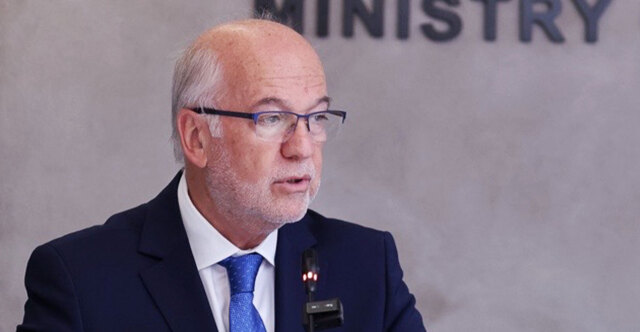
Speaking at the event, Minister Estela Aranha stated that violence plays a direct role in driving women away from politics. She said that abuse begins on an individual level through intimidation and moral harassment that lead women to question why they should remain in public life.
Aranha explained that attacked candidates face immense difficulty defending themselves and establishing public positions, which weeds out those who are trying to run, those who could enter, or those who have considered entering races.
She emphasized that this dynamic is very serious because democracy presupposes the political and electoral participation of everyone who wishes to take part in debate.
Aranha added that the problem escalates in digital environments, where online attacks spread with higher speed and greater volume. Targeted women often have nowhere to turn, especially when facing coordinated campaigns.
The Superior Electoral Court announced several measures to confront the problem, including the national monitoring dashboard, specialized training for electoral courts and voting zones, strengthened reporting hotlines, and actions against coordinated digital attacks, deepfakes, and false content targeting female politicians.
The court also signed a formal protocol with the Electoral Attorney General's Office to improve the prevention, reporting, and monitoring of political violence cases.
Evolution of electoral quota rules
Brazil began adopting candidate quotas for women in 1995, setting an initial threshold of 20 percent.
Lawmakers raised the requirement to 30 percent in 1997. However, the original legislation only required political parties to reserve candidate spots for women, leaving parties free to leave those ballot lines unfilled.
In 2009, a statutory change replaced the requirement to reserve spots with an obligation to fill them, making the minimum percentage mandatory for party tickets.
In subsequent years, further legal and judicial reforms tied public campaign financing directly to female candidacies, requiring parties to distribute campaign funds proportionally.
For the 2026 elections, the Superior Electoral Court calculated the proportions of female, Black, and Indigenous candidates presented by each party to determine allocations from the Party Fund and the Special Campaign Financing Fund.
Across the 20,500 candidacies evaluated by the court for public campaign funding this year, female contenders account for 34.85 percent of the total.