


Peruvian President Keiko Fujimori has backed away from her campaign pledge to tackle public insecurity within her first 100 days in office, telling business leaders in Lima that her administration has 1,826 days to restore order and overhaul the state.
Speaking on September 9 at the inauguration of the Expomina Peru 2026 mining conference, Fujimori replaced the short-term benchmark that defined her presidential campaign with a timeline covering her entire five-year mandate.
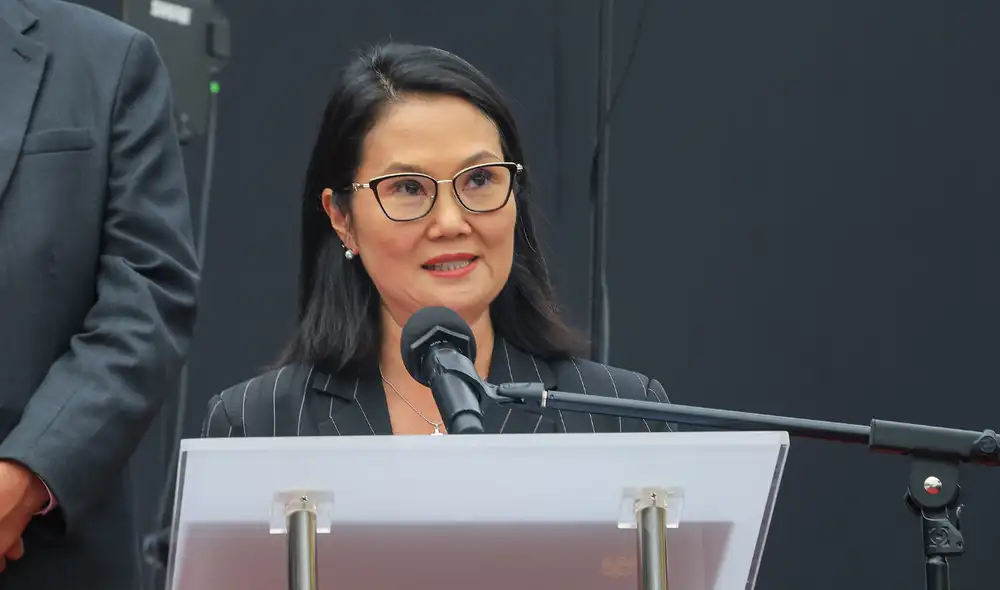
The shift marks a significant departure from her promises in July, when as president-elect she urged citizens to measure her performance by what she accomplished during her first 100 days in government.
Shift from short-term promises to a five-year mandate
During her speech to mining executives, Fujimori asked investors for their trust and promised fundamental changes in how state institutions interact with private enterprise. She refrained from setting any short-term goals or specific targets for the coming weeks.
Instead, the head of state outlined a broader vision encompassing her full term in office. She stated that upon assuming leadership of the country, her administration established an irreversible clock of 1,826 days to restructure the state, recover public safety, and boost the national economy.
Fujimori added that during her message to the nation, she established a key governing principle: the state must stop acting as a bureaucratic barrier for investors and citizens, transforming instead into a facilitator of national development.
The mention of an irreversible countdown revived a concept Fujimori first introduced during her inaugural address to Congress on July 28. On that occasion, she declared that the clock on her presidency had begun to tick, though she previously applied the metric primarily to public safety rather than economic policy.
Evolution of campaign commitments on crime
The five-year timeline contrasts sharply with the specific short-term commitments Fujimori made throughout her campaign and election victory. During an appearance on the television program Tu Decision 2026, candidate Fujimori outlined four primary goals for her first 100 days: improving public security, reviving the economy, strengthening health and education services, and addressing national infrastructure needs.
Following her election victory, Fujimori narrowed those priorities during an interview with journalist Ismael Cala. She stated that her initial focus would center on combating crime and preparing for the El Nino weather phenomenon, emphasizing that those early days would be decisive and mark the beginning of change.
Her pledges regarding public safety were among the most detailed of her campaign platform. During the second-round presidential debate, Fujimori promised to request special legislative powers from Congress for her first 100 days in office to carry out comprehensive security reforms.
Under that proposal, she promised to reorganize the National Police and the National Penitentiary Institute from top leadership down, purchase new patrol vehicles, upgrade equipment and infrastructure at police stations, and strengthen civil intelligence networks across the country.
Growing divergence within the administration
Although the 100-day deadline featured prominently in Fujimori's inaugural address on July 28, it appeared alongside her first reference to the 1,826-day timeframe. In the weeks following her inauguration, senior officials began signaling that quick results might not be achievable.
Prime Minister Luis Galarreta recently asked Congress for more time than originally promised to evaluate the administration's performance. Galarreta's request for flexibility created a noticeable contrast with the strict 100-day deadline Fujimori had repeatedly highlighted during her campaign and post-election interviews.
By shifting the evaluation criteria from 100 days to 1,826 days, Fujimori has effectively moved the benchmark for success from an immediate test of executive action to the final conclusion of her mandate in 2031.
Context of Peru's governance and mining sector
Public safety has consistently ranked as one of the most urgent concerns for Peruvian citizens in recent years, as widespread crime, extortion, and organized violence have put immense pressure on successive national governments. Fujimori, leader of the conservative Fuerza Popular party, won the presidency in 2026 on a platform centered heavily on restoring law and order and slashing red tape for major export industries such as mining.
Expomina Peru, where Fujimori delivered her address, is one of the country's premier international mining conventions, gathering domestic and foreign executives, investors, and policymakers in Lima. Peru is one of the world's top producers of copper and silver, making the mining sector a key engine of national revenue and private investment.
Under the Peruvian Constitution, the president serves a single, non-renewable five-year term. Fujimori's reference to 1,826 days accounts for the full duration of her constitutional mandate, which began on July 28, 2026, and is scheduled to conclude on July 28, 2031.


