

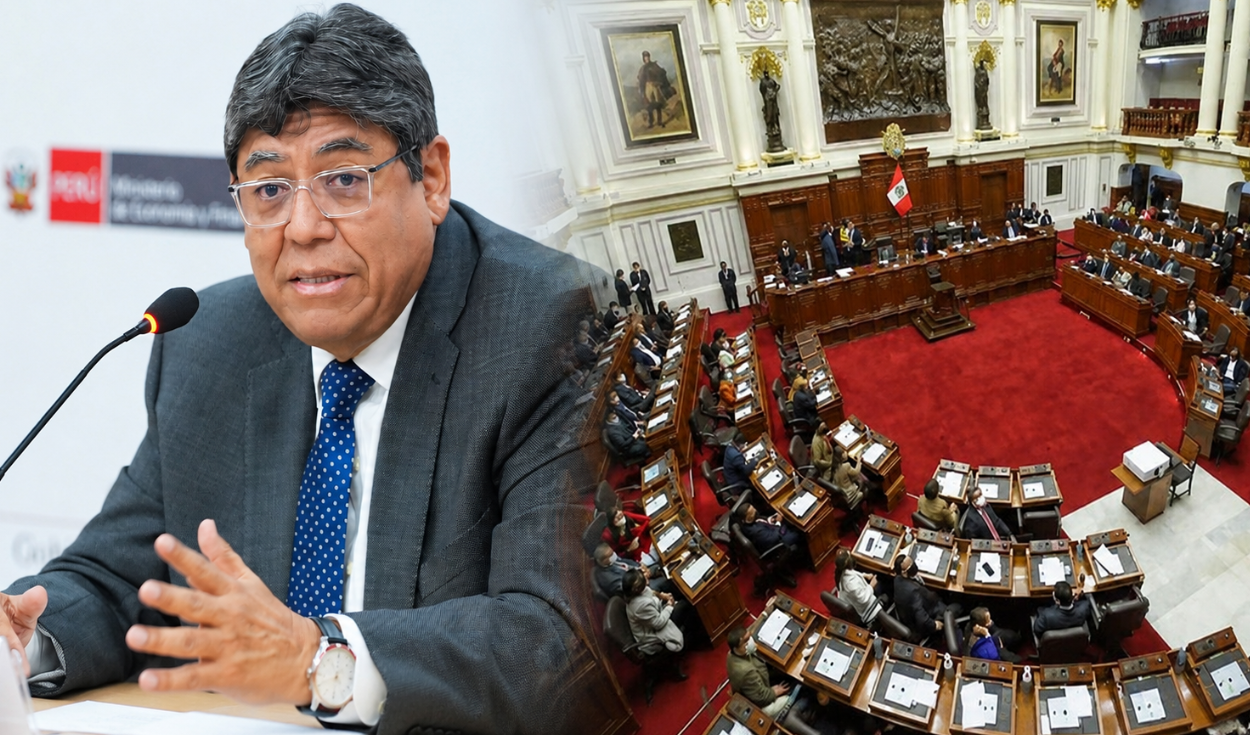
Peru Economy Minister Elmer Cuba presented a 266.506 billion sol public budget bill for 2027 before the Plenary of Congress on Thursday. The proposed spending package allocates approximately 112 billion soles to personnel costs and pensions, accounting for 42 percent of total government expenditure.
The global budget proposal represents a 3.5 percent growth compared to the 2026 Initial Opening Budget, known as the PIA. Within the total structure, current expenditure reaches 178.142 billion soles, capital expenditure accounts for 57.143 billion soles, and debt service absorbs 31.221 billion soles.
Cuba told lawmakers during his presentation that the spending plan aims to ensure the basic operation of public entities across Peru. He added that the bill seeks to guarantee the continuity of ongoing public infrastructure investments while directing fresh funding toward high priority sectors.
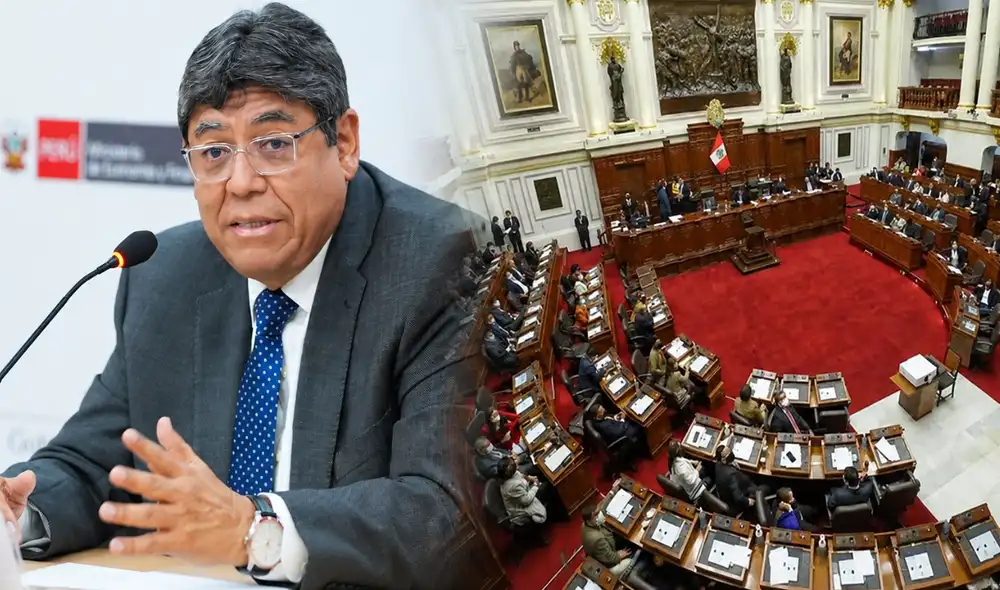
Education and health top budget spending
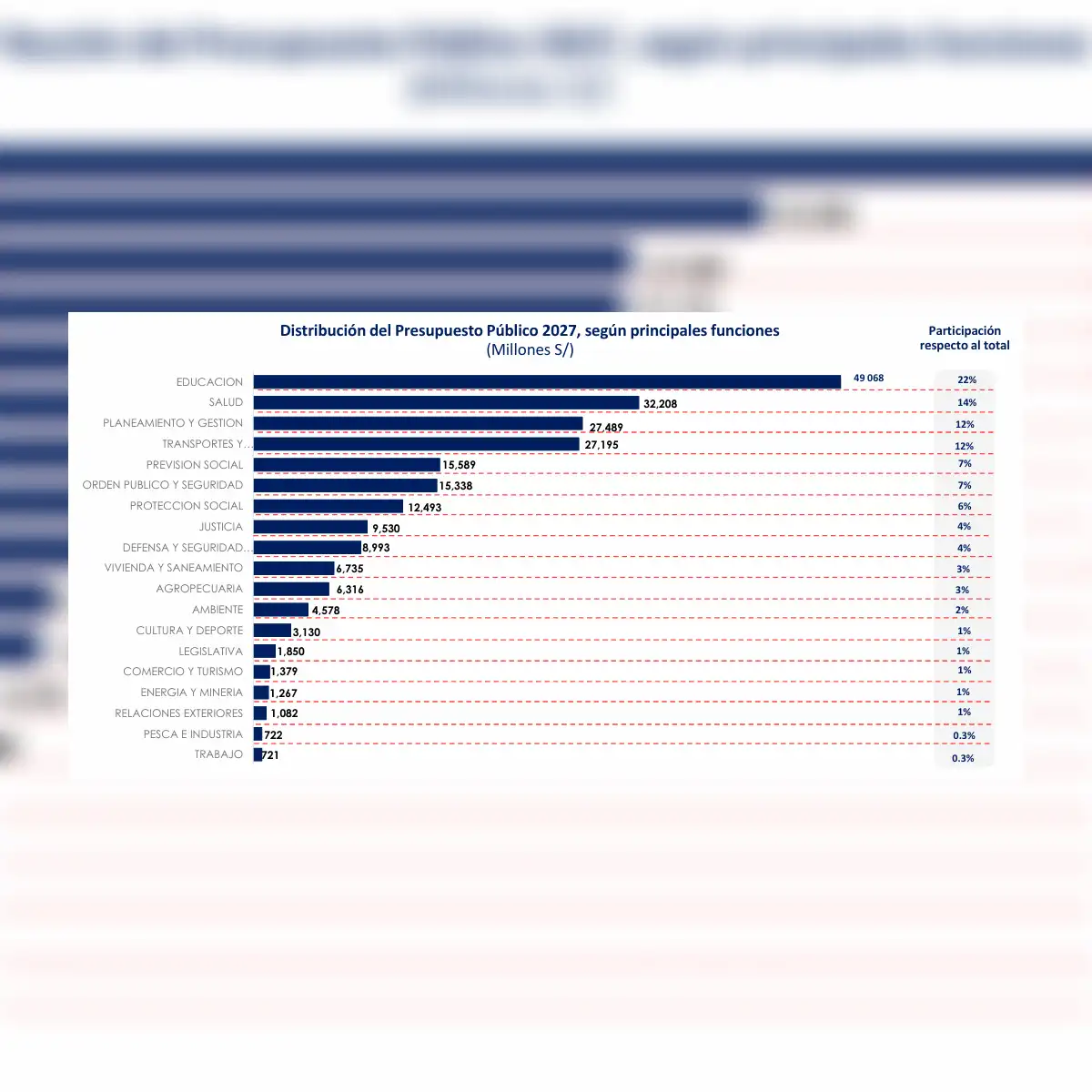
Education and health sectors concentrate the largest individual funding shares under the 2027 budget plan. The Ministry of Economy and Finance assigned 49 billion soles to education and 32 billion soles to health services across the country.
Planning and management follows with 27 billion soles, while the national transport sector is earmarked to receive 26.014 billion soles. Social forecasting accounts for 15 billion soles, and public order and security receives an allocation of 15.338 billion soles.
When combined with culture and sports, total funding linked to education reaches 52.198 billion soles. Out of this broader allocation, 31.452 billion soles is dedicated to payroll costs for active personnel, Contract Administrative Service staff known as CAS workers, and teaching personnel employed by the Ministry of Education as well as regional and local authorities.
Other government sectors receive smaller operational allocations under the draft budget. Housing and sanitation as well as the agricultural sector are set to receive 6 billion soles each, while environmental initiatives get 4 billion soles.
Culture and sports receive 3 billion soles as a distinct operational line item. Foreign relations, energy and mining, and foreign trade and tourism are each assigned approximately 1 billion soles.
Transport allocations include major transit and aviation infrastructure projects. The proposal directs roughly 1.944 billion soles toward the construction, operation, and maintenance of Lines 1 and 2 of the Lima and Callao Metro, alongside 436 million soles for Chinchero International Airport in Cusco.
El Nino prevention and key funding increases
Public security and climate defense against potential El Niño weather impacts rank among the main priorities for 2027. Cuba announced that the budget includes 2.5 billion soles specifically designated to handle potential climate emergency events caused by the Pacific warming phenomenon.
The minister noted that the government plans to introduce an urgency decree modifying the Works for Taxes framework. The regulatory update aims to make it easier for private enterprises to invest directly in public infrastructure projects designed to mitigate El Niño damages.
Transport receives the largest single budget increase under the new bill, gaining an extra 3.689 billion soles over previous baseline levels. Social protection funding expands by 1.8 billion soles, with 1.7 billion soles of that increase directed to Pensión 65, Peru's non-contributory welfare program for elderly citizens.
Defense spending increases by 1.812 billion soles to reach a total allocation of 8.993 billion soles. Within defense, 4.691 billion soles will cover military personnel payroll and benefits.
Justice funding grows by 884 million soles, health receives an additional 848 million soles, and the combined education, culture, and sports sector gains 696 million soles. Public order receives an extra 368 million soles, bringing total public order and security funding to 15.338 billion soles, of which 10.276 million soles covers police and security personnel wages.
Tax evasion targets and borrowing limits
To support the proposed expenditure, Cuba called for measures to expand Peruvian fiscal revenues alongside spending controls. He proposed lowering national tax evasion by two percentage points, estimating that the reduction could yield up to 20 billion soles in additional state income.
Cuba emphasized that out of an estimated 18 million workers in Peru's labor force, only 1.5 million currently pay income tax. The minister argued that broadening the tax base is essential to maintain fiscal sustainability while funding public services.
The fiscal proposal aligns with economic forecasts from the Central Reserve Bank of Peru, which projects the national fiscal deficit will decrease to 1.4 percent of gross domestic product in 2027, down from an estimated 1.8 percent in 2026.
Cuba noted that achieving fiscal targets depends on lawmakers approving the bill, the government successfully boosting revenue collection, and agencies executing budgets without creating unbudgeted liabilities.
The draft legislation sets Peru's borrowing caps for 2027 at an external debt ceiling of 2.8 billion US dollars and an internal debt limit of 19.183 billion soles. Debt service obligations of 31.221 billion soles, along with mandatory payroll and pension commitments, absorb a substantial share of state funds before flexible capital investments can be expanded.
The budget bill now faces detailed evaluation and debate in the Congress of the Republic of Peru. Lawmakers will determine whether the proposed resource distribution balances recurring state obligations with executive priorities in public security, health, education, transport, and climate preparedness.


